Building for Value-Based Care: Software That Supports Risk-Based Reimbursement
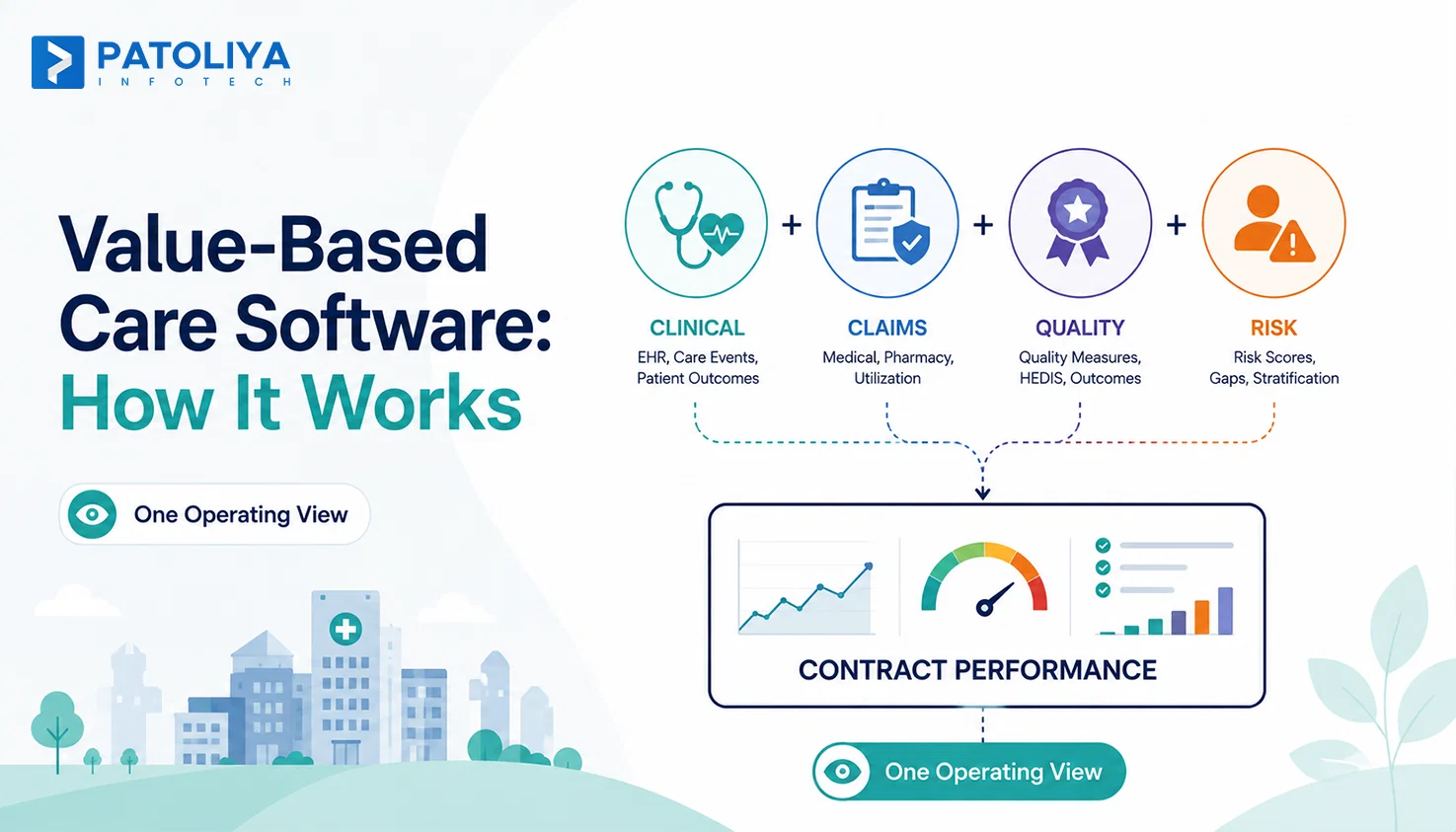
TL;DR: Value-Based Care Software connects population risk, quality, and claims data in one operating layer. Organizations in two-sided contracts need risk-based reimbursement technology that shows financial exposure early enough to act, not after reconciliation locks in the result.
Claims data tells you where you have been; value-based care demands visibility into where you are headed. Risk contracts need software that flags what is about to happen and gives leadership time to change it, which is exactly why Value-Based Care Software exists as its own category separate from claims systems with a reporting module bolted on.
Three pressures define this shift for any group carrying downside risk. Risk score accuracy determines revenue cycle. Continuous quality performance determines standing inside the contract.
Mid-year financial visibility determines whether leadership can still act before reconciliation closes the books, and that visibility is the core job of risk-based reimbursement technology. This guide explains what a working Value-Based Care Software stack needs to deliver, and where most platforms fall short during the year that actually matters.
What Breaks When FFS Systems Run Risk-Based Contracts
- Attribution shifts constantly as patients move between primary care groups mid-year, especially within ACOs, and standard systems carry no logic to track that movement against a contract.
- Claims arrive with a 30 to 90 day lag, so any tool built around claims alone reports a version of reality that already expired.
- Healthcare data integration brings clinical, claims, and financial information together, so care teams and finance can work from the same performance picture.
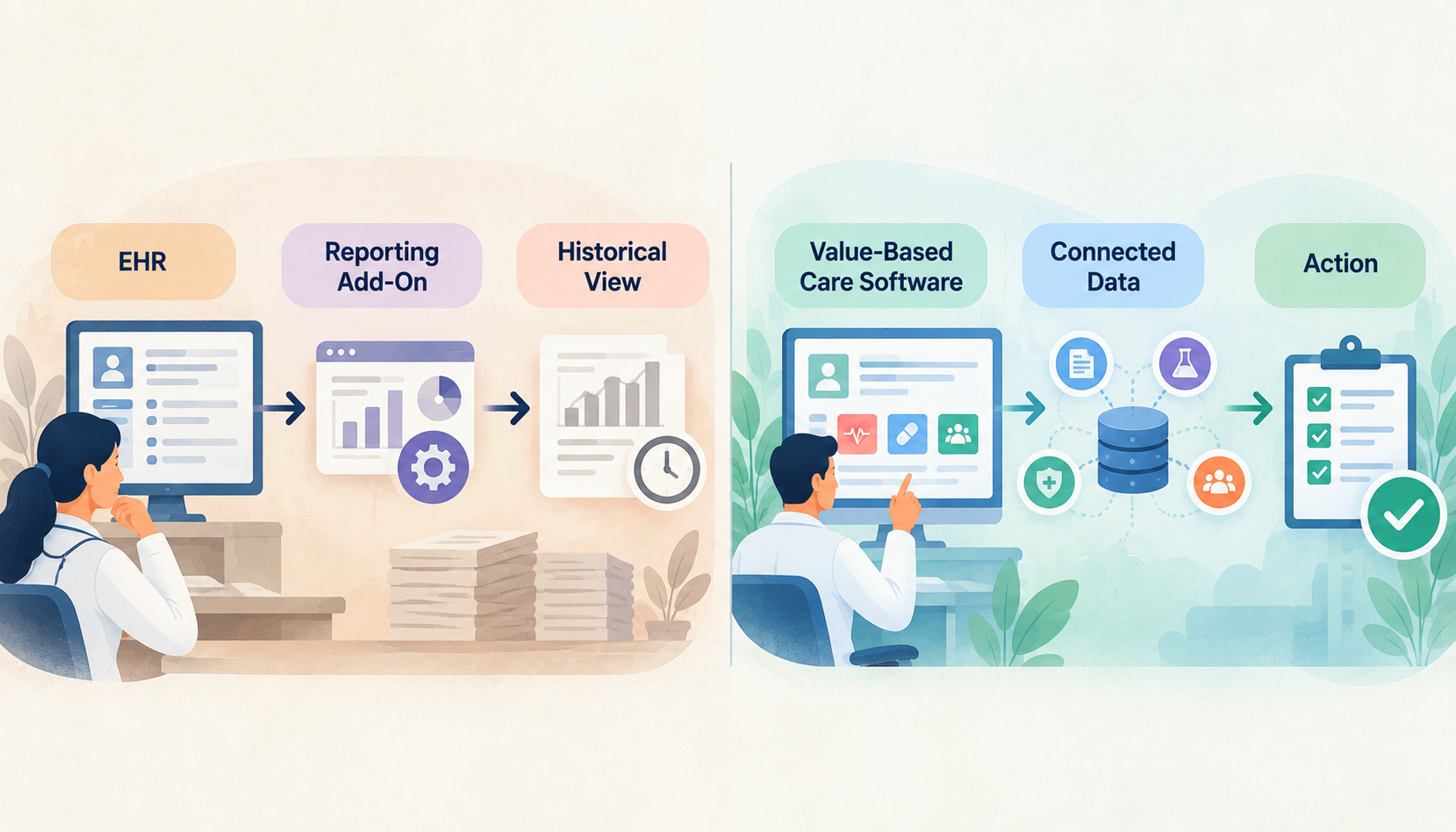
Why an EHR plus a reporting add-on falls short
A reporting add-on shows what happened, but Value-Based Care Software connects care gaps to contract exposure. Unlike generic reporting tools, risk-based reimbursement technology helps providers act before missed signals become lost shared savings.
The Minimum Software Layer Required for Value-Based Care
Submission accuracy on eCQM, CQM, and APP measures is table stakes. What separates working quality measure reporting from a checkbox tool is whether it shows current performance against open gaps in a way a team can act on today, with lineage traceable to the source chart.
Risk adjustment coding only creates value when suspected conditions move into a clinical workflow instead of sitting inside a report nobody opens. Healthcare workflow automation routes signals to the right team for action. This single detail separates a working piece of Value-Based Care Software from a spreadsheet with a nicer interface.
Population risk stratification built for action tells a care team who to call this week by combining clinical signals, utilization, and cost trajectory into a ranked list rather than a flat registry.
|
Layer |
Standard reporting tool |
Value-Based Care Software |
|
Quality reporting |
Submission status only. |
Open gap plus action owner. |
|
Risk coding |
Suspected conditions list. |
Workflow trigger at point of care. |
|
Risk stratification |
Static risk score. |
Ranked, prioritized worklist. |
|
Data view |
Claims or clinical, not combined. |
Unified attribution and benchmark view. |
A working value-based contracts platform pulls EHR data, claims, ADT feeds, and lab results into one attribution logic using HL7 or FHIR standards, so benchmark comparisons stay consistent across the entire contract year.
This unified layer is the foundation any risk-based reimbursement technology stack needs before adding advanced features on top of it. Groups skipping this step end up buying additional Value-Based Care Software modules that never sync with each other.
Where Value-Based Care Software Fails During the Performance Year
Retrospective reporting leaves too little time to correct performance. Year-end quality reports are useful for reconciliation and useless for intervention, since by the time the report lands, the contract year is already closed. Value-Based Care Software worth buying flags performance decline early enough for a team to still change the outcome.
Risk adjustment fails when coding sits apart from clinical workflow. A coding engine can flag a suspect condition all day. That flag only helps once it lands inside the clinician workflow during the visit rather than a spreadsheet reviewed weeks later.
Attribution churn distorts performance visibility. Beneficiaries move between providers throughout the year, so attribution logic has to stay traceable through every move, with historical snapshots locked once recorded.
Care management and quality performance cannot run as separate workflows. A quality gap without an assigned owner is only a number on a screen. Manual reconciliation between population health tools and the EHR burns hours that should go toward patient outreach.
Real-time claims require accounting for real lag. Clinical data updates close to real time. Claims data and CMS files lag 30 to 90 days depending on the payer, so credible risk-based reimbursement technology separates confirmed performance from projected performance rather than labeling stale numbers as current.
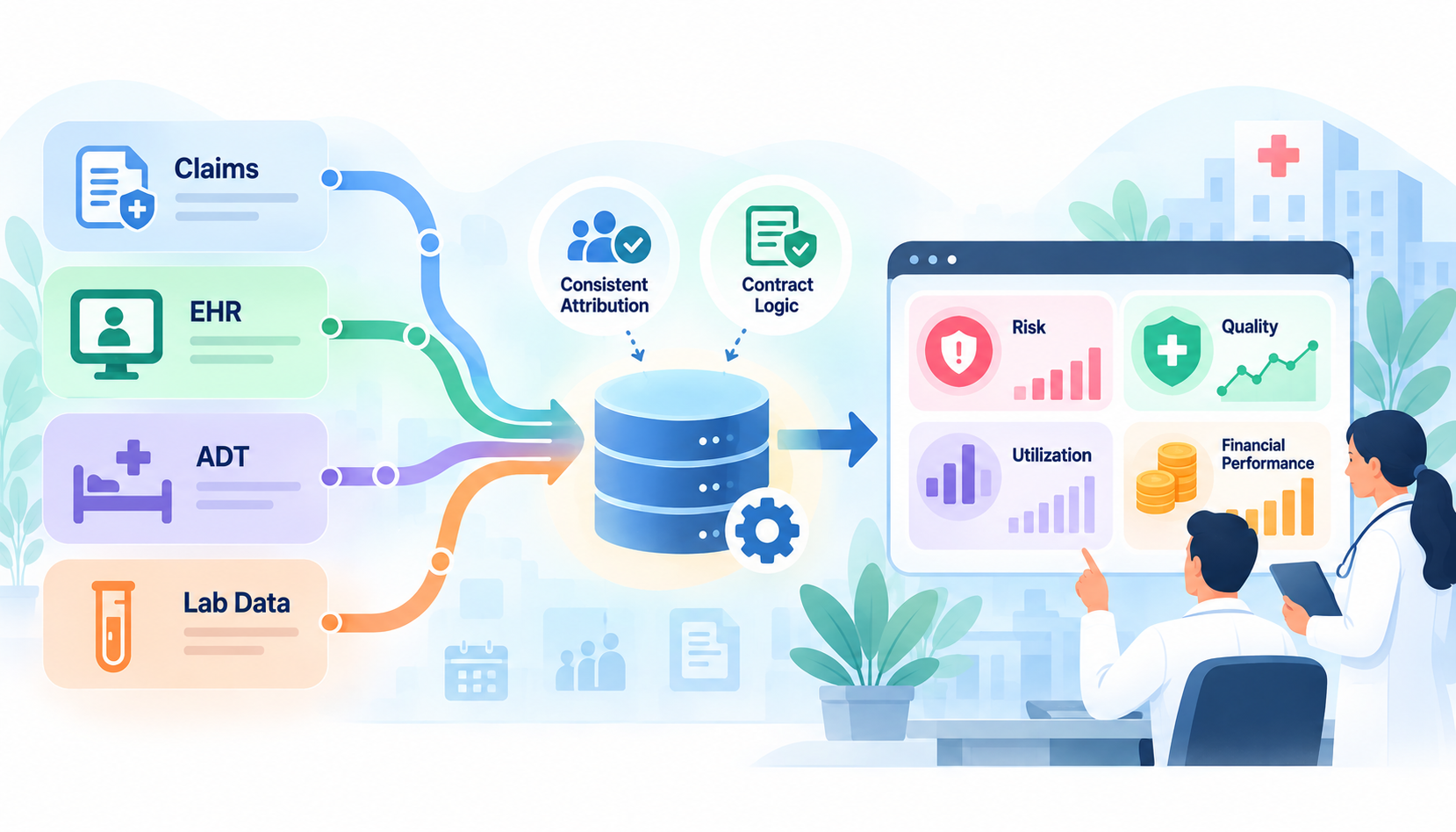
The question is not whether the dashboard updates in real time. The question is whether the decision it supports arrives early enough to change the contract result, and that single distinction decides whether Value-Based Care Software earns its price. Groups that skip this evaluation end up paying twice, once for the platform and again for the missed savings check.
Evaluating One Thing Before You Buy: Can It Show You Where Contract Performance Is Heading
Ask for a live contract performance walkthrough
Require the vendor to demonstrate the full chain live: current position, performance gap, affected population, root cause, recommended action, projected financial effect.
A vendor selling Value-Based Care Software who cannot walk that chain in a live demo will not walk it for your team either.
Test the platform against your actual contract logic
Bring your own attribution rules, quality requirements, risk adjustment methodology, and shared savings calculations into the room.
A generic demo built on sample data proves nothing about how the Value-Based Care Software handles your specific contract terms.
Test traceability
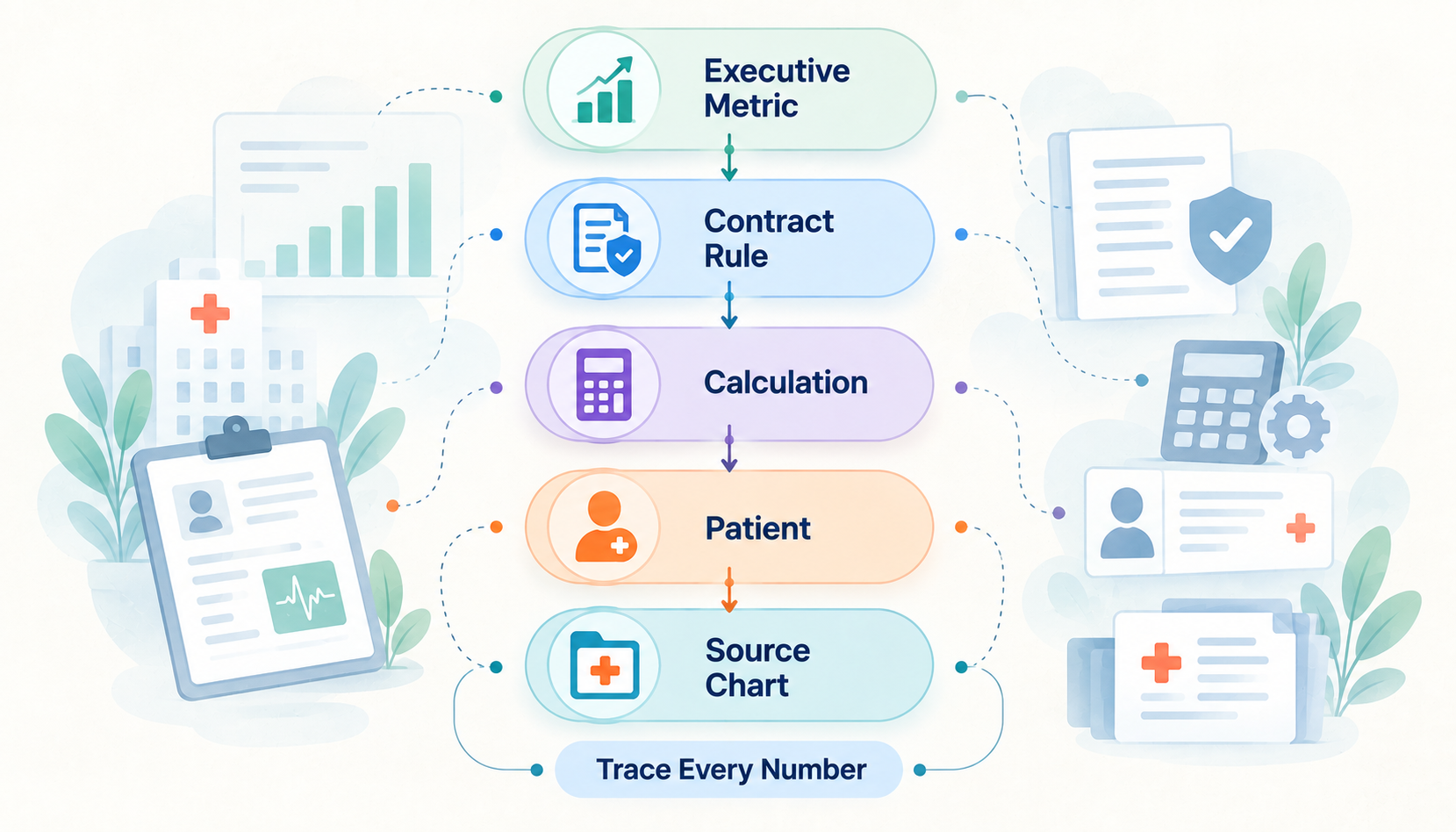
A buyer should move from an executive metric down to the contract rule, down to the calculation, down to the patient population, down to the source chart, without a single manual export in between.
- Does it preserve prior attribution numbers when attribution changes?
- Does it flag late or corrected claims automatically?
- Does it update documentation and coding views together?
- Does it rebuild contract logic without a manual redo?
Ask what happens when the underlying data changes
A working value-based contracts platform earns its price by explaining contract variance, not by counting how many modules ship in the box.
This single evaluation step exposes more about real-world risk-based reimbursement technology capability than any feature list ever will, and it separates serious Value-Based Care Software vendors from ones selling a dashboard with no logic behind it.
How Patoliya Infotech Approaches Value-Based Care
Patoliya Infotech builds Value-Based Care Software around the decisions healthcare leaders need to make during the contract year.
We connect clinical, claims, quality, utilization, and financial data through data analytics to surface risk early, track performance continuously, and identify where intervention can still change outcomes.
Our risk-based reimbursement technology is designed around measurable workflows, giving executives clearer visibility into financial exposure, quality gaps, and operational priorities before they become reconciliation problems.
Conclusion
The strongest Value-Based Care Software does not win on module count or dashboard design. It wins by connecting fragmented data to decisions a team can still act on inside the contract year.
For groups moving deeper into risk-based reimbursement, the technology should make three things visible at all times: where performance stands, what is driving it, and what action can still change the financial result. It should also connect those insights to accountable teams, timelines, and measurable outcomes. Let's talk about what that would look like inside your current contract mix.
FAQs:
A reporting module summarizes what already happened. A platform built for risk contracts connects clinical, claims, and financial data into one operating view so teams can act on gaps while the contract year is still open.
It quantifies financial exposure before year end, tying quality gaps and utilization patterns directly to dollar impact. That visibility lets leadership adjust strategy mid-year rather than reacting after the shared savings check arrives.
Coding accuracy alone does not capture risk correctly if the workflow never reaches the clinician at the point of care. Suspected conditions have to enter documentation during the visit, not weeks later in a spreadsheet.
Ask the vendor to quantify shared savings opportunity and downside exposure using your actual contract terms live, not sample data. If they cannot show that chain clearly, the platform likely cannot support real financial planning.
Effective stratification ranks patients by combined clinical, utilization, and cost signals instead of a flat score, giving care teams a prioritized worklist rather than a static registry someone has to sort by hand.
Not fully. Claims typically lag 30 to 90 days depending on payer and program. Strong platforms separate confirmed performance from projected performance instead of labeling delayed data as real-time.