Nearshore Healthcare Software Development: When to Choose
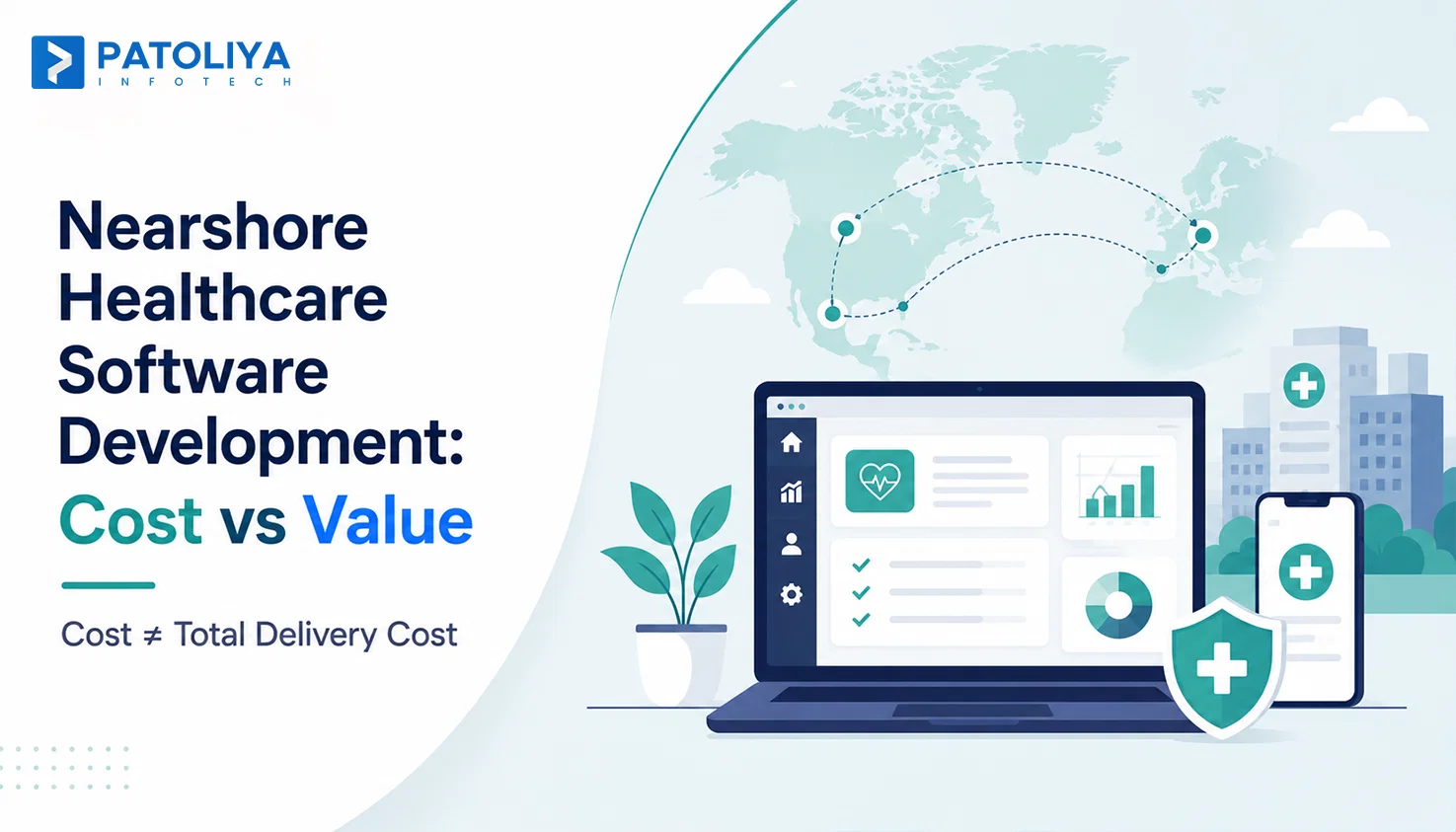
TL;DR: Nearshore healthcare software development works best when a project needs fast decisions and constant clinical input. Pick offshore for stable, repeatable engineering. Pick onshore only when physical presence changes the outcome, and treat the choice as a per project call.
Most healthcare leaders pick a delivery location based on hourly rates first and project reality second, especially when comparing nearshore healthcare software development companies. That habit costs more than it saves once rework and delayed decisions enter the picture.
A healthcare software outsourcing model built only on rate comparisons quietly falls apart once real clinical complexity shows up, and this guide will explain why nearshoring wins some workstreams and loses others. By the end, you will have a clear way to test every delivery location choice your team makes this year.
The Work Should Drive the Delivery Model
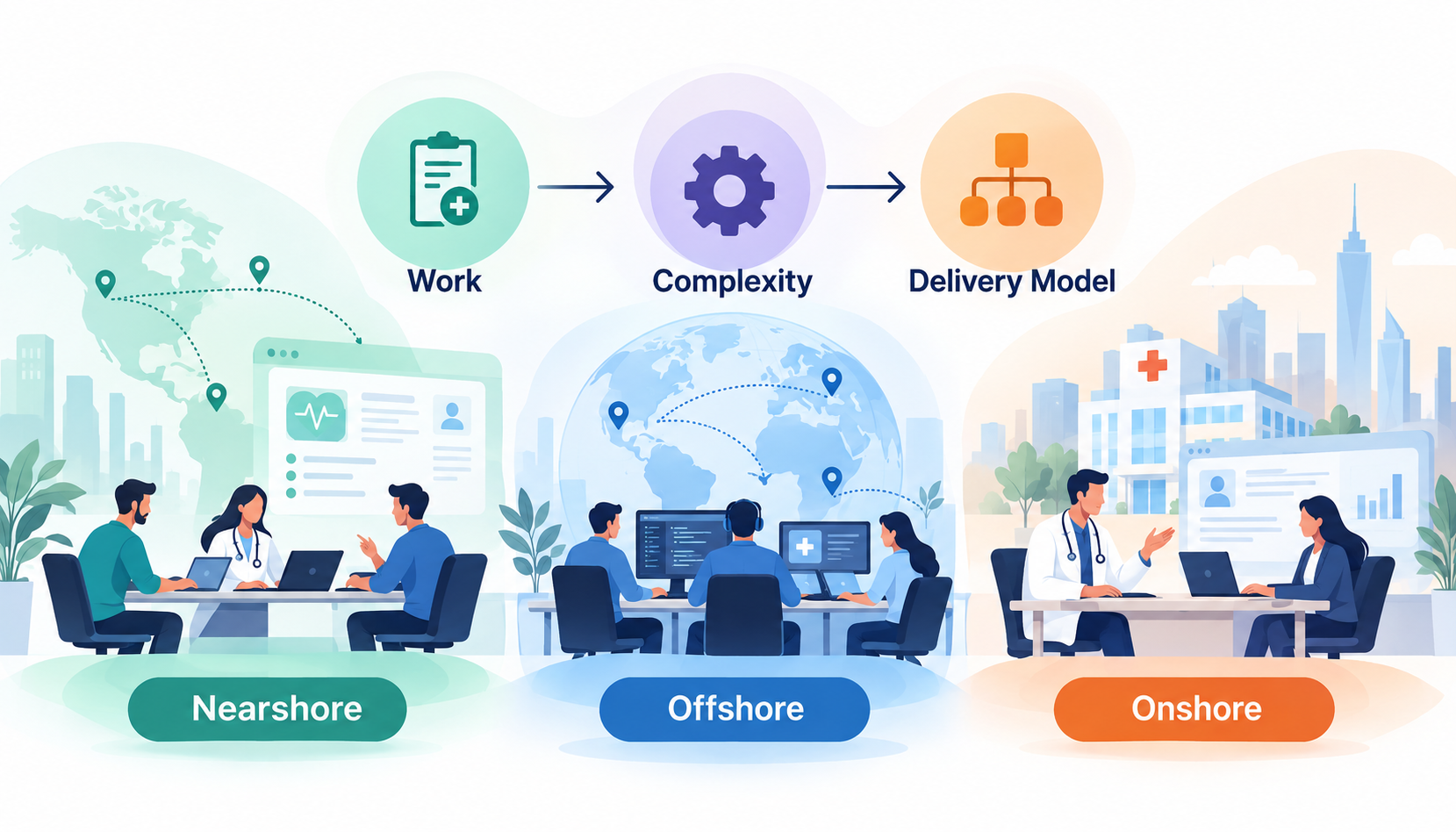
The right delivery model depends on the work’s complexity, collaboration needs, and pace of change.
Is the Work Spec Driven or Decision Heavy?
Stable, documented, and repeatable work fits offshore delivery well because requirements rarely change mid-sprint.
Evolving requirements, clinical input, and complex integrations push the case toward a healthcare software development company that can respond inside the same working day. A rate-driven outsourcing decision ignores this difference.
How Often Does the Team Need to Think Together?
Collaboration intensity decides the right fit. Low interaction work suits offshore. Medium interaction works with planned overlap hours.
High interaction favors nearshore healthcare software development because architecture decisions happen live. Very high interaction with required physical presence points toward onshore.
What Happens When a Decision Is Delayed?
EHR integration, data mapping, clinical workflow design, and production incidents all carry a real cost when a decision waits twelve hours for a reply. This delay cost is the real argument behind a nearshore vs offshore healthcare software comparison, not the hourly rate on a contract.
A team practicing genuine nearshore healthcare software development closes that gap because a question raised in the morning gets an answer before lunch, and this is often the clearest sign that software development fits the workstream.
Healthcare Projects Where Nearshore Has a Real Advantage
EHR and Interoperability Projects
- Healthcare data integration projects involving HL7 and FHIR demand constant back and forth between engineers and product owners.
- Data mapping errors and interface failures compound fast when a fix waits until the next day.
- Nearshore healthcare software development keeps the feedback loop inside the same business hours.
- A shared time zone means an interface failure gets triaged within the hour, not the next standup.
Healthcare SaaS With Rapid Product Iteration
- Healthcare SaaS development with frequent roadmap changes needs fast engineering input and close product-engineering collaboration.
- Continuous product feedback loops work best with same-day standups.
- Short release cycles leave no room for a next-day reply.
- High product and engineering interaction is the core reason a healthcare software outsourcing model built for speed leans toward proximity.
- Product managers get direct engineering answers instead of relayed summaries.
Legacy Healthcare Modernization
- Legacy healthcare system modernization involves a chain of decisions covering legacy dependencies, architecture, migration steps, integration points, testing, and rollout.
- Each link needs a conversation, not a ticket.
- A dedicated nearshore healthcare software development team keeps that chain moving because stakeholders can talk through blockers the same afternoon.
- A missed dependency caught early saves weeks later in the migration.
Production Critical Healthcare Platforms
- Integration failures, production defects, and business-critical incidents need engineers who can respond inside the workday, particularly when cloud infrastructure services support production-critical healthcare platforms.
- A team nine time zones away cannot match that speed, and that gap is exactly where a nearshore vs offshore healthcare software comparison tends to favor proximity.
- Nearshore healthcare software development earns its premium here because response time protects patient-facing uptime.
- Faster incident response also reduces the cost of every escalation.
Choosing Between Offshore and Onshore Healthcare Software Development
The right delivery model depends on collaboration, complexity, regulatory needs, and cost. Choose proximity only when it materially improves delivery outcomes.
When Offshore Is Actually the Smarter Choice
Stable Well Documented Development
Offshore fits work with defined requirements, mature architecture, repeatable patterns, and limited stakeholder interaction.
The specification already answers most questions an engineer would ask, which removes the need for nearshore healthcare software development.
Scale and Cost Dominant Work
Offshore wins when the priority is large engineering capacity, parallel development, or straightforward cost optimization on a fixed scope.
Here, a nearshore vs offshore healthcare software comparison usually favors offshore without much debate, since collaboration frequency stays low across the entire engagement.
Maintenance and Repeatable Engineering
Software testing and QA services, maintenance tickets, migration scripts, and standardized modules rarely need the level of live discussion that complex healthcare engineering requires.
This is where a healthcare software outsourcing model should lean offshore. Don't pay a nearshore premium for work that never benefits from proximity, and reserve that budget for the workstreams where it actually changes outcomes.
When Onshore Is Worth the Premium
Onshore delivery earns its cost when onsite collaboration happens weekly, or local regulatory requirements demand a local presence.
A hospital system negotiating a state-level compliance rollout is a fair example, and even then most surrounding engineering still runs through nearshore healthcare software development while only the compliance liaison stays local.
Before paying for onshore delivery, ask whether physical proximity will materially improve the outcome.
If not, nearshore healthcare software development may offer a better balance of collaboration and cost, especially when office overhead and travel are considered.
The Hidden Cost of Choosing the Wrong Delivery Geography
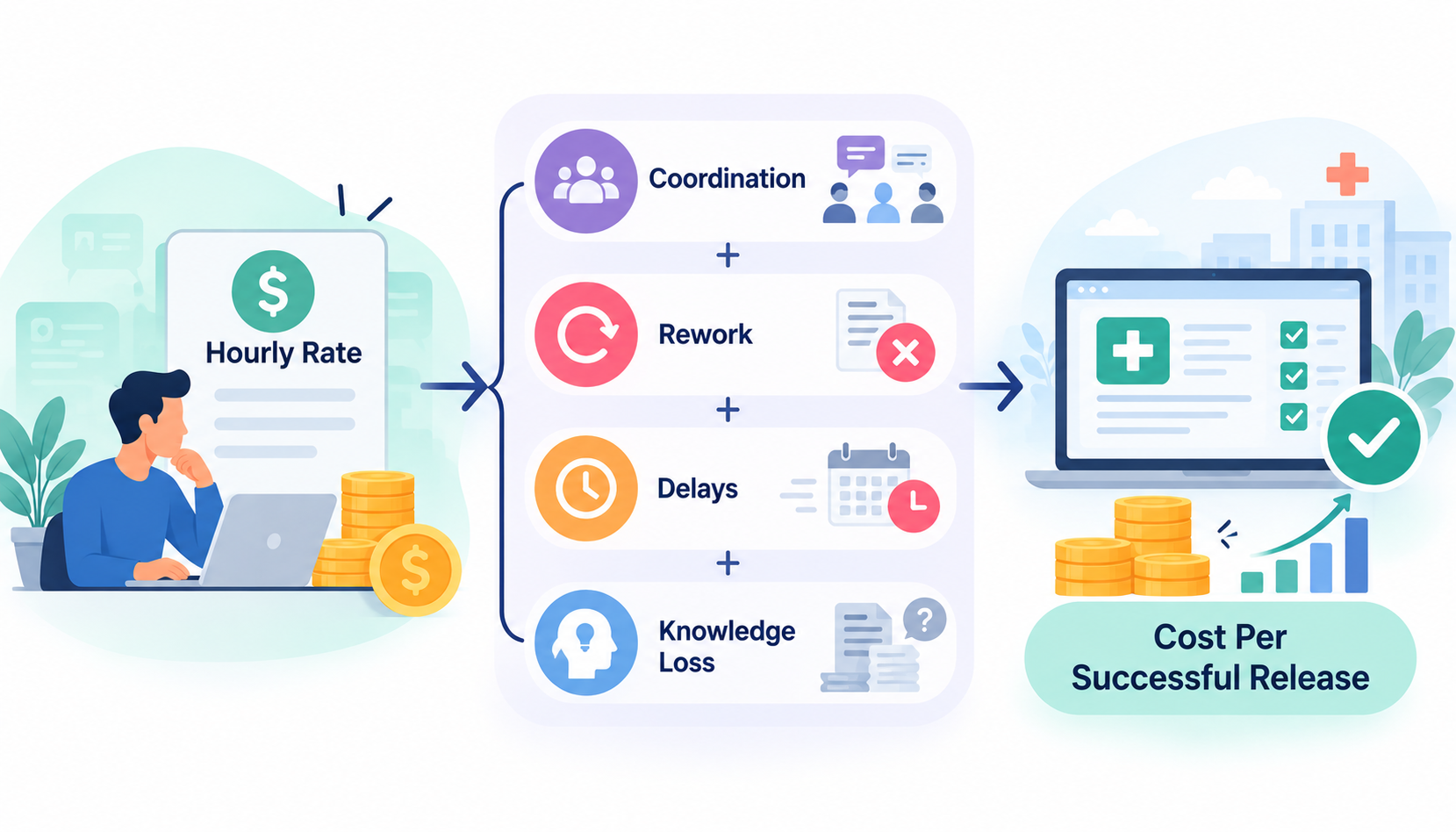
The Coordination Tax: Hourly rates hide the real number. Add developer cost, management time, waiting time, meeting overhead, and escalation cycles together.
The gap between offshore and nearshore healthcare software development often shrinks once a project needs frequent collaboration. A model that ignores this tax always looks cheaper on paper than it performs in practice.
The Healthcare Rework Tax: Rework around EHR integrations, clinical workflows, data mapping, security controls, and interoperability carries a downstream cost far higher than the original build. A misread clinical requirement does not surface until testing, and by then the fix touches five other modules.
Teams running true nearshore healthcare software development catch this earlier because the clinical stakeholder and engineer sit on the same call instead of exchanging notes across a delayed thread.
The Knowledge Loss Tax: Developer turnover forces a team to relearn healthcare workflows, integrations, business rules, and architecture from scratch.
Every relearning cycle adds weeks to a roadmap that a stable nearshore healthcare software development partner would have kept moving.
Calculate Cost Per Successful Release: Total delivery cost divided by successful production releases tells the real story.
A cheaper hourly rate that produces fewer clean releases is not actually cheaper, and this number should sit at the center of any healthcare software outsourcing model decision.
Nearshore vs Offshore Should Be Decided Per Workstream
Keep Product and Clinical Decisions Close to the Business
Internal teams should retain product ownership, clinical decisions, and business priorities regardless of where engineering happens, while HIPAA business associate requirements should be addressed when an external partner creates, receives, maintains, or transmits protected health information.
Put High Collaboration Engineering Nearshore
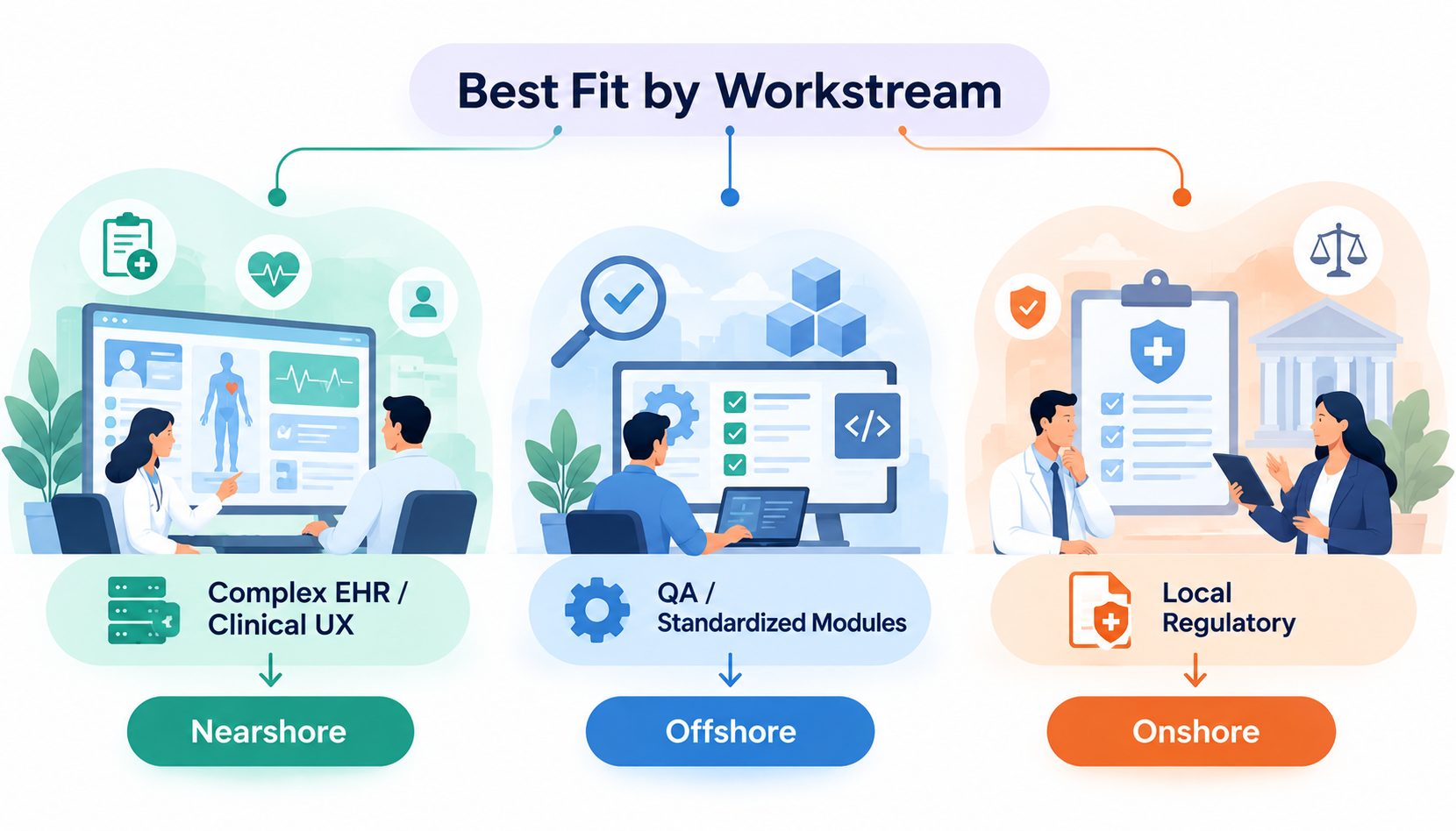
Complex integrations, architecture collaboration, and UX heavy workflows belong with a nearshore healthcare software development team.
Patient portal development that needs weekly clinician review is a clear example where nearshore development can provide faster feedback and fewer missed sprint commitments.
Push Independent High Volume Work Offshore
QA automation, repeatable engineering, maintenance, and standardized modules run efficiently offshore because they need output, not conversation. Pairing this offshore layer with nearshore healthcare software development on the collaborative side is what a balanced delivery mix looks like.
The Result Is a Workstream Based Model
A clear nearshore vs offshore healthcare software split by workstream, shown below, keeps the decision grounded instead of political.
|
Workstream Type |
Best Fit |
|
Complex EHR integration |
Nearshore |
|
Clinical workflow design |
Nearshore |
|
QA automation |
Offshore |
|
Standardized modules |
Offshore |
|
Local regulatory rollout |
Onshore |
Stop asking whether the company should go nearshore or offshore as a whole. Ask where each type of work should happen for the best combination of cost, speed and quality, and revisit that split every quarter as the product roadmap changes.
How to Structure a Nearshore Healthcare Engagement
Three things matter most here: start small, set a clear operating rhythm, and measure before you expand.
Pick something measurable to prove the model. EHR integration, an interoperability layer, a patient portal, or a cloud modernization project all work well as a first engagement for nearshore healthcare software development, since results show up fast enough to justify a second workstream.
Define overlap hours, sprint cadence, architecture reviews, release process, escalation rules, and decision ownership before the first sprint starts.
Without this structure, even a well matched nearshore vs offshore healthcare software comparison falls apart in execution, no matter how strong the engineering talent is on paper.
Track release velocity, defect rate, decision turnaround, rework, and team stability alongside cost per successful release to evaluate the effectiveness of healthcare software testing and QA.
Expand only when the model shows measurable value across two full release cycles, and only then scale the healthcare software outsourcing model to a second workstream. A partner that resists rushing this step is usually the one worth keeping.
Making the Right Nearshore Decision
|
Project Characteristic |
Strongest Fit |
|
Stable requirements plus cost priority |
Offshore |
|
High collaboration plus evolving requirements |
Nearshore |
|
Complex EHR or integration work |
Nearshore |
|
Large standardized engineering workload |
Offshore |
|
Frequent onsite interaction |
Onshore |
|
Long-term healthcare SaaS evolution |
Nearshore |
|
Routine maintenance or QA |
Offshore |
|
Mandatory local presence |
Onshore |
Choose the geography that minimizes total cost and risk across the project. Treat nearshore healthcare software development as the default whenever a workstream needs a fast answer, and let a proper healthcare software outsourcing model decide the rest.
Where Patoliya Infotech Fits the Nearshore Healthcare Model
For healthcare leaders, nearshore delivery is not primarily a time-zone decision; healthcare software consulting helps evaluate it as a broader risk and execution decision. Patoliya Infotech combines healthcare domain knowledge with engineering depth, helping leadership avoid the cost of technically sound systems that fail to fit clinical or operational workflows.
Patoliya builds scalable healthcare software across EHR/EMR, HL7/FHIR, legacy modernization, and cloud transformation, aligning architecture and integration with long-term business value.
Conclusion
Nearshore healthcare software development does not automatically outperform offshore or onshore delivery. It creates value when faster collaboration and healthcare complexity reduce execution risk enough to justify the premium. A smart healthcare software outsourcing model assigns each workstream to the delivery model that fits its complexity, collaboration needs, and business impact, not one location for everything.
The right delivery model starts with the work, not the geography. Map your healthcare workstreams to the delivery model that gives each one the right balance of expertise, collaboration, and cost.
FAQs:
Nearshore healthcare software development keeps teams inside a close time zone, which allows same day decisions on clinical workflows. Offshore usually saves more on cost but adds a delay that shows up during complex EHR work.
Offshore fits stable, well documented projects such as QA automation and standardized modules where requirements rarely change, and stakeholder interaction stays low.
The hourly rate is usually higher, but total project cost often drops because fewer decisions get delayed and rework goes down.
Compliance accountability should stay with the internal team regardless of delivery location. The outsourcing model only changes how fast engineering responds to compliance related changes.
Yes, and this workstream based approach performs best. Complex integration work goes to a nearshore team while QA automation goes offshore, keeping the overall model balanced.
The biggest mistake is focusing on hourly rates instead of total delivery cost, coordination, rework, delays, and the cost of getting each release successfully into production.