Medical Claims Software: What It Does That Billing Software Doesn't
TL;DR: Billing software creates the claim. Medical billing computer software manages what happens after submission, scrubbing, tracking, and reconciling it. Practices using dedicated software report meaningfully higher clean claim rates because errors get caught before a payer ever sees them.
A clean claim rate below 85% is not a billing problem. It is a claims management problem, and most practices never separate the two. Administrative claims processing costs the healthcare system billions annually, largely from denials that could have been caught earlier.
Billing software generates the claim. Medical billing computer software validates it, submits it, tracks it, and closes the loop with payment reconciliation. This guide breaks down what dedicated Claims processing and adjudication software actually does, where billing tools stop short, and how to decide which category your revenue cycle team needs.
Medical Billing Software vs. Medical Claims Software: Understanding the Difference
Billing software builds the claim from patient encounters and codes. Medical billing computer software takes over from there, scrubbing, routing, and tracking the claim through every payer touchpoint until payment lands.
Why the Two Categories Are Frequently Confused
Vendors bundle both functions into one product, so buyers assume they are buying claims capability when they are only buying claim creation.
A billing tool can generate a claim in seconds. It cannot tell you why three payers rejected the same code combination last month.
Where Billing Workflows End and Claims Workflows Begin
Billing ends the moment a claim file is generated. Medical billing computer software begins the moment that file needs to survive contact with a payer's adjudication engine, a process billing platforms were never built to manage.
Why Claims Management Has Become Its Own Technology Layer
Payer rule sets change constantly, and effective healthcare data integration helps connect billing, payer, and claims systems without relying on manual data handling. That gap is why dedicated Claims processing and adjudication software now exists as its own category, separate from the practice management system.
Claims Software vs. Billing Software: A Functional Comparison
|
Function |
Billing Software |
Medical Claims Software |
|
Creates claim from encounter |
Yes |
No |
|
Scrubs claim against payer rules |
Limited |
Yes |
|
Tracks claim status across payers |
No |
Yes |
|
Manages denial work queues |
No |
Yes |
|
Reconciles remittance automatically |
Limited |
Yes |
The Core Functions Every Medical billing computer software Platform Should Support
Every serious Medical billing computer software platform earns its cost through five functions working together, not any single feature sold in isolation.
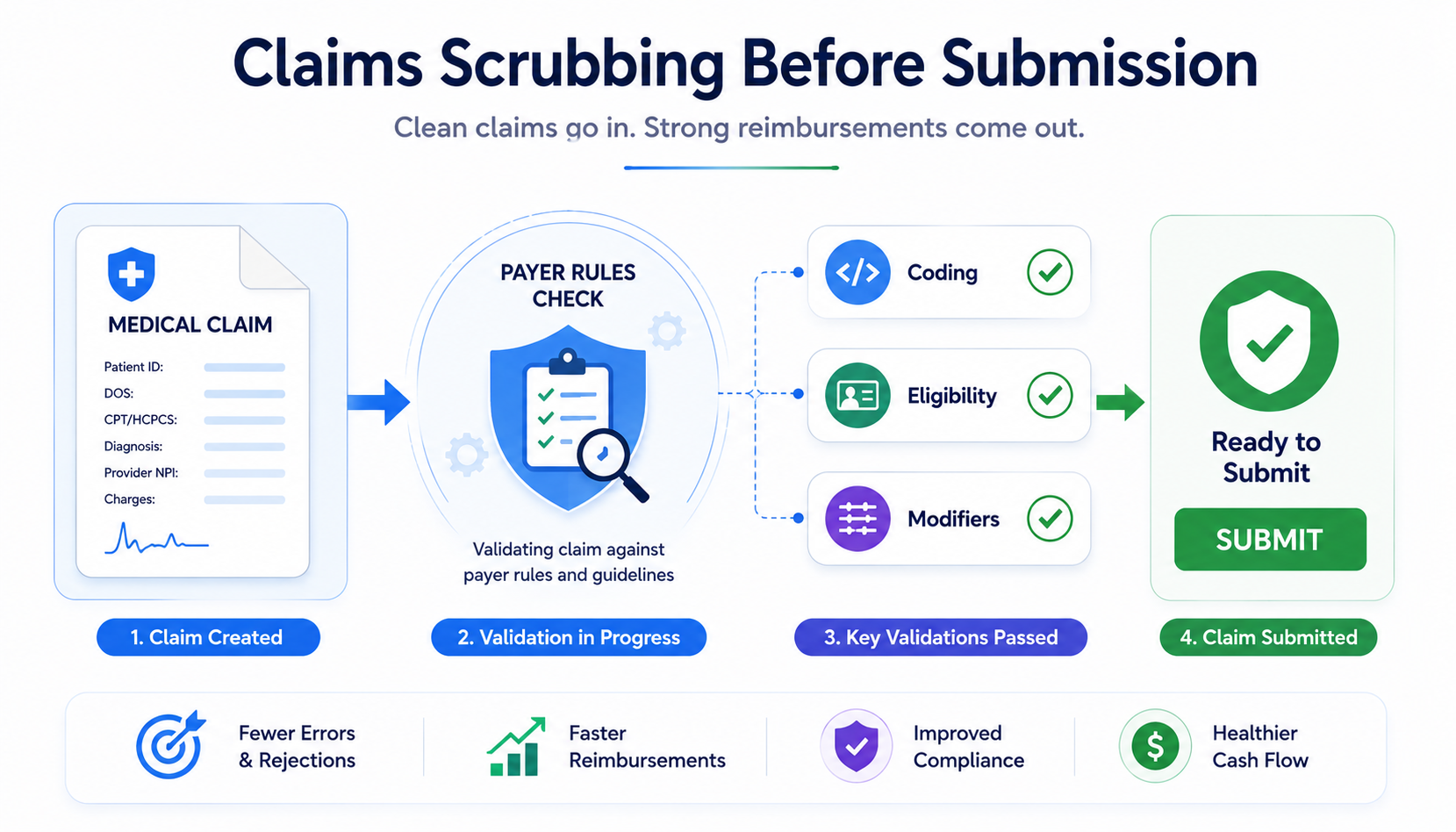
Claims Scrubbing Before Submission
- A capable claims scrubbing software layer extends what medical billing software can do by checking every field against payer-specific edits before a claim leaves the building.
- This single step prevents the majority of avoidable rejections, because most denials trace back to coding or eligibility errors caught too late.
Automated Claims Submission Across Payers
- Manual claim batching wastes staff hours that Medical billing computer software eliminates through direct payer connections.
- A platform that routes claims automatically using X12 healthcare transaction sets to the correct clearinghouse or payer removes a full manual step from every single claim.
Claims Status Tracking and Follow Up
- Real-time status visibility means staff stop calling payers to ask "where is my claim."
- Good Medical billing computer software pulls status updates automatically and flags anything stuck for more than the expected turnaround window.
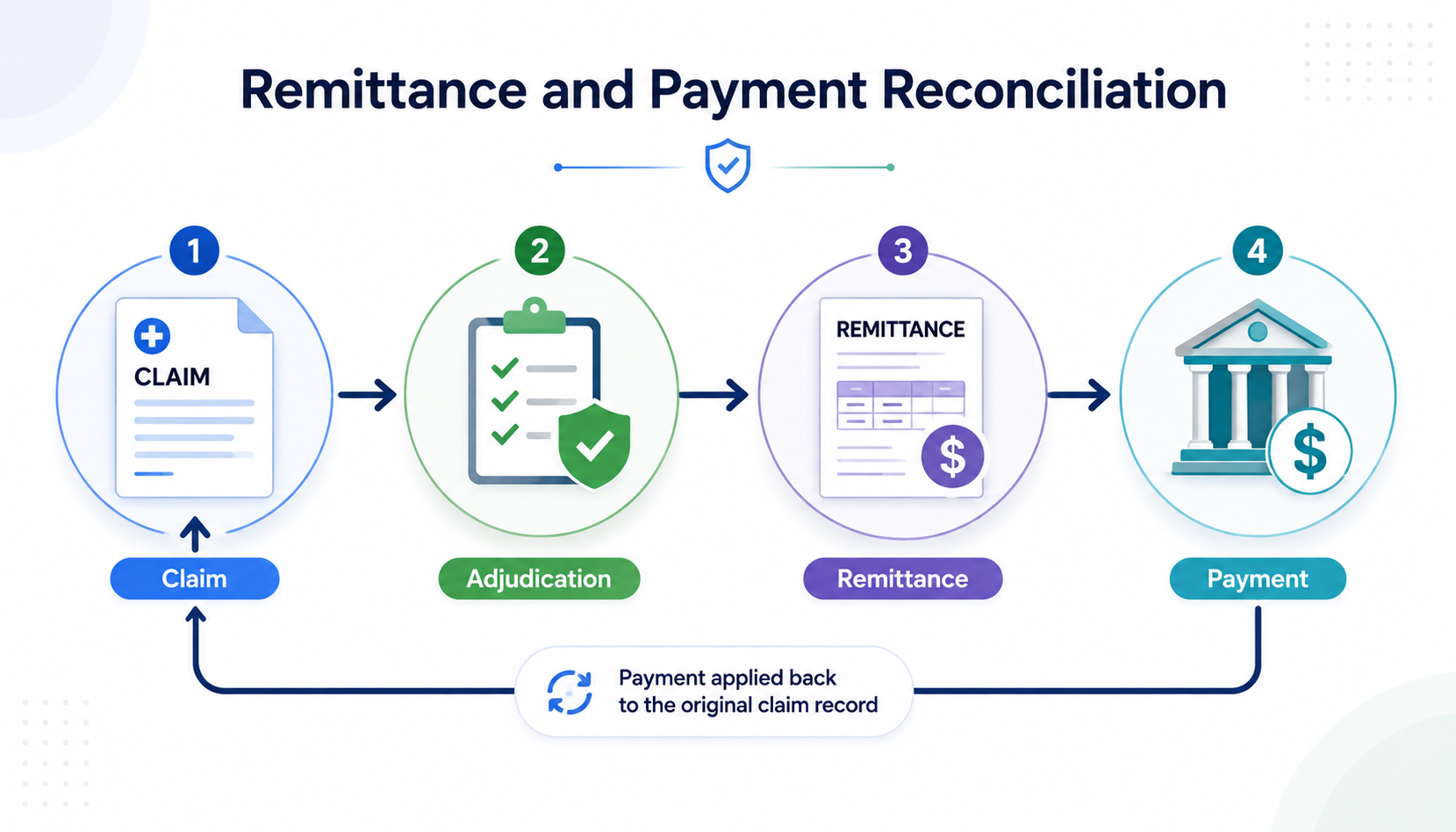
Remittance and Payment Reconciliation
- Matching payments to claims by hand invites errors that compound over a full billing cycle.
- Claims processing and adjudication software automates the match between remittance advice and open claims, closing the loop without a spreadsheet.
Payer Rules Validation and Exception Handling
- A payer rules engine applies payer specific logic at the point of submission, not after a denial arrives.
- This is the function most billing platforms skip entirely, and it is the one that saves the most rework hours.
Why Workflow Automation Matters More Than Feature Count
- A platform with fifty features and no automation still leaves staff doing manual follow-up.
- The practices getting real value from healthcare workflow automation measure hours saved per claim rather than simply counting menu items on a features page.
Why Billing Software Alone Often Fails to Improve Claims Performance
Billing software optimizes for one moment: claim creation. It has no mechanism to manage what happens across the weeks a claim spends inside a payer's system, which is exactly where a dedicated claims platform earns its value.
Claim Creation Is Not Claims Management: Generating a claim file and managing its full lifecycle are separate disciplines requiring separate tooling.
A biller can create a hundred claims in an hour and still have zero visibility into which ten will bounce back.
Denials Often Begin Before Submission: Most denials originate from errors present at the moment of claim creation, long before a payer ever touches the file.
Medical billing computer software with scrubbing built in supports denial management in healthcare by catching errors while correction is still cheap and fast.
Limited Visibility After Claims Leave the System: Once a billing platform hands a claim to a clearinghouse, most teams lose real-time visibility until a remittance file arrives weeks later.
That blind spot is precisely what dedicated Claims processing and adjudication software closes.
Manual Follow Up Creates Revenue Leakage: A mid-size practice we studied was losing staff hours every week calling payers for status updates that automated tracking would have surfaced instantly.
Switching to Medical billing computer software cut that follow-up time by more than half within one billing cycle.
Why Revenue Cycle Teams Need Dedicated Claims Workflows
Revenue cycle leaders who separate billing from claims management can strengthen their healthcare revenue cycle management strategy with faster cash flow and fewer written-off claims. This is the clearest argument for treating Medical billing computer software as its own budget line, separate from the EHR contract.
How Modern Medical Claims processing and adjudication software Works
The value of medical claims software comes from five connected stages working as one pipeline, not five disconnected tools bolted together after the fact.
Pre-Submission Validation and Claims Scrubbing
Every claim runs through hundreds of payer-specific edits before it leaves the system, catching coding mismatches, missing modifiers, and eligibility gaps.
This stage alone determines whether a practice sees an 85% or a 98% first pass rate.
Automated Submission and Routing Workflows
Once a claim clears scrubbing, Medical billing computer software routes it to the correct clearinghouse or payer connection without staff intervention.
Batching happens on a schedule the practice controls, not whenever someone remembers to run it.
Claims Status Monitoring Across Multiple Payers
Status pulls happen automatically across every connected payer, giving staff one dashboard so they stop logging into a dozen payer portals daily.
This is where Claims processing and adjudication software delivers the most visible time savings for front office teams.
Exception Management and Work Queues
Claims that stall or get flagged land in a prioritized work queue, not a shared inbox nobody owns.
Staff works the highest value exceptions first, which is a structural advantage this type of platform provides over manual spreadsheet tracking.
Payment Reconciliation and Adjudication Feedback Loops
Remittance data feeds back into the same platform automatically, matching payments against open claims and flagging underpayments for review.
Where Automation Delivers the Greatest Operational Impact
The scrubbing and reconciliation stages return the highest measurable value per dollar spent on Medical billing computer software, especially when combined with AI workflow automation for healthcare to reduce repetitive manual work.
The Metrics That Reveal Whether Your Claims Software Is Actually Working
A platform is either moving these six numbers in the right direction or it is not earning its cost, regardless of how many features medical claims software advertises.
Clean Claim Rate
The percentage of claims accepted on first submission without any manual correction, and the single clearest signal that scrubbing is working. A rate under 90% usually points to a scrubbing gap in the current system.
For instance, if 950 out of 1,000 claims are submitted without edits, the clean claim rate is 95%.
First Pass Acceptance Rate
Similar to clean claim rate but measured specifically at the payer adjudication step, not at submission. This number tells you whether the payer rules your Medical billing computer software applies actually match reality.
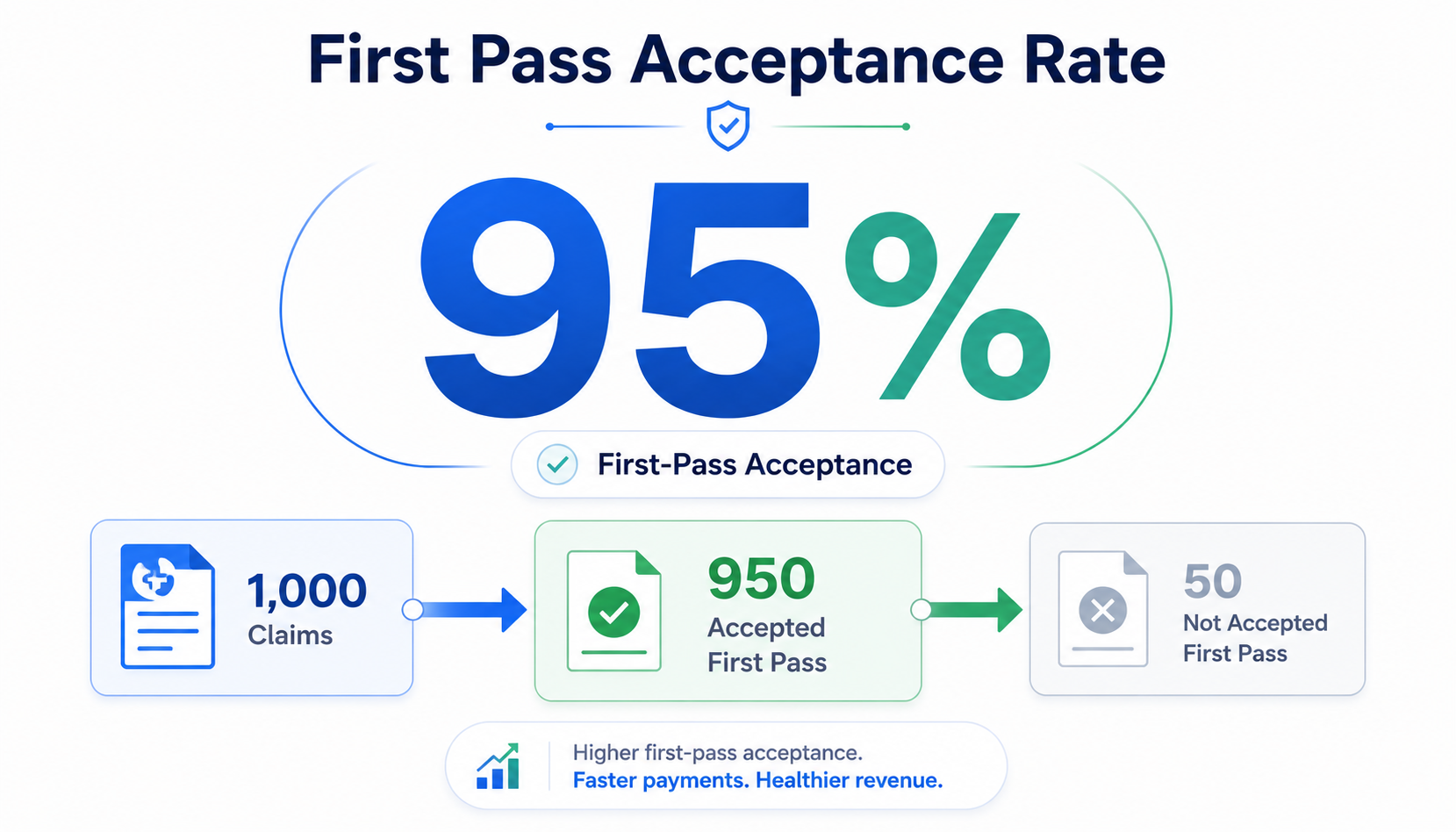
For instance, a claim may pass internal scrubbing but still be rejected by the payer due to outdated eligibility requirements.
Denial Rate Trends
Track denials by reason code every month. A single aggregate percentage hides the real pattern. A rising trend in a specific denial category usually means a payer changed a rule your system has not caught up with yet.
For instance, eligibility-related denials increasing from 3% to 8% over three months may indicate a verification workflow issue.
Days in Accounts Receivable
The average number of days a claim sits unpaid from submission to final payment, a direct measure of cash flow health. Claims processing and adjudication software that automates follow-up typically compresses this number within the first two billing cycles.
For instance, reducing A/R days from 42 to 30 can significantly improve monthly cash flow.
Average Time to Claim Resolution
Measures how long a claim takes from submission to either payment or final denial, capturing the full lifecycle across every stage. Shorter resolution time means staff spend less time chasing the same claim twice.
For instance, a claim resolved in 12 days instead of 20 frees billing teams to focus on higher-value work.
Cost Per Claim Processed
Divide total revenue cycle labor cost by total claims processed monthly to get a real efficiency number. Practices running effective Medical billing computer software typically see this figure fall as automation replaces manual touches.
For instance, if a practice spends $12,000 monthly to process 6,000 claims, the cost per claim is $2.
Claims Software vs. Billing Software: Which Problem Are You Actually Trying to Solve
The right answer depends entirely on where your current pain sits: creation speed or post-submission visibility, and a dedicated claims platform only solves the second problem.
Organizations Focused on Billing Efficiency
If claim creation itself is slow, the fix is a faster billing workflow, not a new claims layer. Medical billing computer software will not speed up how quickly a coder enters charges.
Organizations Struggling With Denials and Rework
If denials keep climbing and staff keeps resubmitting the same claims, that is a scrubbing and rules gap. This is the clearest case for adopting Claims processing and adjudication software immediately.
Multiple Payer Environments With Complex Submission Rules
Practices billing more than a handful of payers face complex submission requirements, including HIPAA-adopted electronic transaction standards covering claims, eligibility, claim status, and payment transactions. Medical claims software built for multiple payer environments absorbs that complexity so staff stops tracking it manually.
|
Situation |
Better Fit |
|
Slow claim creation |
Billing software upgrade |
|
Rising denial rate |
Medical billing computer software |
|
Many payers, complex rules |
Medical claims software |
|
No visibility after submission |
Claims processing and adjudication software |
Growing Healthcare Organizations Seeking Claims Visibility
Growth adds payer contracts and claim volume faster than most teams can track manually. Medical billing computer software scales visibility alongside volume without adding headcount at the same rate.
When Dedicated Claims Software Becomes Necessary
Once denial rework consumes more staff hours than claim creation itself, the math favors a dedicated platform every time. That threshold is where medical claims software stops being optional and starts being the obvious financial decision.
Signs Your Organization Has Outgrown Traditional Billing Software
These six warning signs show up consistently in practices that need dedicated claims tools but have not made the switch yet.
Claim Rejections Continue to Increase
A rejection rate trending upward month over month, even with the same staff and same payers, signals a scrubbing gap that billing software cannot close on its own.
Staff Spend Significant Time Tracking Claim Status
If someone on your team spends part of every day logging into payer portals for status checks, that is manual work Medical billing computer software automates entirely.
Payer Rule Changes Require Constant Manual Intervention
Every payer update forces someone to manually adjust claim templates, and that reactive cycle never ends without a rules engine handling updates centrally.
Reporting Lacks End to End Claims Visibility
If leadership cannot see where claims stall without pulling a manual report, the current system is not built for real claims management.
Growth Is Increasing Administrative Burden
Adding patients and payers should not require adding staff at the same rate. When it does, Medical billing computer software is the fix, not more headcount.
Technology Teams Are Managing Workarounds Instead of Improvements
If your IT team spends more time patching billing software gaps than improving actual workflows, it may be time to evaluate custom software solutions built around your claims process.
How Healthcare Leaders Evaluate Medical Claims Software
Evaluate any Medical billing computer software vendor against these seven criteria before signing a contract, in this order.
Claims Scrubbing Capabilities and Rule Coverage
- Confirm payer specific edit coverage for every payer in your mix.
- Ask how frequently the rules engine updates.
- Request the current first pass acceptance rate from reference customers.
Support for Automated Claims Submission
- Verify direct clearinghouse and payer connections exist for your top payers.
- Confirm batching can run on a schedule you control.
- Ask about failure alerts when a submission does not go through.
Claims Status Tracking and Workflow Visibility
- Look for a single dashboard covering every connected payer.
- Confirm exception queues are prioritized by claim value.
- Ask how status data refreshes, real-time or batch.
Integration With EHR, PM, and Revenue Cycle Systems
- Confirm the platform supports API-first healthcare software integration with your existing EHR, practice management, and revenue cycle systems.
- Ask about data sync frequency between systems.
- Verify that patient and encounter data flows seamlessly between electronic health records applications and the claims platform without manual entry.
Scalability Across Multiple Payers and Locations
- Ask how the platform handles adding a new payer connection.
- Confirm pricing scales predictably with claim volume.
- Verify multi-location reporting rolls up correctly.
Reporting, Analytics, and Operational Insights
- Request sample reports on clean claim rate and denial trends, and evaluate the platform's software testing and QA approach for critical claims workflows.
- Confirm custom report building without vendor support tickets.
- Ask whether benchmarking against industry averages is included.
Questions Healthcare Leaders Should Ask Before Selecting a Platform
|
Evaluation Criterion |
Why It Matters |
|
First-Pass Acceptance Rate |
Shows how reliably claims are accepted without rework. |
|
Payer-Specific Scrubbing |
Reduces denials caused by payer-specific rules and requirements. |
|
Payer & Clearinghouse Connectivity |
Ensures claims and status updates move reliably across your network. |
|
Real-Time Claim Tracking |
Gives teams visibility into claim status and follow-up needs. |
|
Similar Customer References |
Validates performance with a comparable organization, volume, and payer mix. |
Ask vendors for actual first-pass acceptance data from current customers, not marketing claims. Request a reference customer with a similar size and payer mix before signing.
Why Healthcare Enterprises Choose Patoliya for Medical Claims Software
Patoliya builds Medical billing computer software around payer specific scrubbing rules that update continuously, not on a quarterly release cycle. Clients report first pass acceptance rates climbing within the first ninety days of implementation.
- Direct connections to major clearinghouses and payers.
- Real-time status tracking across every connected payer.
- Dedicated implementation support during the first billing cycle.
Book a conversation with our team to look at your payer mix, claim volume, and current submission process, and find practical ways to make it work better.
Conclusion
Billing software and Medical billing computer software solve different problems, and treating them as the same purchase is where many revenue cycle teams lose money. Billing software manages the financial side of the practice, while claims software focuses on getting accurate claims out the door, tracking their progress, and catching issues before they become denials.
The practices with the cleanest claim rates separate claim creation from claims management and invest in both deliberately. If denials, rejected claims, and manual follow-up are eating into your staff’s time, let’s talk about what a dedicated claims platform could change in your next billing cycle, from cleaner submissions to fewer avoidable rework hours.
FAQs:
Billing software creates the claim from patient and coding data. Medical claims software scrubs, submits, tracks, and reconciles that claim through the full payer lifecycle, a function billing platforms rarely cover.
No. Medical billing computer software integrates with your existing EHR and practice management system, handling the submission and tracking layer while your EHR continues managing clinical and patient data.
Most practices go live within one billing cycle, roughly thirty to sixty days, depending on how many payer connections need setup and how much historical claim data requires migration.
Practices that implement scrubbing and payer rules validation typically see denial rates drop within the first ninety days, since most denials trace back to errors catchable before submission.
If denial rework consumes significant staff hours weekly, yes. Smaller practices often see the fastest return since automation replaces manual follow-up that would otherwise require additional hires.
Yes. A proper payer rules engine applies payer-specific logic automatically at submission, which is the exact capability that makes multiple payer environments manageable without constant manual template updates.