Conversation Intelligence: Cost, Control and ROI
 By Hitesh SUpdated on: 01/01/7011 min read
TL; DR: Conversation intelligence is the application of AI technology to transcribe, analyze, and structure customer calls for action by sales and support teams based on actual customer comments. Purchase a solution if standard capabilities and speed of implementation are more important. Build one if you have different requirements.
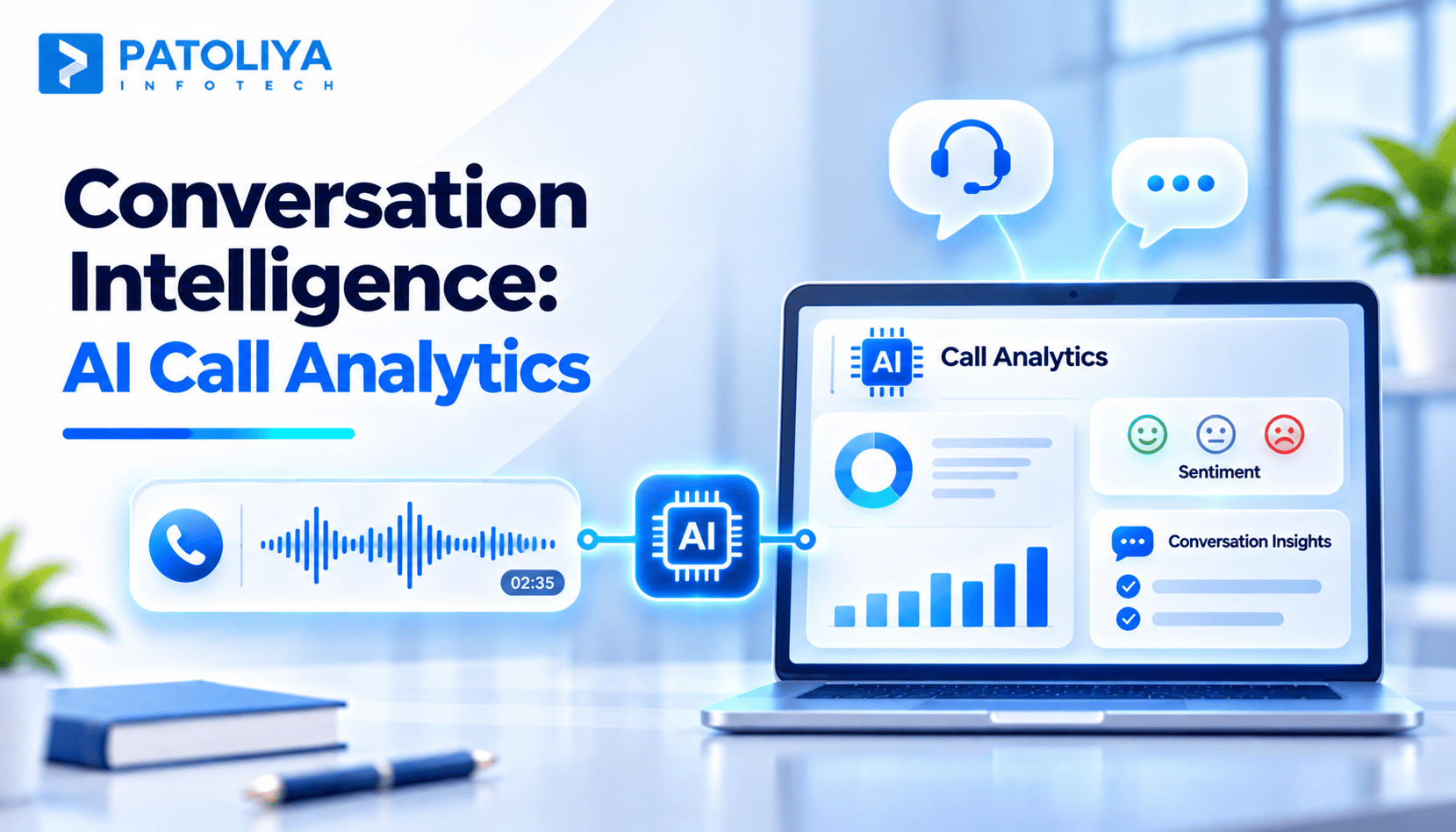
Your team keeps records of thousands of calls each month, yet very few of them are listened to once more. Conversation intelligence eliminates this gap by employing artificial intelligence to transcribe, analyse, and organise the customer conversations so that people can take action on what has been said.
Sales managers use it to identify deal risks and to give guidance to their sales representatives. Support managers use it to locate recurring complaints and to verify that company policy is being followed. In this way, both of them are able to avoid spending hours going through replayed audio.
A recording stored in storage has no value, but insight that gets passed on to a representative, a manager, or is entered into a CRM system can change the outcome. This guide explains how conversation intelligence functions and how to decide whether to build it yourself or to buy it, taking into account workflow suitability, data control, integration requirements, and total cost.
What Conversation Intelligence Software Does and How It Works
From Call Recording to Usable Insight
The conversation intelligence software records the audio from the calls, converts it into text, uses speaker diarization to identify the different speakers, analyses the content, produces summaries, and then feeds the results into your CRM; however, a poor transcript corrupts all the subsequent summaries and scores.

A transcript is made up of raw material, and genuine insights are obtained when the system identifies reliable, actionable facts such as who raised the price objection, which competitor was mentioned, and what the agent promised. The quality of good conversation intelligence software is demonstrated by its ability to provide these details, while inferior tools fail to do so.
Core AI Capabilities
The analytics AI causes a number of tasks to be carried out on the transcript. It performs sentiment analysis by monitoring the changes in tone during the call.
Topic detection identifies themes such as pricing, onboarding, or cancellation. Call summarisation reduces a forty-minute call to a few lines, together with action items. Coaching insights involve comparing the agent's behaviour with your playbook.
Distinguish between what can be measured and what the model interprets. Ratios and periods of silence are counts, whereas sentiment and intent are judgments, so the output of analytics AI on these points requires context and human review.
Teams that regard the AI scores from call analytics as hints for the manager's assessment achieve much greater value than those which treat the scores as final judgments.
Sales vs. Support Conversation Analytics
Conversation analytics serves two different masters. Sales teams care about objections, deal risk, and rep coaching. Support teams care about resolution, quality, and recurring complaints.
A support director asks why refund calls jumped last week. A sales VP asks why deals stall after pricing. Support teams running AI chatbot development projects can mine these calls for training data. Let your main workflow guide which conversation analytics product you shortlist and how you design the architecture. Picking conversation intelligence software before naming that workflow wastes the first quarter.
Build vs. Buy Conversation Intelligence Software: How to Decide
When Buying an Existing Platform Makes Sense
Buy when your team needs call recording, transcription, summaries, and CRM integrations running within weeks. Buy when existing tools already cover your languages, compliance rules, and workflows. Buy when you prefer vendor-managed infrastructure.
Most mid-sized sales teams fall here, and conversation intelligence software from an established vendor gets them coaching on day thirty. An off-the-shelf tool also gives managers a working baseline to judge any future custom build against.
When Building a Custom Platform Makes Sense
Build when business-specific scorecards, proprietary workflows, or unusual integrations sit at the heart of the requirement. A health insurer that must score calls against its own regulatory script fits this profile, because generic call analytics AI scorecards miss its compliance language.
Build when you need control over data processing, retention, deployment region, or model choice. Build when conversation intelligence is itself your product or a strategic edge. Our guide on AI copilot development shows how a custom call analysis system grows into live rep assistance.
Compare Build vs. Buy Across the Right Criteria
|
Criteria |
Buy |
Build |
|
Initial investment |
Low, subscription based |
High, engineering led |
|
Time to launch |
Weeks |
Months |
|
Ongoing maintenance |
Vendor handles it |
Your team owns it |
|
Customization |
Limited to settings |
Full control |
|
Data control |
Vendor terms apply |
You set the rules |
|
Integration flexibility |
Prebuilt connectors |
Any system you need |
|
Scalability |
Priced per seat |
Priced per usage and infrastructure |
|
Vendor dependence |
High |
Low |
A custom build still carries running costs: transcription, model inference, hosting, monitoring, security, and maintenance. Compare total cost of ownership over three years. Upfront quotes hide most of the conversation intelligence bill. A team that processes 20,000 calls a month pays transcription and inference fees every month, whichever route it picks.
Consider a Hybrid Approach
Many teams buy commodity transcription or meeting capture, then build the analysis, scoring, and workflow layers that set them apart. This hybrid route keeps conversation analytics specific to your business and spares engineers from rebuilding transcription. It also lets conversation intelligence evolve one layer at a time, and makes later conversation analytics changes cheaper. Whatever path you choose, test it on 50 to 100 real calls and a written business case before you sign anything. A steady AI product management rhythm keeps each layer tied to a business goal.

How to Build Conversation Intelligence Software: Architecture, AI, and Data Protection
Capture and Process Conversation Audio
- Connect approved sources such as telephony systems, dialers, and video meetings. Flag lines that capture card payments early, because those calls carry stricter handling rules than ordinary sales or support calls.
- Batch processing handles calls after they end and keeps conversation intelligence costs predictable. Real-time processing powers live agent prompts through call analytics AI, but it demands low-latency streaming and tighter monitoring.
- Most teams start with batch and add real-time once the core analysis proves useful. Store raw audio separately so you can reprocess calls when your models improve.
Implement Speech to Text and Speaker Diarization
- The engine converts audio into timestamped transcripts and labels who spoke when. Diarization errors are sneaky.
- When the system swaps agent and customer, every coaching score in your call analytics AI flips meaning. Open source toolkits such as pyannote.audio are a useful reference point for how speaker diarization pipelines segment and label speakers.
- Test accuracy on your own calls, including regional accents, product jargon, background noise, and people talking over each other.
- Public benchmarks like the Open ASR Leaderboard help you shortlist speech to text engines, but most benchmarks run on clean audio.
- Your contact center rarely sounds like that, and conversation intelligence quality depends on how your calls really sound.
Add Analysis and Coaching Insights
- Combine sentiment analysis, topic detection, call summarisation, and configurable scorecards to surface the patterns your managers care about.
- A RAG pipeline can ground summaries in your product docs and policies. Every call analytics AI score and recommendation should link back to the exact transcript lines behind it.
- Keep a person in the loop for any judgment that affects pay, performance reviews, or customer outcomes. That review step keeps conversation analytics credible with the reps it measures.
Sync Insights With CRM and Business Workflows
- Map summaries, topics, action items, and key fields to the right CRM records. Solid CRM sync handles identity matching, duplicate prevention, failed sync retries, and field level permissions.
- Our AI agent security checklist covers those permission rules. Conversation intelligence that stays in a separate dashboard dies there.
- Conversation analytics delivers when a rep sees the summary inside the opportunity record they already open daily.
Protect Sensitive Conversation Data
- Treat privacy as conversation intelligence architecture from day one. Cover recording consent, role-based access, retention rules, encryption, and PII redaction in transcripts and every downstream output.
- Timing matters: redact before data reaches the language model, or card numbers and health details leak into summaries and logs. Local privacy laws, payment card rules, and customer contracts set the final requirements, so map them before the first call is processed.
Evaluate Quality Before Production
- Measure transcription error rate, speaker attribution, summary completeness, topic precision, and scoring consistency across reviewers.
- Run a set of representative calls through your call analytics AI, review every error type, and fix the pipeline before expanding usage.
- Track how conversation analytics results shift as products and scripts change. Ongoing AI agent observability keeps that quality visible after launch, so your conversation intelligence software stays trustworthy as call volume grows.
Choose the Approach That Makes Conversation Data Actionable
The decision comes down to fit. Buy conversation intelligence software when standard features and speed matter most. Build when differentiated workflows, deeper data control, or product requirements justify the investment. Go hybrid when both are true, buying commodity transcription and owning the analysis that sets you apart.

Picture two companies with the same call volume. One buys a platform and has coaching live in a month. The other builds, because its scorecards are its product. Both made the right call for their situation.
Every path succeeds or fails on the same thing. Conversation intelligence pays off when insight reaches the people who act on it, inside the tools they already use, every single day.
Build or Buy Readiness Checklist
Work through these six questions with the people who will own the system. Start by naming the primary use case. Sales coaching, support quality, and churn prevention each need different conversation analytics, so pick one.
Next, test transcription and speaker separation on real calls from your own lines. Accents, jargon, and crosstalk expose weak speech engines fast.
Then define the call analytics AI outputs you need, the scorecards your managers trust, and the exact CRM fields the system should fill. Plan CRM sync rules before you pick a vendor or write code.
Review privacy early. Map consent, retention, access, and PII redaction rules before a single call reaches a model.
Compare conversation intelligence total cost of ownership, including engineering time, model usage, hosting, security, and the people who maintain it.
Finally, run a measurable pilot with clear success criteria, and review the evidence before scaling across teams.
More transcripts will never fix a coaching problem. Reliable conversation intelligence that improves decisions and follow through will. Let's sit down with your call data and work out which path gets your team there fastest.
How Patoliya Infotech Can Help Build Conversation Intelligence Solutions
Patoliya turns conversation data into actionable workflows for sales, support, and customer operations. We design conversation intelligence features and conversation analytics reports around business decisions. See our Conversation Insights case study.
Our generative AI development services connect speech processing, analysis, storage, and CRM systems. The Model Context Protocol helps AI access business data securely.
We test conversation intelligence pipelines and call analytics AI models against real calls, measure accuracy, and protect sensitive data. A focused pilot validates business impact before scaling, while LLMOps supports model reliability.
Conclusion
Conversation intelligence helps businesses turn customer conversations into measurable improvements in sales performance, customer experience, and operational efficiency.
The right platform connects call data with existing business systems, delivers reliable insights, and supports decisions that improve business outcomes. Start by identifying your highest-priority workflow, defining success metrics, and validating accuracy against real conversations.
A focused pilot helps establish value before broader investment. Patoliya Infotech helps businesses design, integrate, and validate conversation intelligence solutions tailored to their operational needs. Ready to turn conversations into actionable insights? Connect with Patoliya to explore your next steps.
FAQs:
Conversation intelligence identifies successful selling behaviors, objection-handling patterns, and missed opportunities, helping sales leaders refine coaching strategies and improve conversion rates across their teams.
Track talk-to-listen ratios, interruption frequency, question rates, competitor mentions, objection handling, follow-up commitments, and conversion trends to evaluate conversation quality and identify improvement opportunities.
Yes, multilingual conversation intelligence can transcribe and analyze supported languages, helping global teams identify customer concerns, evaluate interactions, and maintain consistent service quality across regions.
Conversation intelligence detects recurring complaints, declining engagement, unresolved issues, and negative sentiment patterns, helping account managers prioritize at-risk customers and intervene before relationships deteriorate.
Compare transcription accuracy, supported languages, integration options, customization flexibility, reporting capabilities, scalability, deployment requirements, and pricing against your operational needs before selecting a vendor.
Measure coaching time saved, conversion improvements, reduced call handling time, faster onboarding, fewer compliance violations, and retention gains against implementation and ongoing operational costs.