Home Health Scheduling Software: Build, Buy or Customize?
 By Hitesh SUpdated on: 08/24/2610 min read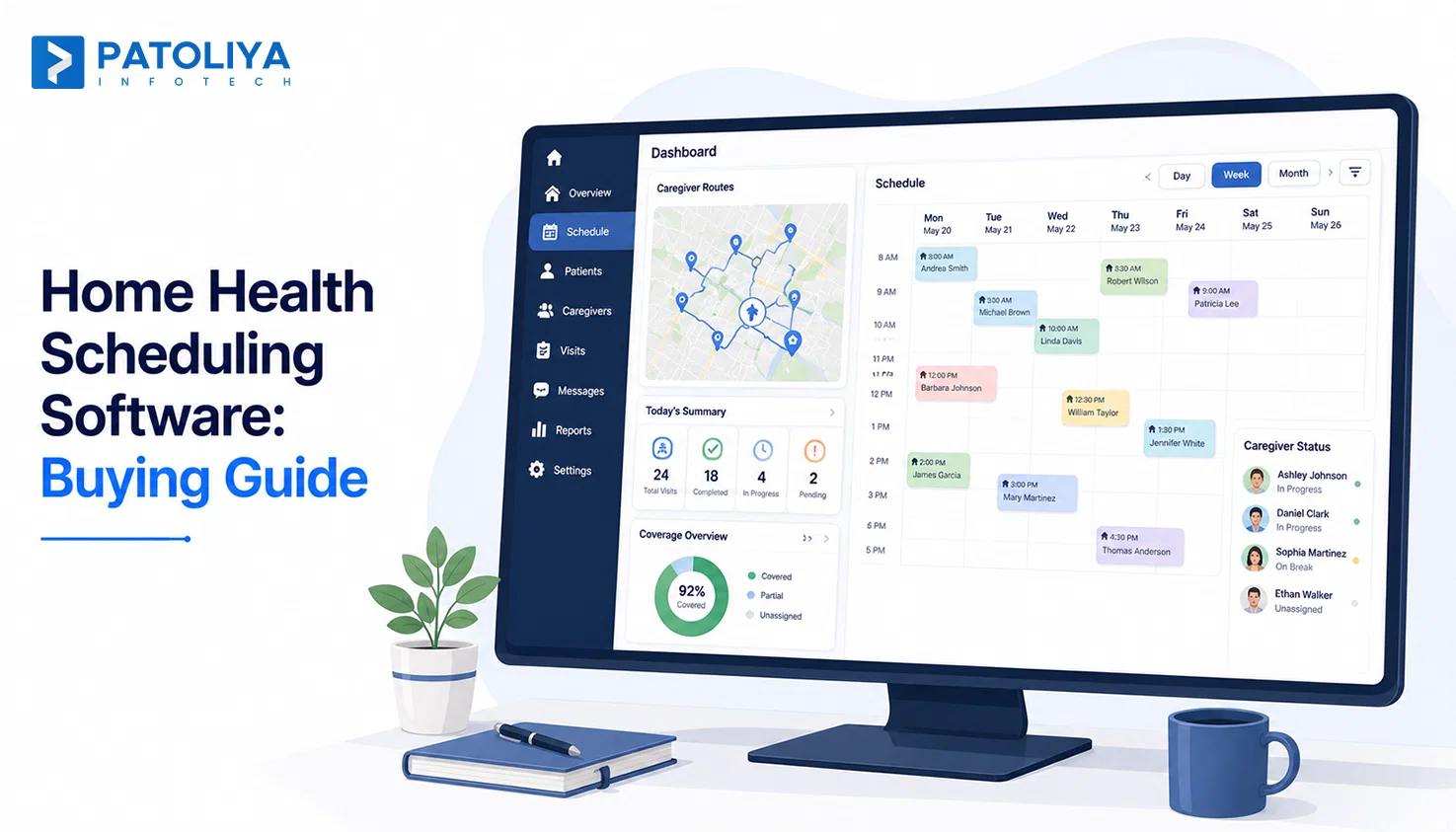
TL;DR: Missed visits cost agencies money every week. Home Health Scheduling Software closes coverage gaps, optimizes caregiver routes, supports EVV compliance, and connects verified visits to billing for cleaner claims and stronger revenue.
Home health and hospice teams manage shifting patient needs, caregiver availability, and payer rules every single day. A missed visit is never a small scheduling error. It becomes a compliance risk, a revenue gap, and a patient safety concern at once.
Agencies treating scheduling as a side task lose capacity they never see on a report. Home Health Scheduling Software solves this by connecting visit assignment, route planning, and documentation into one working system.
This guide explores what separates basic scheduling tools from built to protect coverage, compliance, and revenue together. The right choice shapes staffing decisions for years to come.
What Makes Home Health and Hospice Scheduling Different?
Home health and hospice scheduling carry different clinical rules, visit patterns, and compliance loads than any generic workforce tool. Home Health Scheduling Software built for one workflow rarely fits the other cleanly.
Home Health Scheduling Requirements
Medicare home health requirements include rules around covered services and physician certification, making physician orders and visit frequency important considerations when scheduling home health care. Home Health Scheduling Software must match caregiver skill to visit type automatically, since a wound care visit and a therapy visit demand separate credentials entirely.
Hospice Scheduling Requirements
Medicare hospice requirements shape how hospice organizations structure and document patient care, while scheduling must adapt to changing patient needs and continuity of care. Visit frequency shifts fast as a patient declines, so Home Health Scheduling Software needs same day reassignment while protecting caregiver continuity for the family.
How Scheduling Affects Workforce Capacity and Patient Coverage
Poor routing quietly eats staff hours agencies never bill for, making healthcare workforce management software important for controlling caregiver capacity and utilization. Every unplanned gap between visits is paid time with zero patient contact happening.
Clinician Utilization and Travel Time
Drive time between visits often equals actual visit time across rural coverage areas. Smart clustering inside Software groups visits by zone and sequences them by proximity automatically.
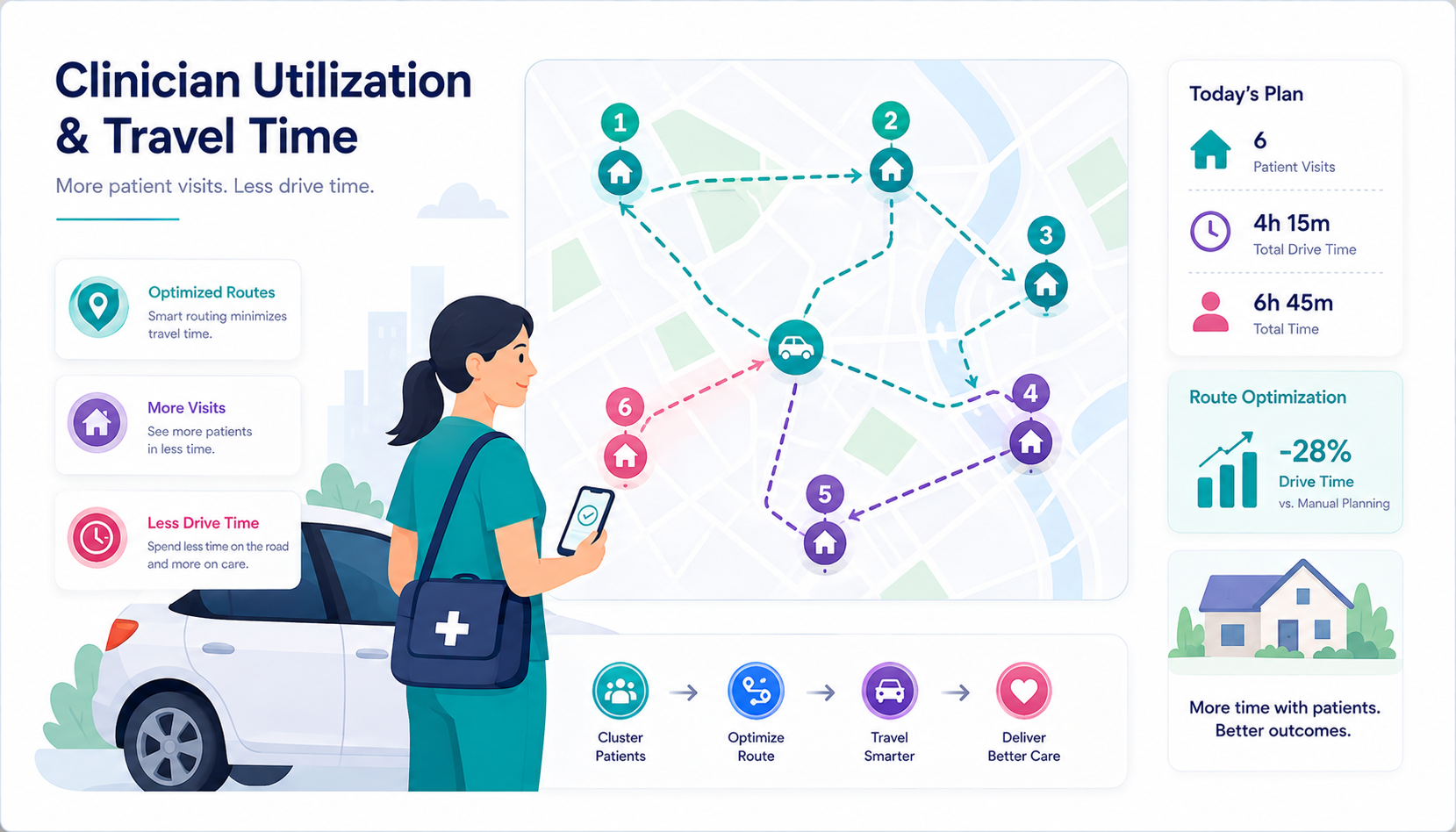
Agencies running manual routing report significantly more windshield time per clinician daily. Home Health Scheduling Software with built-in zone logic recovers those hours automatically.
Schedule Changes, Callouts, and Patient Coverage
Last-minute callouts happen constantly in this industry, every single week. Automated backfill inside Home Health Scheduling Software matches an open visit to the nearest qualified caregiver within minutes.
Coverage gaps left open too long often turn into missed visit reports agencies must explain to payers directly.
What Home Health Scheduling Software Should Automate
Home Health Visit Scheduling
Home health visit scheduling should match orders, frequency, and caregiver credentials automatically without manual cross checking.
For instance, a diabetic wound visit should only populate caregivers certified for wound management, filtering out the rest of the roster. Manual matching invites errors that surface weeks later during audits.
Caregiver Route Optimization
Caregiver route optimization sequences visits by location and time window, cutting drive time between stops significantly.
For instance, A caregiver with six visits across one zip code should see a tight loop, never a zigzag across the county. Home Health Scheduling Software with this feature recovers more billable hours per week than almost any other automation.
Recurring Visits and Schedule Management
Recurring visit patterns should renew automatically based on the care plan, without weekly manual rebuilding. Home Health Scheduling Software carries frequency rules forward until an order changes.
This frees coordinators from repetitive entry every Monday. For instance, when a hospice patient moves to twice-weekly visits, one update adjusts the entire schedule.
Real Time Rescheduling and Exception Management
When a caregiver calls out at 7 am, Home Health Scheduling Software should flag every affected patient visit immediately, before the office even opens. Healthcare workflow automation gives coordinators a live view of every scheduling gap, ranked by patient acuity and urgency, while enabling faster reassignment.
A high acuity wound patient bumps ahead of a routine check-in automatically. This is the core value coordinators expect from Software during a chaotic morning.
Electronic Visit Verification
Electronic visit verification confirms visit time, location, and service type at the point of care directly. Electronic Visit Verification requirements apply to Medicaid personal care and home health services, making EVV a critical consideration when evaluating scheduling software.
Home Health Scheduling Software that fails EVV compliance creates direct billing exposure. A caregiver checking in from a driveway, for example, should trigger an automatic flag right away
Connecting Scheduling With Care, Compliance, and Billing
EHR and Hospice EHR Integration
- Scheduling and clinical documentation should share one patient record through reliable healthcare data integration, never two disconnected systems requiring duplicate entry.
- A hospital care coordination platform connection lets discharge orders flow directly into electronic health records applications and a new home health schedule automatically.
- Hospice EHR systems need visit notes tied to the same schedule entry, so IDG teams see real-time status.
EVV, Documentation, and Billing
- Every verified visit should generate a billing-ready record automatically inside Home Health Scheduling Software and connect cleanly with medical billing software.
- A system that skips this link creates a growing backlog of unbilled visits sitting in a separate folder somewhere.
- Documentation gaps caught at the schedule level cost far less to fix than gaps caught during a payer audit.
Home Health Billing Compliance and Audit Trails
- Home health billing compliance and healthcare software security depend on a clean, timestamped trail running from order to visit to claim.
- An audit trail inside Home Health Scheduling Software should show who scheduled the visit, who performed it, and when it was verified in one screen.
- Agencies without this trail spend days pulling records manually whenever a payer requests documentation. Home Health Scheduling Software with built-in audit logging removes that scramble entirely.
How to Measure the ROI of Scheduling Software
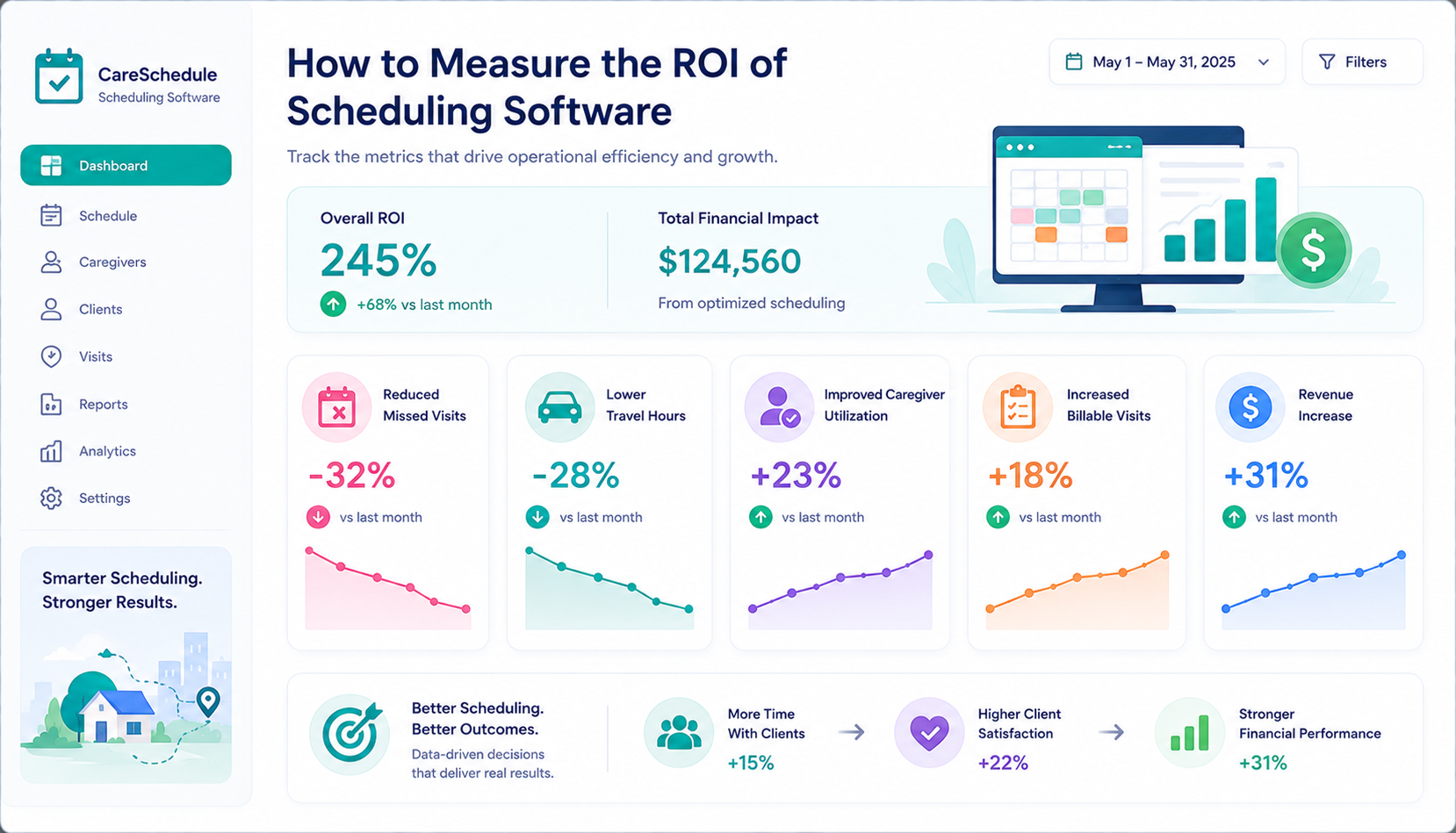
Workforce and Operational Metrics
Track hours lost to travel against hours actually billed per caregiver each week through a healthcare dashboard portal. Home Health Scheduling Software should reduce non-billable travel time by tightening route sequencing across every zone consistently.
Patient Coverage and Revenue Metrics
Missed visit rate and same day fill rate tell the real story of scheduling health. A lower missed visit rate protects revenue that would otherwise get written off or disputed by payers later.
Measuring ROI Before and After Implementation
Simple formula: hours saved per caregiver each week multiplied by hourly rate, multiplied by total caregivers, minus software cost, equals monthly ROI from Home Health Scheduling Software.
|
Metric |
Before |
After |
|
Missed visits monthly |
High, underreported |
Flagged and filled same day |
|
Coordinator hours on phone |
Heavy daily load |
Reduced to exceptions only |
|
Unbilled visit backlog |
Days to weeks |
Same day readiness |
Run this calculation at 90 days, since early weeks still reflect the learning curve. Agencies switching from spreadsheets to Home Health Scheduling Software usually see this formula turn positive within the first full quarter.
Should You Buy, Customize, or Build?
When Off-the-Shelf Software Is Enough
Agencies running one service line with predictable visit patterns rarely need custom development work.
Off-the-shelf Home Health Scheduling Software covers standard workflows, EVV compliance, and basic route planning without added engineering cost. Most agencies at this stage do not need full Home Health Care Management Software yet.
When Customization Makes Sense
Multi-state agencies with unique payer rules or hybrid home health and hospice operations often outgrow rigid templates fast.
Custom software development becomes worthwhile when a standard Home Health Scheduling Software platform forces staff into manual workarounds every single week.
When to Consider Home Health Care Management Software
|
Situation |
Recommended Path |
|
Single service line, standard payer mix. |
Off-the-shelf Home Health Scheduling Software. |
|
Multi-service line, complex compliance. |
Customized configuration. |
|
Enterprise scale, multiple EHR systems. |
Full Home Health Care Management Software. |
A full Home Health Care Management Software build makes sense once scheduling, billing, and clinical documentation need one unified data layer across every branch. Home Health Scheduling Software alone rarely covers that full scope once an agency reaches enterprise scale.
How to Evaluate a Home Health Scheduling Software Vendor
Test Real Scheduling Workflows
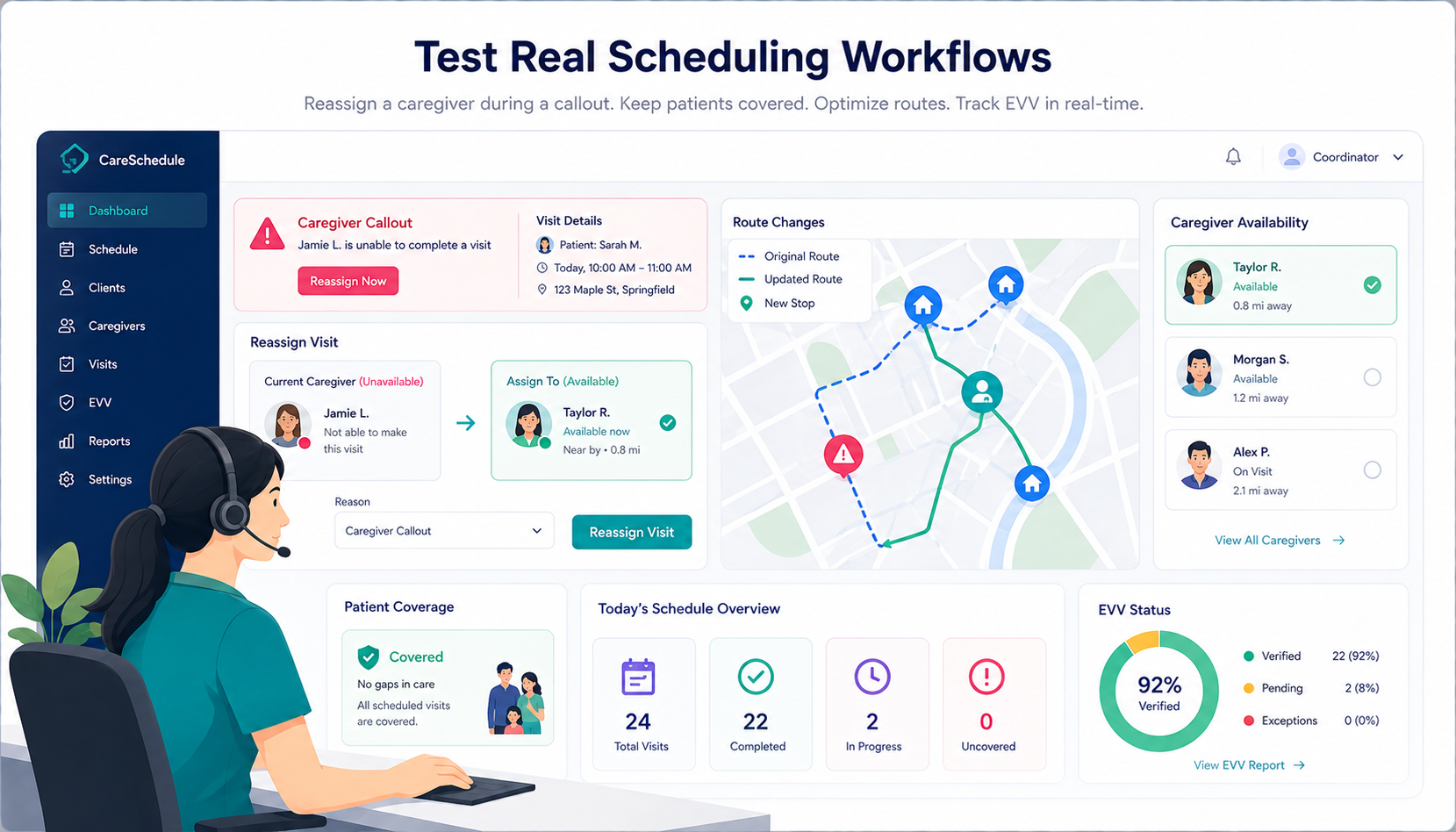
- Ask the vendor to run an actual callout scenario live during the demo, never a scripted walkthrough.
- Watch how many clicks it takes to reassign a visit under real time pressure.
- Confirm EVV compliance works correctly across every state the agency operates in.
Evaluate Integrations and Scalability
- Confirm direct integration with the current EHR and hospital care coordination platform already in use.
- Ask how Home Health Scheduling Software handles growth from one branch to ten branches without a full rebuild.
- Check whether hospice IDG workflows are supported natively inside the platform.
- Confirm the hospital care coordination platform link updates in real time on every referral.
Compare Total Cost of Ownership
- Request pricing that includes training, support, and future updates beyond the license fee alone.
- Compare implementation timeline against staff hours needed to get the team live.
- Ask for references from agencies of similar size and service mix. Pricing structures for Home Health Scheduling Software vary widely between vendors, so get everything in writing.
Choosing the Right Scheduling Strategy
Service Mix: Choose software that supports your specific home health, hospice, or blended care model.
State Footprint: Confirm the platform can handle scheduling and compliance requirements across every state you operate in.
Payer Complexity: Check support for payer-specific rules, authorization limits, and EVV requirements.
Care Coordination: If you use a hospital care coordination platform, test referral and data integrations before signing.
Workflow Fit: Prioritize features that match your daily operations instead of paying for tools your team rarely uses.
How Patoliya Infotech Builds Home Health Scheduling Software for Real Workflows
As a healthcare software development company, Patoliya Infotech builds custom Home Health Scheduling Software and Home Health Care Management Software for agencies that outgrew generic platforms.
- Custom EVV integration that follows state-specific compliance rules.
- Route optimization based on your actual service areas.
- Scheduling, hospice EHR, and billing connected in one system.
Patoliya Infotech has delivered Home Health Scheduling Software that reduces missed visits and unbilled hours for growing agencies steadily. Book a 15 minute call to see how a custom build compares against your current setup today.
Conclusion
Scheduling directly affects revenue, staff efficiency, and patient care. The right Home Health Scheduling Software helps agencies reduce missed visits, manage caregiver capacity, maintain EVV compliance, and keep billing accurate.
Instead of relying on manual schedules and disconnected systems, agencies can build workflows that respond to real-time changes in patient needs and caregiver availability.
When scheduling becomes part of the agency’s core operations, teams spend less time fixing gaps and more time delivering care. The result is better resource utilization, cleaner claims, stronger margins, and a more reliable patient experience.
FAQs:
Hospice scheduling shifts daily as patient condition changes, while home health follows fixed order frequency closely. Home Health Scheduling Software built only for home health rarely handles hospice IDG visit patterns well.
Yes, but only when the vendor carefully confirms state-specific EVV mapping during evaluation. Some platforms handle one state well and struggle once an agency expands into a second Medicaid jurisdiction.
Yes, tighter routing directly lowers total miles driven per caregiver each day. Agencies typically see this reflected in lower mileage reimbursement within the first billing cycle after rollout.
The system flags the missed visit immediately and routes it to the nearest available caregiver fast. Documentation of the gap and resolution protects the agency during a payer audit review.
It becomes necessary once referral volume from hospitals grows past a handful weekly. Manual referral intake at that volume creates delays that a connected hospital care coordination platform removes entirely.
Implementation typically ranges from a few weeks for standard configurations to a few months for custom builds. Timeline depends on integration complexity with existing EHR and billing systems already in place.