What Is a Product Roadmap? Types, Tools, and ROI Explained
Almost all businesses have their backlog, sprint board, and release calendar in place. What breaks product development is not a lack of tools. It is the absence of a product roadmap that actually governs decisions.
Teams that confuse an agile product roadmap with a feature wish list pay for it in rework cycles and misaligned launches. According to vFunction, a survey revealed that for more than 50% of companies, technical debt exceeded 25% of the total technology budget in 2024. That debt accumulates when product roadmap planning is absent.
This blog covers types, build process, feature prioritization frameworks, product roadmap software pricing, ROI metrics, execution risks, and vendor selection, so decision-makers can move from reactive development to strategic product execution.
What Is a Product Roadmap and What It Is Not
A product roadmap is a strategic communication tool that connects product vision to execution timelines across leadership, engineering, and sales. It answers why something is being built, what outcome is expected, and what sequence matters most.
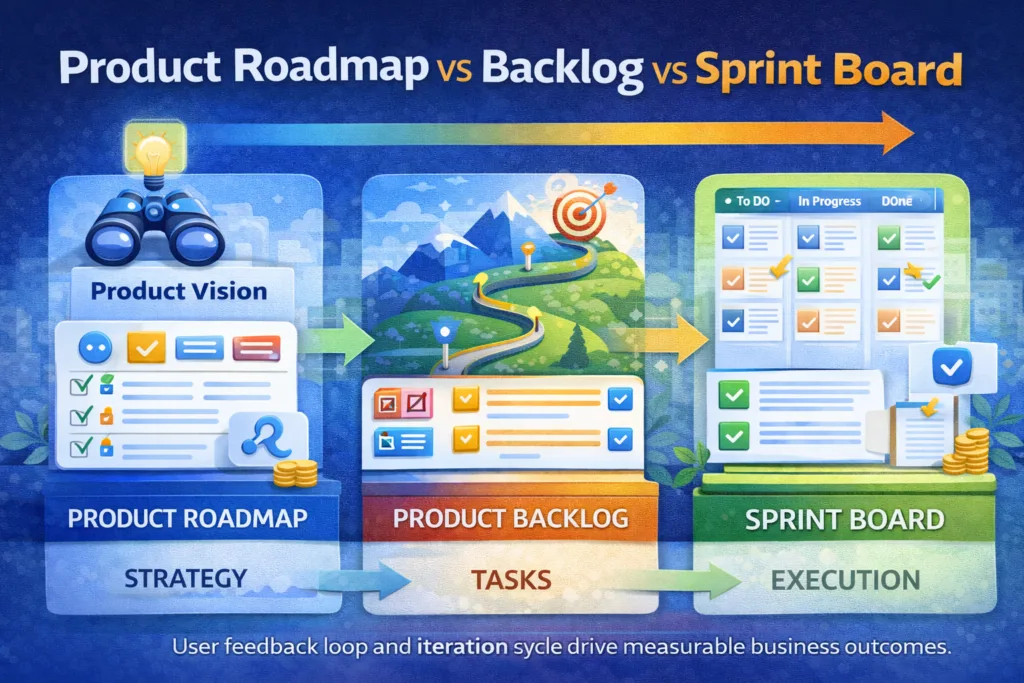
It helps teams decide early whether the product is worth building. Most teams already have a sprint board, a project plan, and a product backlog. What they are missing is a single source of truth that governs which work actually moves the business forward. The CPO uses it to defend priorities. The CTO uses it to anticipate architecture decisions. Sales uses it to set honest customer expectations. Without a current and agreed-upon agile product roadmap, stakeholder alignment falls apart.
Types of Product Roadmaps
The format of your product planning shapes how stakeholders engage with it and how much flexibility your team retains.
Feature-Based Roadmap
- Built around specific deliverables tied to dates. This Feature prioritization works well for coordinated multi-team releases with external commitments.
- The risk is that sales teams treat every date on the product roadmap template as a customer commitment. When a date moves, the conversation shifts from what changed to why we should trust the next date. Teams using this format need a documented change communication process.
Outcome-Based (OKR-Linked) Roadmap
- Every product template ties to a measurable business objective, such as OKRs, retention, conversion, or revenue per user.
- This format works because it separates the decision of what business outcome to move from the implementation detail of how to move it. Growing adoption in B2B SaaS, where product-led growth demands responsiveness to usage data over engineering schedules.
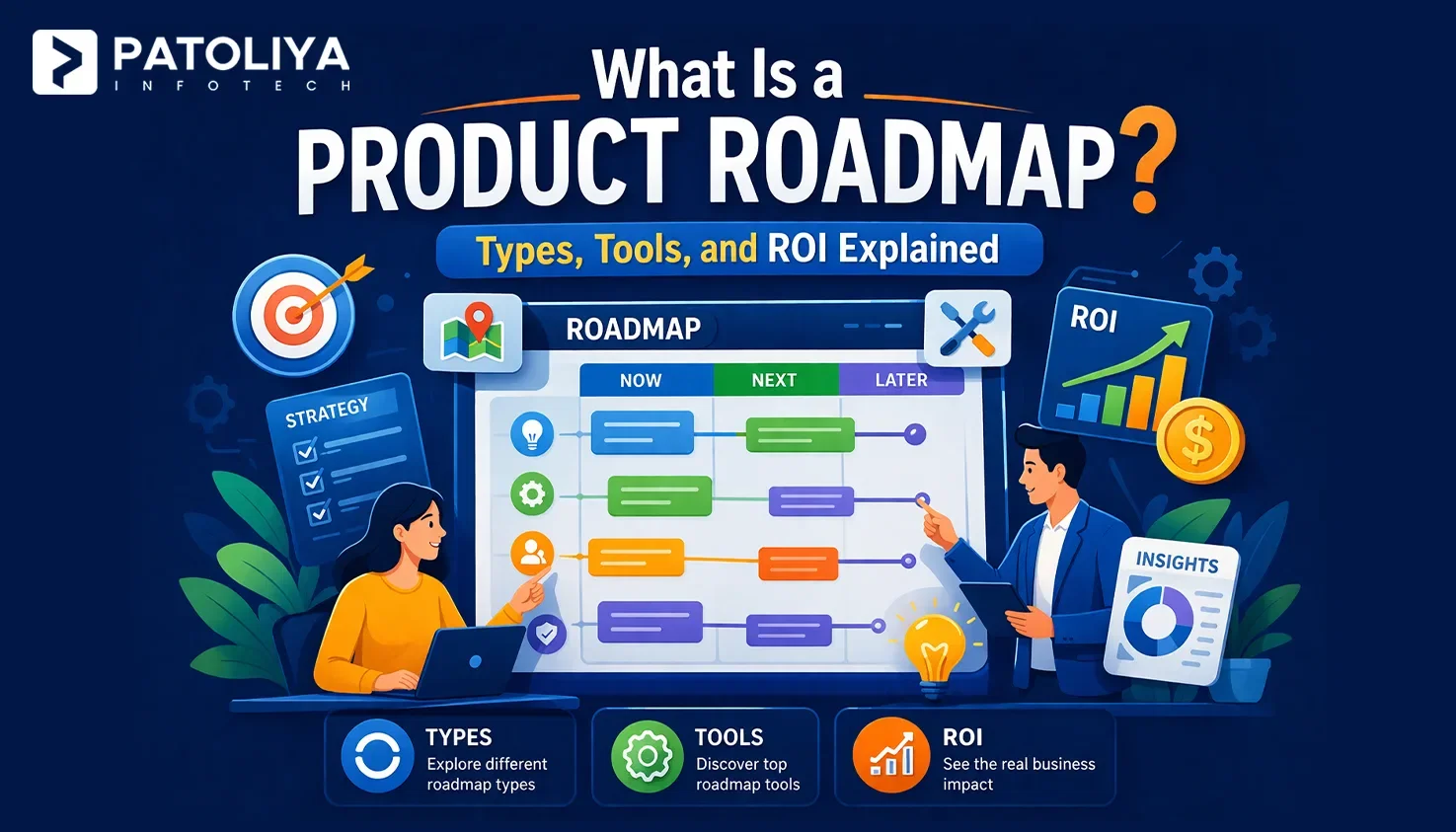
Now-Next-Later Roadmap
- The now-next-later framework replaces dates with time-horizon buckets. No fixed release dates.
- Most effective in fast-moving markets where quarterly pivots are normal. Stakeholder risk is low because no specific feature prioritization is ever promised on a date.
How to Build a Product Roadmap in 5 Steps
A durable product roadmap tools requires grounding in vision, customer signals, and honest sequencing, in that exact order.
Step 1: Anchor to Product Vision
Product vision must precede roadmap creation. A vague vision produces a reactive product roadmap software that reflects whoever had the most input that week.
Step 2: Gather and Validate Input Sources
Customer support tickets, sales pipeline data, churn interviews, and behavioral analytics carry a signal that internal opinion does not. Skipping validation produces feature factories where output looks high, but business outcomes do not follow.
Step 3: Define Prioritization Criteria
Score every product template against business impact, development effort, and strategic alignment. This replaces decisions made by seniority or urgency with a visible, challengeable framework
Step 4: Assign Time Horizons, Not Rigid Dates
Commit to themes and outcomes before committing to release dates. Release planning improves when dates are sharpened through sprints rather than being fixed at planning time.
Step 5: Build a Communication Cadence
Executives care about which business metrics are moving and by when. Engineering needs to know what ships in what order and why the sequence matters. Sprint planning sessions stay grounded when teams work from a current agile product roadmap, reviewed monthly at the tactical level and quarterly at the strategic level.
Feature Prioritization Frameworks That High-Performance Teams Use
The right feature prioritization framework turns subjective debates into scored, defensible decisions that the whole team can see and challenge.
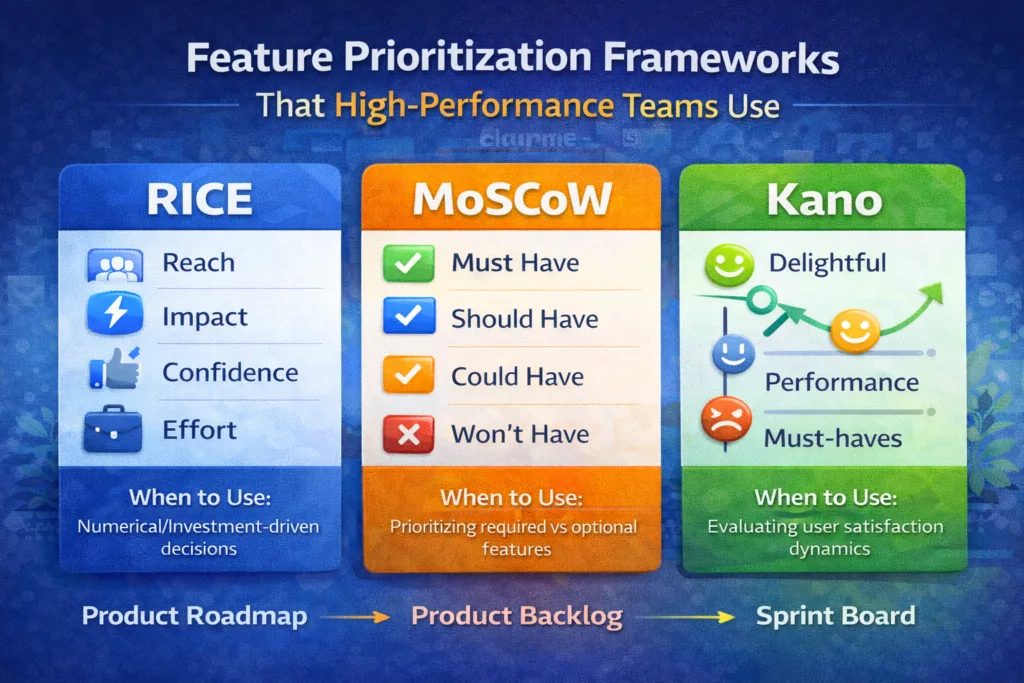
RICE Scoring (Reach, Impact, Confidence, Effort)
RICE quantifies Reach, Impact, Confidence, and Effort into a single score per product roadmap software. It surfaces disagreements before they become political conflicts. When two PMs argue about sequencing, RICE turns the argument into a data review.
MoSCoW Method
MoSCoW segments every product roadmap tool into Must-have, Should-have, Could-have, and Won’t-have. Most effective during release planning under fixed capacity. Won’t-have is as important as Must-have because it explicitly documents what was deprioritized, stopping stakeholders from repeatedly re-raising the same requests.
Kano Model
The Kano Model maps feature prioritization decisions to customer satisfaction outcomes. The model treats satisfaction as three distinct problems. Basics are a trust requirement. Performance features are a growth lever. Delighters are a retention multiplier that standard prioritization frameworks rarely surface on their own. Most agile product roadmap teams skip Kano and then wonder why shipping ten features still produces flat retention numbers.
Now-Next-Later vs Feature-Based vs Outcome-Based: Side-by-Side Comparison
Your product roadmap template should align with your organization’s risk tolerance and market velocity. The table below compares all three across dimensions that matter to decision-makers selecting a structure for their next roadmap planning cycle.
| Format | Best For | Flexibility | Stakeholder Risk | Recommended For |
| Feature-Based | Multi-team coordination | Low | High | Enterprise, large releases |
| Now-Next-Later | Fast-changing markets | High | Low | Startups, PLG companies |
| Outcome-Based (OKR) | Revenue-focused PMs | Medium | Low | B2B SaaS, growth-stage |
The stakeholder risk column is what most product roadmap software guides skip. Feature-based formats carry the highest risk because any named feature prioritization with a date becomes an external commitment, even when no promise was made. Outcome-based and now-next-later formats keep stakeholders aligned on business direction without locking the team into a specific feature prioritization or release date.
If you are constantly overpromising and underdelivering, that can become a problem. It really comes down to communication between engineers, product managers, and the people building the product, according to Juan Agudo, VP of Product, Product School.
Working with a product engineering partner who understands your product roadmap format reduces planning overhead significantly. Talk to Patoliya Infotech’s product team to evaluate your current product roadmap structure.
Product Roadmap Software: Pricing Breakdown (2025 to 26 Data)
Licensing costs for product roadmap software range from $0 to over $400 per maker per month at the enterprise tier. Picking the wrong product roadmap tool costs both budget and team adoption speed.
Tool Pricing Snapshot
The table reflects current 2025 and 26 pricing for the most-evaluated product roadmap software options.
| Tool | Entry Price | Best For | Notable Weakness |
| Aha! Roadmaps | $74 per user per month | Strategic planning, portfolios | Steep learning curve |
| Productboard | $19 per maker per month (Essentials) | Customer-driven prioritization | AI features cost extra |
| Jira Product Discovery | $10 per creator per month | Atlassian-stack teams | Limited standalone roadmapping |
| ProdPad | $20 per editor per month | Lean teams, outcome focus | Smaller integration library |
| Canny | $79 per month | Small teams, feedback-first | No deep portfolio view |
Jira Product Discovery is the most common entry point for Atlassian teams, but it is not a replacement for a dedicated product roadmap tool when portfolio visibility is required. ProdPad is the only option including AI-assisted roadmap planning at base pricing.
ROI and Business Impact of a Structured Product Roadmap
A structured agile product roadmap is the variable determining whether engineering output translates to revenue. Organizations that align technical work with business strategy report 34% faster time to market for new capabilities, as per GainHQ, 2026.
Technical debt is the clearest signal of a broken product roadmap software discipline. A 2024 survey of technology executives found that for more than 50% of companies, technical debt exceeds 25% of total tech budget, according to vFunction, 2024. That debt is untracked on most roadmap templates and consumes sprint capacity invisibly until it forces unplanned work.
How to Measure Product Roadmap ROI
Track four signals: release cycle velocity, stakeholder alignment score, rework rate, and feature adoption rate post-launch. Tie these to ARPU growth, Net Revenue Retention, and time to value for new customers.
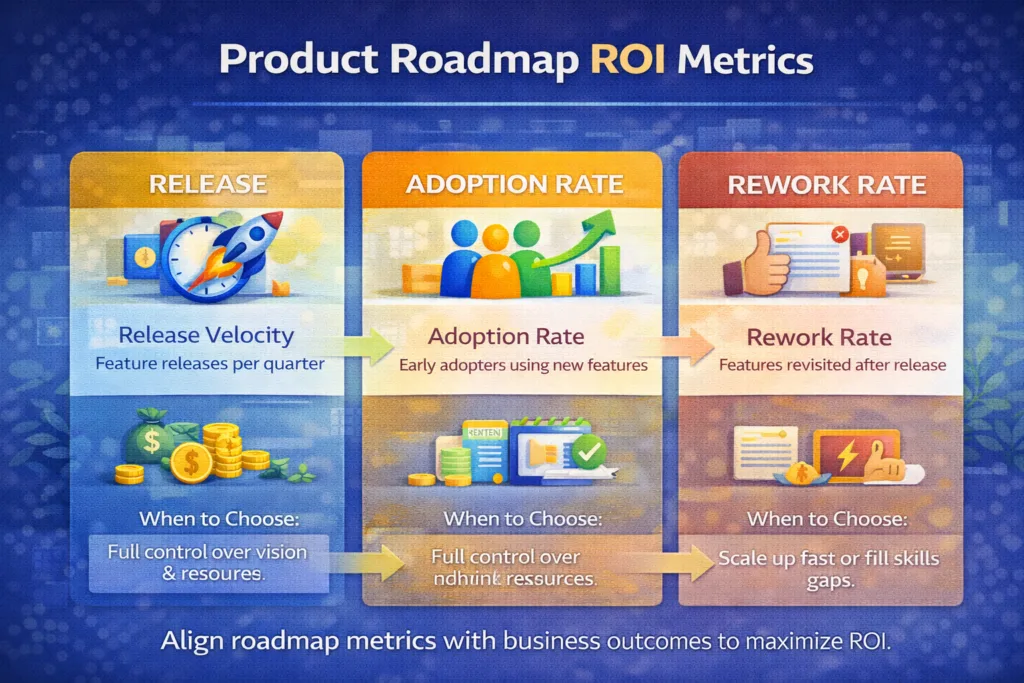
Backlog management and product lifecycle management both improve when agile product roadmap cycles include retrospective reviews. These reviews assess whether this quarter’s roadmap choices moved the committed business metrics.
Common Risks and Challenges in Product Roadmap Execution
Most agile product roadmap failures come from the same repeatable habits, not from market unpredictability.
Over-committing to fixed dates sets false expectations for sales and removes PM flexibility when engineering uncovers unscoped dependencies. A roadmap template that reads like a release calendar becomes a liability the moment a date slips.
Treating the product roadmap software as a static document is the second failure mode. Quarterly strategic reviews and monthly tactical updates are the minimum. An outdated roadmap actively misleads the teams working against it.
Stakeholder attachment to specific features is a downstream effect of feature-based formats shared without expectation management. Shift to outcome framing on the product roadmap tools to break this pattern.
Poor version control quietly destroys agile product roadmap integrity. Engineering working from an outdated version during sprint planning builds against a reality that no longer exists.
Vendor Selection Checklist: What to Evaluate Before Choosing a Product Roadmap Tool
- Does the product roadmap software support multiple views, including Gantt, now-next-later, and Kanban?
- Does it integrate natively with Jira, Slack, and Salesforce?
- Are AI features included in base pricing or priced as add-ons?
- Can contributors and viewers access without consuming paid seats?
- What is the real implementation timeline, hours, or weeks?
- Does it support portfolio-level product roadmap planning across multiple products?
- How granular is the permission structure?
- Is there a dedicated customer success resource at your plan tier?
Top Product Roadmap Tools in 2025 Worth Evaluating
Aha!: strongest for strategic planning and multi-product portfolios.
Productboard: best for customer feedback centralization.
Jira Product Discovery: best for Atlassian-native engineering teams.
ProdPad: best for lean and outcome-focused product teams with AI at base pricing.
Canny: best for early-stage teams prioritizing simplicity and cost.
Monday dev: best for cross-functional teams needing visual workflow automation.
The right product roadmap tool is the one your team will actually keep current.
Aha! Roadmaps lead for strategic planning and multi-product portfolios. Productboard leads for customer feedback centralization. Jira Product Discovery is the natural choice for Atlassian-native teams. ProdPad fits lean, outcome-focused teams with AI at base pricing.
Canny serves early-stage teams prioritizing simplicity. It helps cross-functional teams manage agile product roadmaps with clear visibility and automated workflows. Also, no single product roadmap template wins across all team sizes and growth stages.
Why Patoliya Infotech Is a Strong Choice for Product Roadmap Execution
We cover the full product lifecycle from product roadmap definition and ideation workshops through architecture, build, and post-launch support, eliminating multi-vendor coordination overhead.
What differentiates our approach in product roadmap execution:
- Cross-industry experience across fintech, healthcare, logistics, and eCommerce reduces domain-specific risk during roadmap execution.
- Short sprint cycles give C-level buyers continuous visibility at every product roadmap stage.
- Client reviews consistently cite on-time delivery and proactive communication, both direct outcomes of disciplined product roadmap planning.
For teams that need a partner to both shape and build, let’s start with a scoping conversation.
Conclusion
An agile product roadmap is not a planning ritual. It is the structural layer that separates teams building with intention from teams building by whoever spoke loudest last quarter. Technical debt, misaligned sprints, and failed launches are all downstream of poor roadmap discipline.
The product roadmap planning decisions made now will determine what engineering ships next quarter and whether that work moves business metrics or generates rework.
If your product roadmap software needs an honest evaluation or a complete build-out, connect with Patoliya Infotech’s product team and schedule a free review.
FAQs:
A product roadmap is a strategic document that aligns teams on what to build, why it matters, and in what sequence. It connects product vision to development execution. Unlike a backlog or sprint board, a product roadmap tool is a decision and alignment tool used across leadership, engineering, and sales.
A product backlog lists tasks. An agile product roadmap communicates strategic direction and expected business outcomes. The backlog is an engineering execution tool. The product roadmap template is a leadership alignment tool that governs which products ever reach the backlog in the first place.
Outcome-based and now-next-later framework formats work best for B2B SaaS. Both reduce stakeholder attachment to fixed features and keep the product roadmap tool responsive to market shifts. Feature-based formats create date-commitment problems that damage SaaS renewal and expansion cycles.
Product roadmap software pricing ranges from $10/creator per month for Jira Product Discovery to $74/user per month for Aha! Roadmaps. Enterprise tiers for platforms like Productboard reach $300 to $400 per maker per month. Factor in AI add-on costs before comparing headline pricing.
Strategic product roadmap template reviews should happen quarterly. Tactical updates reflecting sprint outcomes, customer feedback, and feature prioritization changes should happen monthly. An outdated product roadmap tool is worse than no roadmap because teams build against a reality that no longer exists.
The most damaging mistakes in product roadmap planning are over-committing to specific dates, treating the product roadmap tool as static, ignoring technical debt allocation, and building without tying products to customer outcomes or measurable business metrics. All four are preventable with the right process and a clear communication cadence.