Healthcare Virtual Assistant: Features, ROI & Use Cases
 By Hitesh SUpdated on: 08/27/2611 min read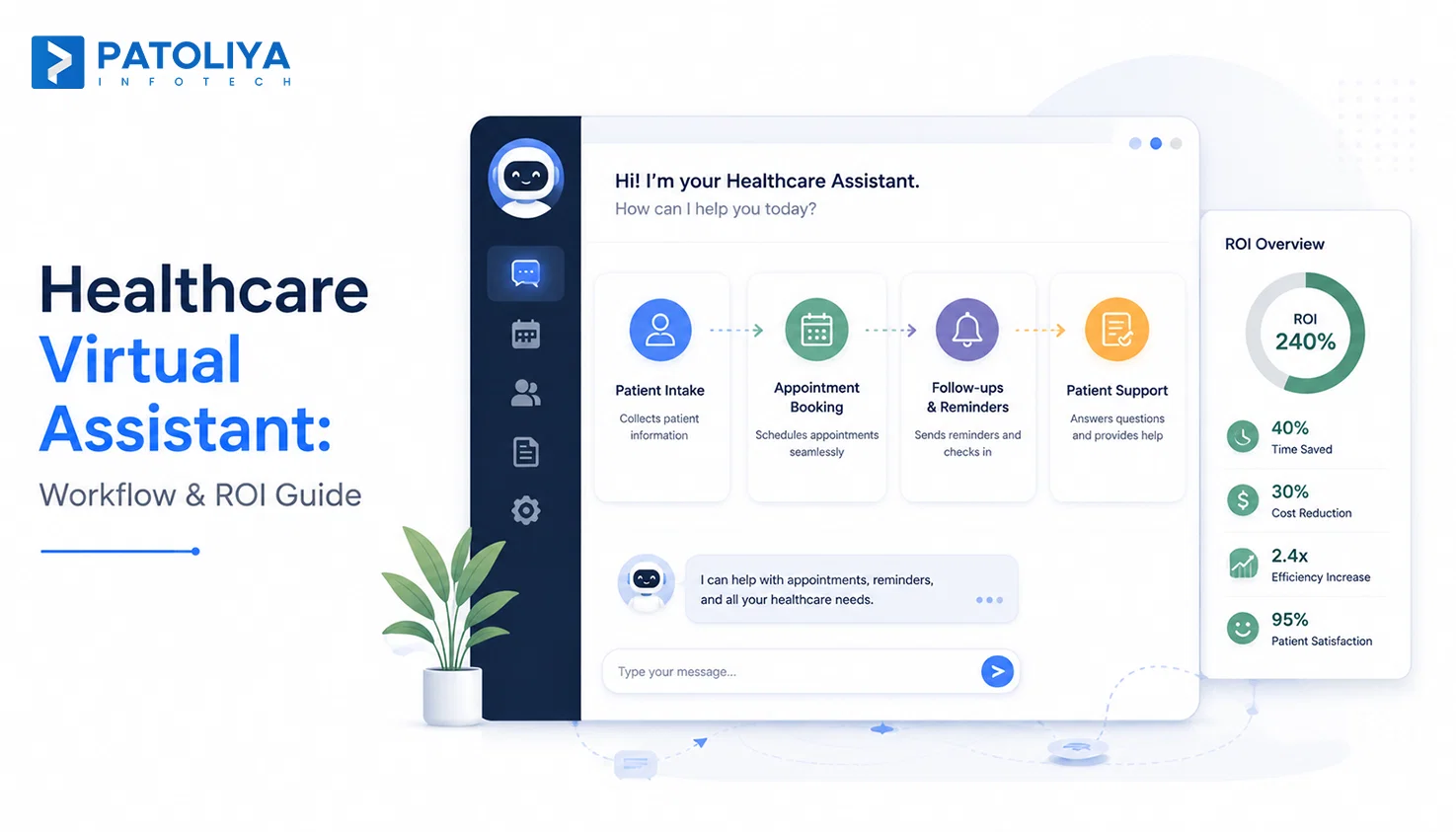
TLDR: A real Healthcare Virtual Assistant does more than answer questions. It books appointments, completes intake, and sends follow-ups, closing full workflows instead of just responding to patient messages.
Healthcare organizations are moving past FAQ bots because answering a question doesn't save staff a single hour. A basic bot tells a patient the office closes at five. A real Healthcare Virtual Assistant books their visit, confirms insurance, and follows up after. That gap between answering and completing is where most deployments quietly fail.
This guide helps leaders evaluate what a Healthcare Virtual Assistant should own across the patient journey, where a patient engagement chatbot adds real workflow value, and where staff must stay involved.
Where Healthcare Organizations Lose Administrative Capacity
Administrative capacity disappears in three places: scheduling calls staff repeat all day, patient questions answered the same way hundreds of times, and intake work nobody automated.
Patient Access and Scheduling Bottlenecks
Front desk teams spend hours on calls that never touch clinical care. Rescheduling requests, insurance checks, and appointment confirmations pile up during peak hours.
Real patient needs end up waiting on hold or landing in voicemail, which pushes access delays further out and frustrates patients who called for something urgent.
Repetitive Patient Communication
The same handful of questions repeat constantly across every shift. Office hours, parking directions, visit prep instructions, and billing questions consume staff time that should go toward patients who need actual help, not directions to the building or a copy of last week's invoice.
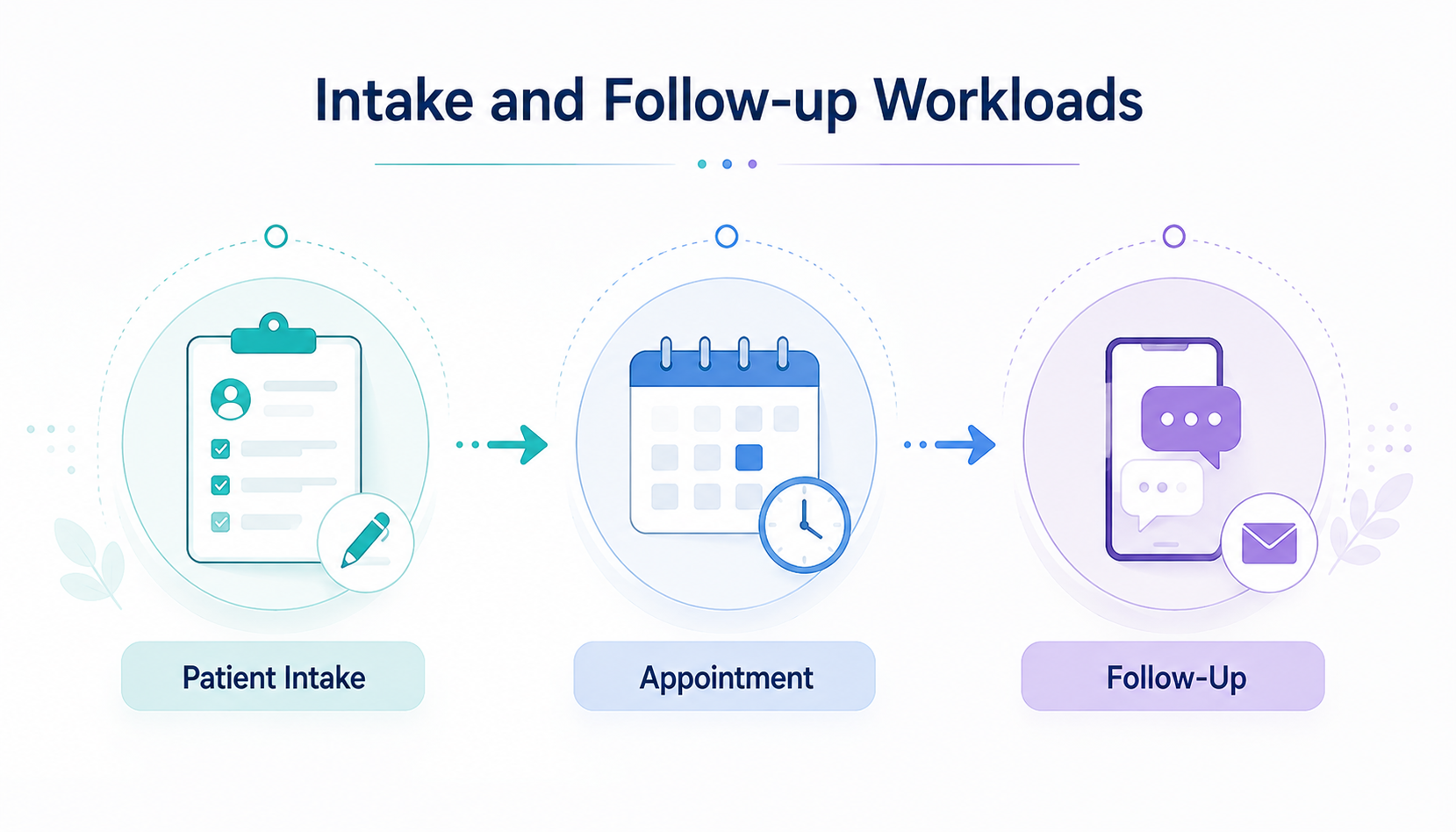
Intake and Follow-Up Workloads
Manual intake forms and post-visit check-ins get skipped once staff run out of hours in a shift. A healthcare NLP engine built into a Healthcare Virtual Assistant can capture this data conversationally, without adding a single new hire to the front desk team. Follow-up calls that used to slip through the cracks get sent automatically instead.
Which Patient Interactions Should Be Automated First
Healthcare workflow automation should start with high-volume, low-complexity interactions where a Healthcare Virtual Assistant can finish the task fully, freeing staff time for work that genuinely needs a person.
- Hours, location, and insurance acceptance questions.
- Prescription refill status checks.
- Billing and payment plan inquiries.
- Routine patient FAQ automation for visit prep and policy questions.
High-Volume Administrative Requests
These requests carry zero clinical risk and repeat constantly, which makes them the easiest starting point for any automation rollout. A conversational AI healthcare system handling these first builds staff trust quickly, since results show up within the first week.
Appointment and Registration Workflows
- An appointment booking chatbot handling scheduling, rescheduling, and cancellations.
- Insurance eligibility verification before the visit.
- New patient registration and digital form completion.
- Wait list management when slots open up.
This category touches the largest share of front desk call volume in most outpatient practices, which is exactly why it delivers the fastest measurable time savings.
Post-Visit and Care Coordination Tasks
- Discharge instruction delivery and confirmation.
- Medication reminder follow-ups on a set schedule.
- Satisfaction surveys and outcome check-ins.
- Referral status updates between departments.
These three categories carry most of the repetitive workload inside a typical healthcare organization. Getting them automated correctly builds the confidence needed to expand a Healthcare Virtual Assistant into harder parts of the patient journey.
What a Real Healthcare Virtual Assistant Should Own Across the Patient Journey
A complete Healthcare Virtual Assistant owns tasks before, during, and after the visit, not just the moment a patient types a question into a chat window.
Before the Appointment
The assistant should handle scheduling, insurance verification, pre-visit forms, and reminders without staff touching a single step.
For instance, a patient booking a follow-up visit can get insurance eligibility confirmed and a digital intake form sent within seconds. This alone cuts front desk call volume before the appointment day even arrives, and it gives the practice accurate insurance data before the patient walks through the door.
During Intake and Care Navigation
Once a patient arrives, a patient engagement chatbot can collect symptom history, update medication lists, and route the patient to the correct department. A symptom checker chatbot function can flag urgency level before a nurse reviews the chart, which shortens triage time on lower-acuity visits.
For instance, a patient reporting mild cold symptoms gets routed to a quick visit slot, while flagged red-flag symptoms trigger an immediate clinical alert.
After the Visit
Post-visit, the assistant should confirm the patient understood discharge instructions, schedule follow-up labs, and send medication reminders on a defined cadence.
A diabetes management program running automated check-ins can catch a missed medication refill days earlier than a manual call list would, which directly reduces avoidable readmissions and keeps care teams informed between visits.
This full-journey ownership is what separates a working Healthcare Virtual Assistant from a bot that only answers static questions. Coverage across all three phases, not answer accuracy alone, is what actually reduces staff workload across a busy healthcare organization.
Where Human Staff Should Stay Involved
Automation should never replace clinical decision-making. A Healthcare Virtual Assistant handles logistics and information, while staff handles judgment calls that carry real risk.
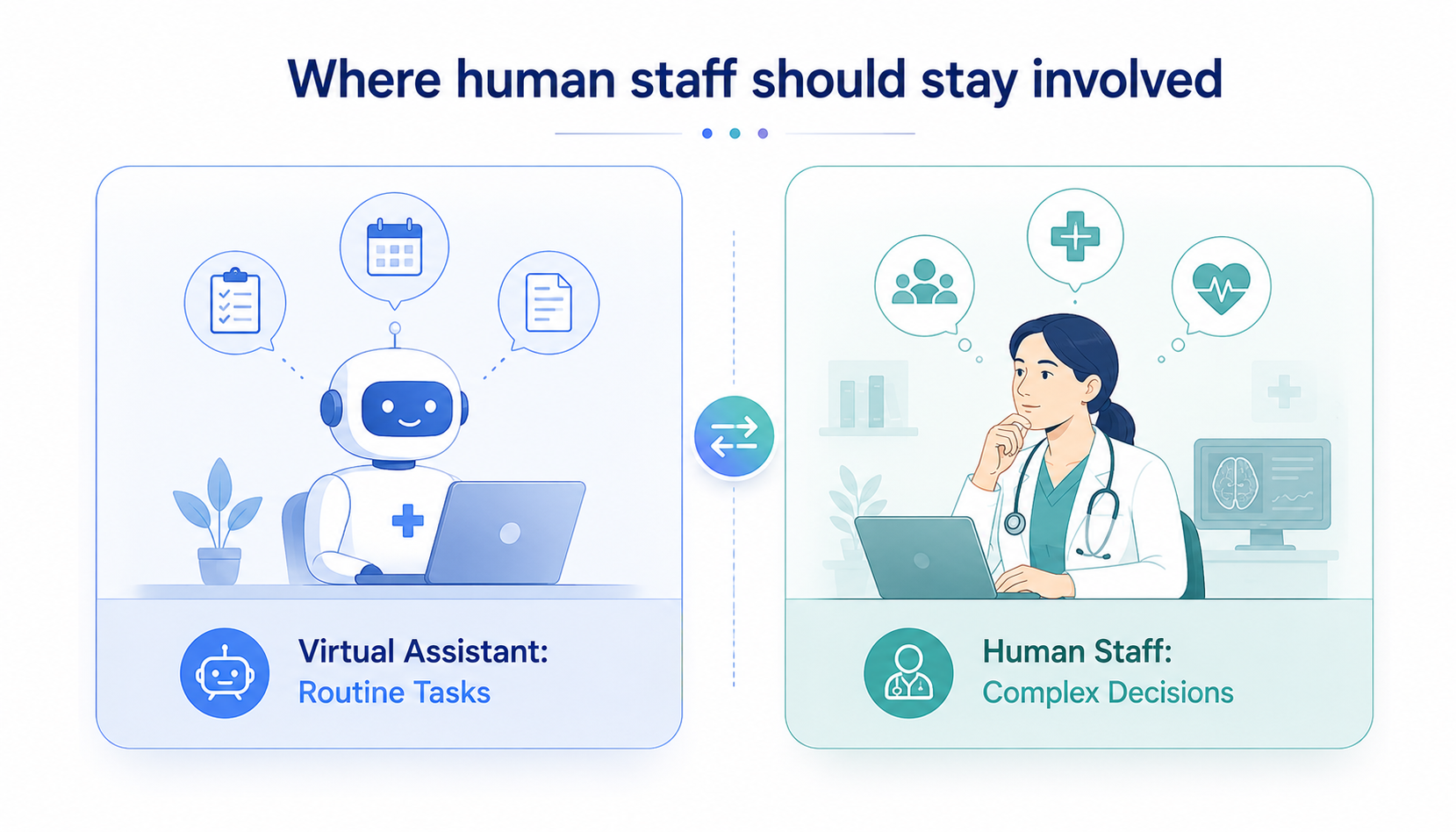
Clinical Judgments and Escalations
Any interaction involving diagnosis, medication changes, or symptom severity above a defined threshold needs to route to a clinician immediately, with full context handed off rather than a generic transfer message. This handoff speed matters as much as the automation itself.
Complex Patient Situations
Patients managing multiple chronic conditions, language barriers, or emotional distress need a human on the line. The assistant's job is recognizing that handoff point quickly and routing with context, not attempting to resolve the situation alone.
Why Healthcare Virtual Assistant Projects Fail
Most Healthcare Virtual Assistant failures trace back to three causes: automating a broken process, weak system integration, and no plan for staff adoption after launch, which is why artificial intelligence consulting services should assess the workflow and architecture before implementation.
Automating Broken Processes
- Digitizing a confusing scheduling workflow just makes the confusion move faster.
- Teams skip mapping the actual process before building the bot.
- Root causes stay unresolved and resurface later as patient complaints.
Weak EHR and Scheduling Integration
- An assistant that can't write back to electronic health records applications creates duplicate manual work.
- Real-time schedule syncing failures cause double bookings.
- Healthcare NLP without system access can understand a request but never complete it.
Lack of Adoption and Governance
- No clear internal owner for ongoing tuning and monitoring.
- Staff never trained on when to trust automated outputs.
- No feedback loop to fix requests the assistant keeps misunderstanding.
Fixing these three issues before launch prevents most rollout problems healthcare organizations run into. The workflows below show where a properly integrated assistant pays for itself fastest.
The Healthcare Workflows That Deliver ROI Fastest
The fastest ROI comes from scheduling, intake, and follow-up workflows, where a Healthcare Virtual Assistant replaces repetitive manual work with measurable time savings per interaction.
Patient Access and Scheduling
An appointment booking chatbot cuts phone volume for routine scheduling, freeing front desk staff for walk-ins and complex cases that genuinely need a person handling them.
Intake and Documentation
Conversational intake powered by healthcare NLP reduces paper form errors and shortens check-in time, giving clinicians cleaner data before the patient even sits down in the exam room.
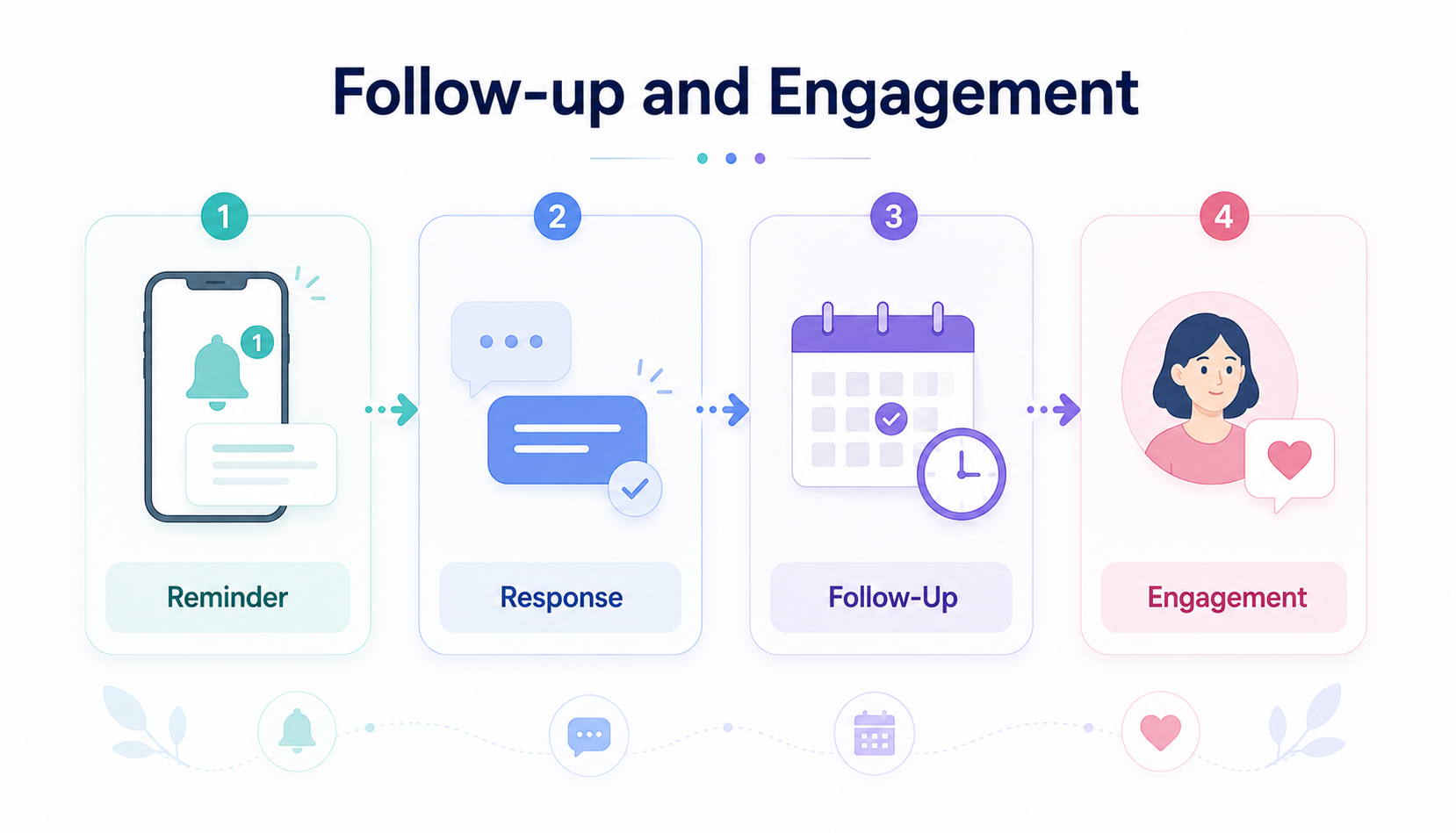
Follow-Up and Engagement
A patient engagement chatbot running automated check-ins catches missed medications and no-show risk earlier than a manual call list ever could manage on its own.
|
Workflow |
Staff Time Saved |
Typical Impact |
|
Scheduling and Access |
High |
Fewer calls, faster booking |
|
Intake and Documentation |
Medium |
Cleaner data, shorter check-in |
|
Follow-Up and Engagement |
Medium |
Lower no-show and readmission risk |
These three workflows consistently show the fastest payback because they carry the highest interaction volume and the lowest clinical complexity in a typical practice.
When a Healthcare Virtual Assistant Is the Wrong Investment
A Healthcare Virtual Assistant is not always the right first move. Certain conditions mean the investment fails before it even starts producing value.
Low Interaction Volumes
A small practice with limited patient volume may not generate enough repetitive interactions to justify the build and ongoing maintenance cost involved.
Unstandardized Workflows
If scheduling and intake processes differ by provider or location with no consistency, automation multiplies that inconsistency instead of fixing it across the organization.
Missing Integration Readiness
Without API access to the EHR and scheduling systems, custom software development services may be required to build the integrations that allow the assistant to complete the tasks that actually save staff time.
Questions Healthcare Leaders Should Answer Before Selecting a Solution
Before selecting a Healthcare Virtual Assistant, leadership needs clear answers on which workflows to automate, what systems the assistant must access, and how success gets measured.
Which Workflows Need Automation Most?
Rank workflows by call volume and staff hours consumed. Scheduling and routine patient FAQ automation usually rank highest for most outpatient organizations evaluating this decision.
What Systems Must the Assistant Access?
List every system the assistant needs to read from and write to, including the EHR, scheduling platform, and billing system, and determine whether interoperability standards such as HL7 FHIR are supported before evaluating a healthcare data integration strategy.
How Will Success Be Measured?
Define KPIs before launch. Without a baseline, it becomes impossible to prove the Healthcare Virtual Assistant actually reduced staff workload once deployment goes live across departments.
KPI Framework for Measuring Success
A Healthcare Virtual Assistant should be measured by the work it completes and the operational value it creates, not by conversation volume alone. The most useful KPIs connect automation with staff capacity, patient experience, and measurable financial outcomes.
Operational Efficiency KPIs
Track call deflection rate, average handle time reduction, task completion rate, human handoff rate, and staff hours saved.
Also measure how many appointments, intake forms, rescheduling requests, or follow-up tasks the assistant completes without staff intervention.
Patient Experience KPIs
Monitor patient satisfaction, response time, self-service completion rate, appointment booking completion, and abandonment rate.
Compare these metrics across channels to identify where patients still require human support.
Financial Impact KPIs
Measure cost per automated interaction, cost savings from staff time reclaimed, appointment conversion rate, no-show reduction, and revenue generated from completed appointments.
These metrics help leadership connect virtual assistant performance to actual business value.
Why Choose Patoliya Infotech for Healthcare Virtual Assistant Development
Patoliya Infotech provides generative AI development services for Healthcare Virtual Assistants built around real healthcare workflows, connecting with existing EHR, scheduling, and operational systems rather than creating another standalone chatbot.
- Custom patient workflows for booking, intake, rescheduling, follow-up, and patient support.
- Healthcare NLP for understanding healthcare-specific conversations and requests.
- HIPAA Security Rule requirements should inform the architecture and secure system integrations of healthcare virtual assistants.
- Conversational AI healthcare solutions designed around measurable workflow outcomes.
- Scalable automation that can expand as new patient workflows are introduced.
The focus of our healthcare software development is not simply on handling more conversations. It is on completing more patient tasks with less manual intervention.
For organizations looking to reduce administrative workload while improving patient access, Patoliya Infotech can help turn the highest-value workflows into practical automation
Conclusion
A Healthcare Virtual Assistant earns its value by completing meaningful patient and administrative tasks, not by generating more conversations. Organizations should measure success through completed appointments, faster intake, fewer unnecessary calls, reduced staff workload, and stronger patient engagement.
A high message volume means little if patients still need to call staff to finish what they started. The right Patient engagement chatbot assistant should connect conversations to real workflows and measurable outcomes, helping healthcare teams automate repetitive work while keeping people involved where judgment and care matter most.
FAQs:
A Healthcare Virtual Assistant completes full workflows like scheduling and intake, while a basic chatbot only answers static questions without connecting to hospital systems.
Yes. A properly integrated patient engagement chatbot connects to the scheduling system and can book, reschedule, and confirm appointments without staff involvement.
Healthcare NLP handles structured intake data reliably, but clinical judgment and symptom severity decisions still need a licensed provider reviewing the output.
A symptom checker chatbot should escalate immediately when responses indicate urgent symptoms, medication concerns, or input outside its defined confidence threshold.
Deployment timelines depend on EHR integration complexity, ranging from a few weeks for a single workflow to a few months for full scheduling automation.
No. It removes repetitive administrative work so front desk staff can focus on complex patient needs, walk-ins, and situations that require a human decision.