Healthcare IT Consulting: What Healthcare Organizations Need to Know
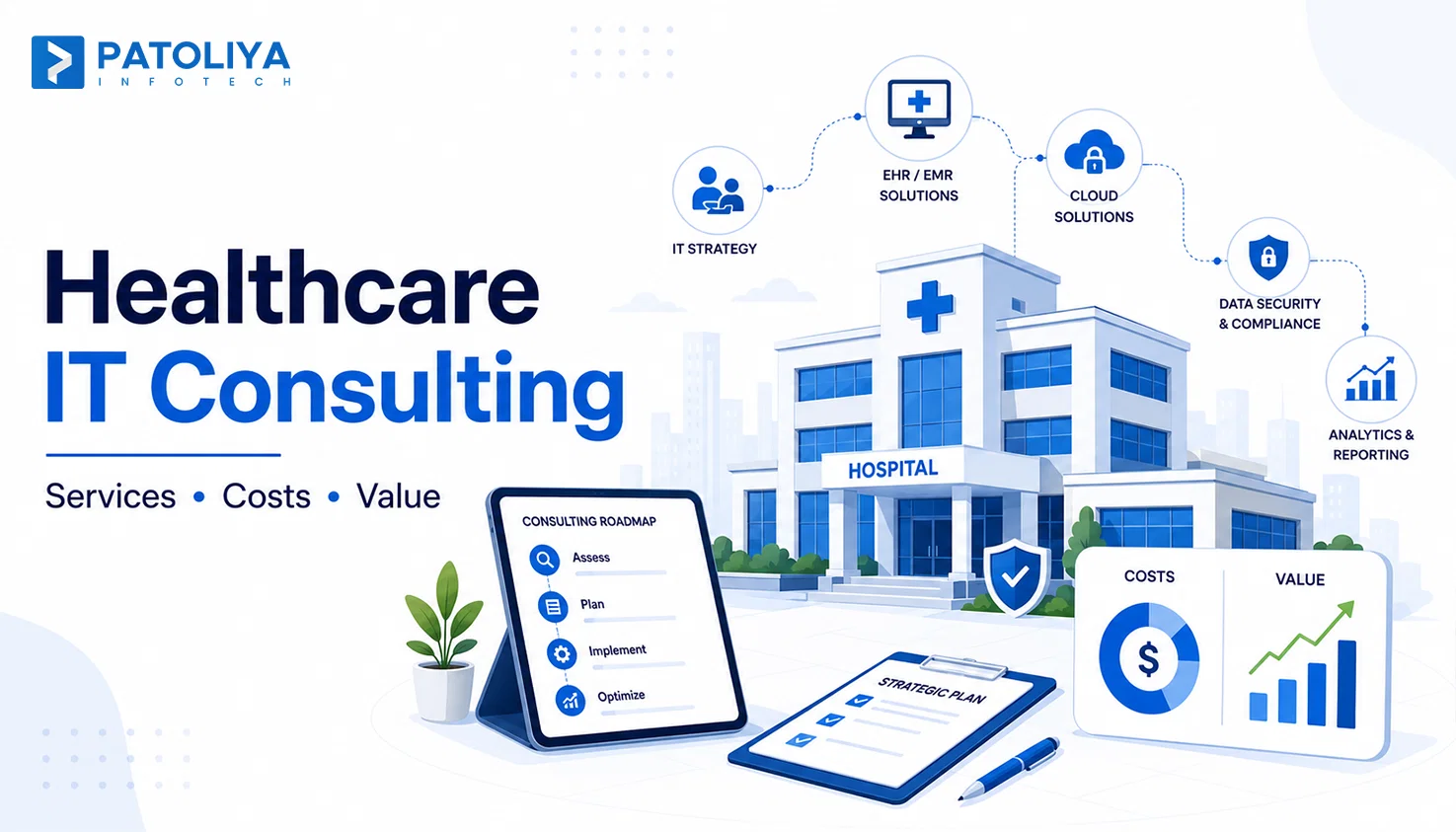
TL;DR: Healthcare IT consulting helps hospitals assess technology gaps, build actionable roadmaps, integrate systems, manage implementation, and measure outcomes. Choose a partner that combines healthcare expertise, execution, compliance, and measurable results.
Healthcare technology decisions can look simple on paper but become complicated during implementation. Vendor negotiations, system integrations, workflow changes, and staff adoption can quickly turn a good plan into a difficult project.
The right healthcare software development company or consulting partner helps you navigate every stage with a clear assessment of your current technology, a roadmap tied to clinical and financial goals, and practical execution support. The goal is not just to recommend what should change, but to help make those changes work across your organization.
This guide breaks down what a real engagement looks like, what it costs, and how to tell a genuine partner apart from a firm selling a template.
What healthcare IT consulting covers
Healthcare IT consulting covers everything between a technology decision and a technology outcome.
That includes EHR optimization, interoperability work, healthcare data integration, cybersecurity posture, cloud migration, data governance, and the workflow redesign that has to happen alongside any of it.
A firm offering true healthcare technology advisory work looks at clinical operations and IT infrastructure together, because one never changes cleanly without the other.
Advisory vs implementation vs managed services
|
Service |
What It Does |
|
Advisory |
Defines what to do and why. |
|
Implementation |
Turns the strategy into a working solution. |
|
Managed Services |
Keeps systems running and optimized after go-live. |
|
Best Approach |
Connects all three through one accountable team. |
What Does a Healthcare IT Consulting Partner Actually Deliver?
Current State Assessment and Technology Gap Analysis
- Maps current systems, integration points, security posture, and workflow bottlenecks.
- Identifies specific gaps such as outdated interface engines, manual reconciliation, ineffective security controls, and the need for legacy system modernization.
- Ranks each gap based on financial and clinical risk.
- Strong healthcare IT consulting firms provide a prioritized gap list that CIOs can act on immediately.
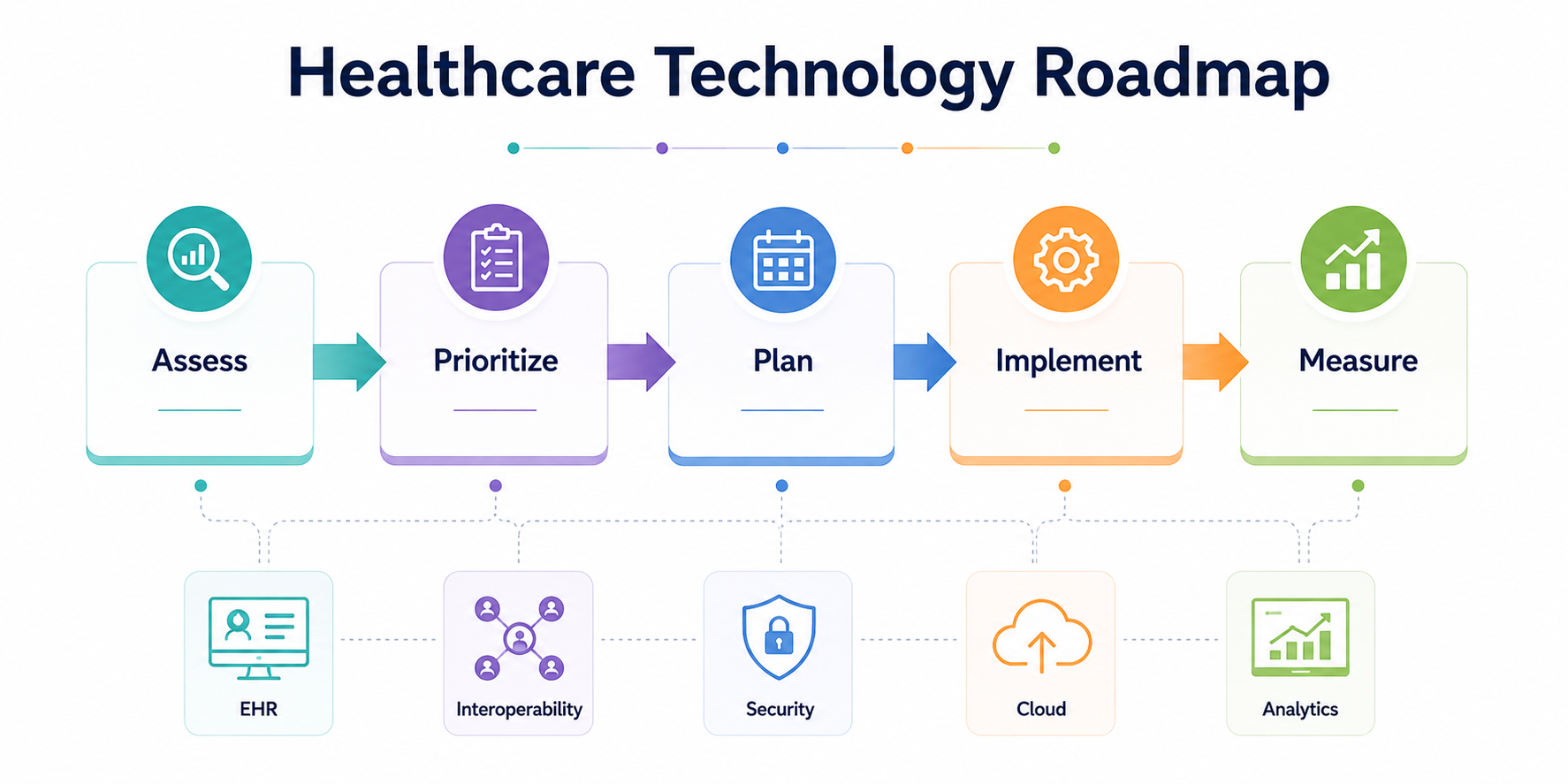
A Healthcare Technology Roadmap Tied to Business Priorities
- Builds a practical sequence of initiatives, including cloud migration services, based on financial and operational capacity.
- Plans technology priorities across a realistic 12 to 36 month timeline.
- Healthcare technology roadmap consulting connects every initiative to measurable outcomes.
- Examples include reducing denials, improving discharge times, and lowering breach exposure.
- Gives leadership a clear roadmap they can confidently defend to the board.
Architecture, Integration, and Technology Recommendations
- Defines specific architecture choices, interoperability standards such as HL7 FHIR, and integration patterns.
- Goes beyond generic vendor recommendations or presentation templates.
- A capable healthcare systems integrator shows how new systems will connect with the EHR, healthcare data warehouse, and security stack through approaches such as SMART on FHIR integrations.
- Validates the technical approach before major investments are made.
Vendor and Solution Selection Support
- Uses a weighted scorecard and structured IT vendor management approach to compare vendors objectively.
- Runs live scenario demonstrations instead of relying on scripted presentations.
- Evaluates implementation timelines, SLAs, and data ownership terms.
- Supports contract negotiations to reduce scope creep and protect the organization after signing.
Implementation Governance and Execution
- Establishes clear governance structures and decision rights.
- Maintains risk logs, milestone checkpoints, and accountability throughout implementation.
- Identifies issues early instead of allowing problems to surface months into the project.
- Ensures the strategy remains aligned with the actual build and implementation process.
Change Management and Post Go Live Optimization
- Provides training based on real clinical workflows rather than generic modules, followed by ongoing software support and maintenance services after implementation.
- Supports staff adoption and addresses workflow or usability gaps after launch.
- A genuine IT strategy partner for healthcare continues monitoring system performance after go-live.
- Measures whether the technology is delivering the financial and operational outcomes defined in the original business case.
Which Healthcare IT Consulting Engagement Do You Need?
Advisory only
Choose this when your internal team can execute but needs direction, an assessment, a roadmap, a vendor recommendation, delivered and handed off cleanly.
Advisory plus implementation
Choose this when your team lacks the bandwidth or technical depth to build what the strategy calls for. The same firm carries the work from plan to live system, which removes the handoff risk between two separate vendors.
Specialist consulting or staff augmentation
Choose this when you need a narrow skill set fast, an integration engineer, a security specialist, a specific EHR module expert, without hiring a full time role for a project with an end date.
Ongoing advisory or managed services
Choose this when the goal is continuous improvement, not a single project. Many healthcare IT consulting firms now offer retained advisory models that keep a strategic partner engaged across budget cycles, security reviews, and system upgrades year over year.
How Much Does Healthcare IT Consulting Cost?
What actually determines consulting cost?
Cost scales with project scope, the number of systems touched, integration complexity, the size of the organization, and how much implementation work sits alongside the advisory work.
A single system assessment costs far less than a multi facility roadmap paired with execution support.
Common healthcare IT consulting pricing models
Fixed fee pricing suits clearly scoped assessments and roadmaps. Time and materials suits implementation work where scope shifts as the project moves.
Retained monthly pricing suits ongoing advisory relationships where the firm functions as an extension of your internal IT leadership.
What should be included in the price?
Ask for a written breakdown covering discovery, deliverables, implementation support, travel, and any post-project support window.
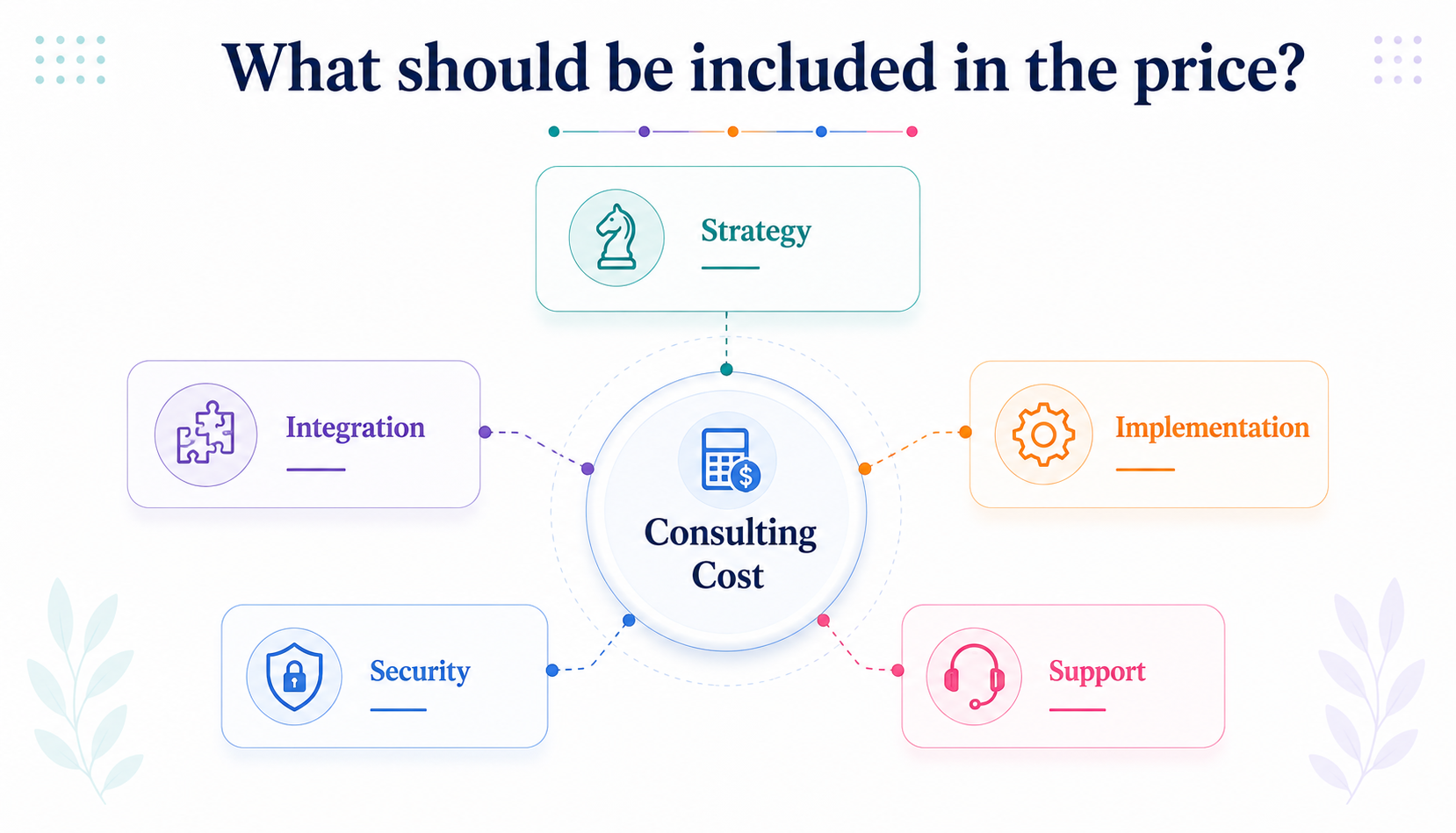
A proposal that bundles everything into one number without a breakdown makes it nearly impossible to compare vendors fairly.
How to Evaluate a Healthcare IT Consulting Firm
Start with healthcare specific experience
General IT consultants understand infrastructure. They rarely understand HIPAA nuance, clinical workflow, or the operational reality of a nursing unit at 2 a.m. Confirm the firm has delivered work in your specific care setting, acute, ambulatory, behavioral health, before you sign anything.
Evaluate outcomes
A client list full of recognizable hospital names means little without outcomes attached. Ask every finalist for specific results tied to past engagements, reduced downtime, faster go live, measurable cost savings, and ask how those numbers were verified.
Evaluate the actual consulting team
The proposal team and the delivery team are often different people. Ask who will actually sit in your meetings six months into the engagement, and confirm their healthcare background directly, not just the firm's overall reputation.
Check whether they can move from strategy to execution
Plenty of firms write excellent strategy documents and stop there. Ask for a specific example where the same firm carried a project from assessment through live implementation, and ask what changed between the plan and the delivered system.
Examine security, compliance, and contractual risk
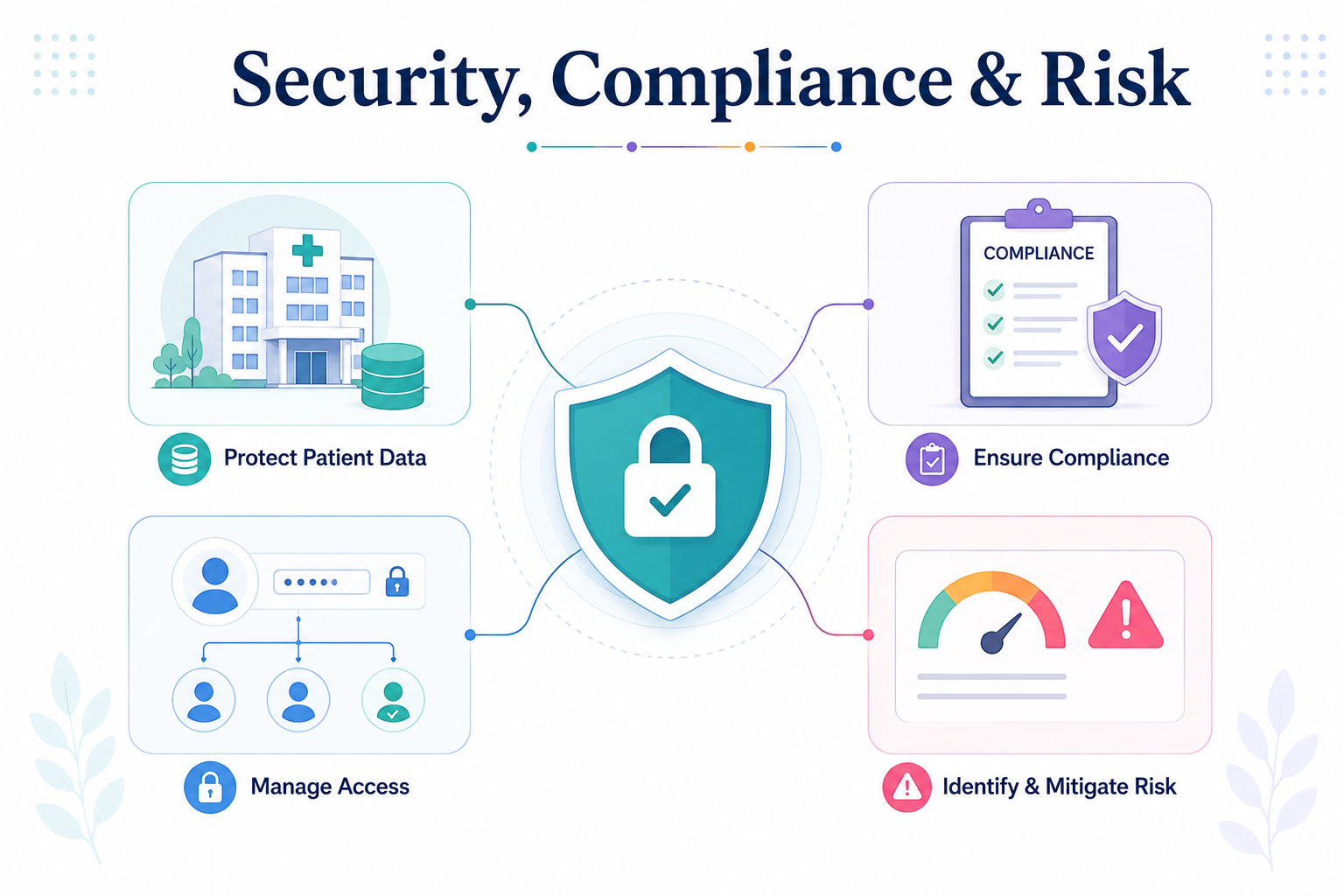
Confirm how the firm handles PHI during the engagement, including healthcare software security, how it approaches the HIPAA Security Rule, or by including Zero Trust security considerations, what security certifications its team holds, and what contractual protections exist if a recommendation leads to a compliance gap after go-live.
Best Healthcare IT Consulting Firms Compared
Patoliya Infotech
A global healthcare software and technology partner offering consulting, software development, implementation, and post-go-live optimization across the healthcare technology lifecycle.
Key Features:
- Healthcare IT consulting and software engineering.
- Custom healthcare software and SaaS platforms.
- EHR/EMR integration and interoperability.
- Cloud, cybersecurity, and healthcare data solutions.
Best For: Healthcare organizations seeking a global technology partner for strategy, development, integration, and implementation under one team.
Intellectsoft
A global software development company providing healthcare IT consulting and custom software development for healthcare organizations, digital health companies, and enterprises.
Key Features:
- Custom healthcare software development.
- EHR/EMR and telehealth solutions.
- Healthcare integration and interoperability.
- Cloud, AI, and application modernization.
Best For: Healthcare organizations seeking an international technology partner for custom software development and long-term digital transformation.
Persistent Systems
A global technology services company providing healthcare software development, digital engineering, data, cloud, and consulting services for healthcare and life sciences organizations.
Key Features:
- Healthcare application development.
- Cloud and digital transformation.
- Healthcare data and analytics.
- Enterprise integration and modernization.
Best For: Healthcare enterprises requiring large-scale software engineering, cloud modernization, and data-driven technology solutions.
Thoughtworks
A global technology consultancy combining software development, digital strategy, data, and modern engineering practices to help healthcare organizations build and transform technology platforms.
Key Features:
- Digital strategy and technology consulting.
- Custom software engineering.
- Cloud and data modernization.
- Platform and application development.
Best For: Healthcare organizations undertaking complex technology modernization or building new digital platforms.
EPAM
A global digital engineering company providing healthcare technology consulting, software development, cloud, data, and digital transformation services to healthcare and life sciences organizations.
Key Features:
- Healthcare software engineering.
- Cloud and data solutions.
- Digital transformation consulting.
- Enterprise application modernization.
Best For: Large healthcare and life sciences organizations managing complex, global technology transformation programs.
Globant
A global technology company providing digital consulting and software engineering services for healthcare organizations focused on digital products, data, cloud, and patient-facing experiences.
Key Features:
- Digital product development.
- Healthcare technology consulting.
- Cloud and data engineering.
- AI and digital experience solutions.
Best For: Healthcare organizations looking to develop modern digital products and transform patient or operational experiences.
Healthcare IT Consulting Firm Evaluation Checklist
|
Criteria |
Why It Matters |
|
Healthcare specific delivery experience |
General IT experience misses clinical and compliance nuance. |
|
Ability to execute, not just advise |
A plan with no execution support rarely survives implementation. |
|
Named delivery team, not just proposal team |
The people in the room after signature determine actual results. |
|
Security and compliance depth |
A recommendation without compliance rigor creates downstream risk. |
|
Transparent pricing structure |
Bundled pricing hides which deliverables actually cost what. |
Why Patoliya Infotech Is a Trusted Healthcare IT Partner
Patoliya connects healthcare IT strategy with practical execution and measurable outcomes. The team stays aligned with your technology environment from assessment through optimization.
- Customized strategy: Recommendations fit your actual systems and workflows.
- Execution support: Helps move plans from assessment to implementation.
- Healthcare governance: Builds compliance and accountability into every engagement.
- Reduced handoff risk: Keeps strategy and delivery closely connected.
Get a clearer view of your technology priorities, identify critical gaps, and define the right next steps for your organization.
How Do You Measure Whether Healthcare IT Consulting Delivered Value?
A healthcare IT consulting engagement should be measured against clear outcomes established during the initial assessment, supported by healthcare data analytics where appropriate. Look beyond project completion and track whether the technology actually improves operations.
System downtime: Has availability improved after implementation?
Integration completion: Are systems exchanging data as planned?
Staff adoption: Are teams using the new workflows effectively?
Cost impact: Has the project reduced expenses or improved efficiency?
Clinical outcomes: Has technology supported faster, safer, or more effective care?
Business performance: Are the results aligned with the original financial and operational goals?
Strong healthcare IT consulting firms should provide measurable before and after results. If a project cannot demonstrate meaningful improvement, the strategy needs to be reassessed.
Conclusion
Healthcare IT consulting should be about more than recommendations and strategy documents. The right partner helps turn technology plans into measurable improvements across clinical operations, financial performance, security, and staff workflows.
Look for a firm that understands your healthcare environment, supports implementation, manages risk, and remains focused on outcomes after go live. Patoliya brings strategy, technical expertise, and execution together to help healthcare organizations make technology decisions that deliver lasting value.
FAQs:
They assess current systems, build a roadmap tied to business goals, recommend architecture and vendors, and often carry the work through implementation and post launch optimization.
Cost depends on scope, system count, and whether implementation is included. Pricing models include fixed fee, time and materials, and retained monthly advisory arrangements.
Choose advisory only if your internal team can execute the plan. Choose full support if you lack the technical depth or bandwidth to build it yourself.
Healthcare engagements require HIPAA knowledge, clinical workflow understanding, and integration experience with systems like EHRs that general IT consultants rarely have.
Assessments often run four to eight weeks. Full roadmap to implementation engagements can run six months to two years depending on scope.
Ask for a specific example where they carried a project from strategy through live implementation, and ask what changed between the original plan and delivery.