Healthcare ERP Software: Features, Cost, Integration & ROI
 By Hitesh SUpdated on: 08/25/2611 min read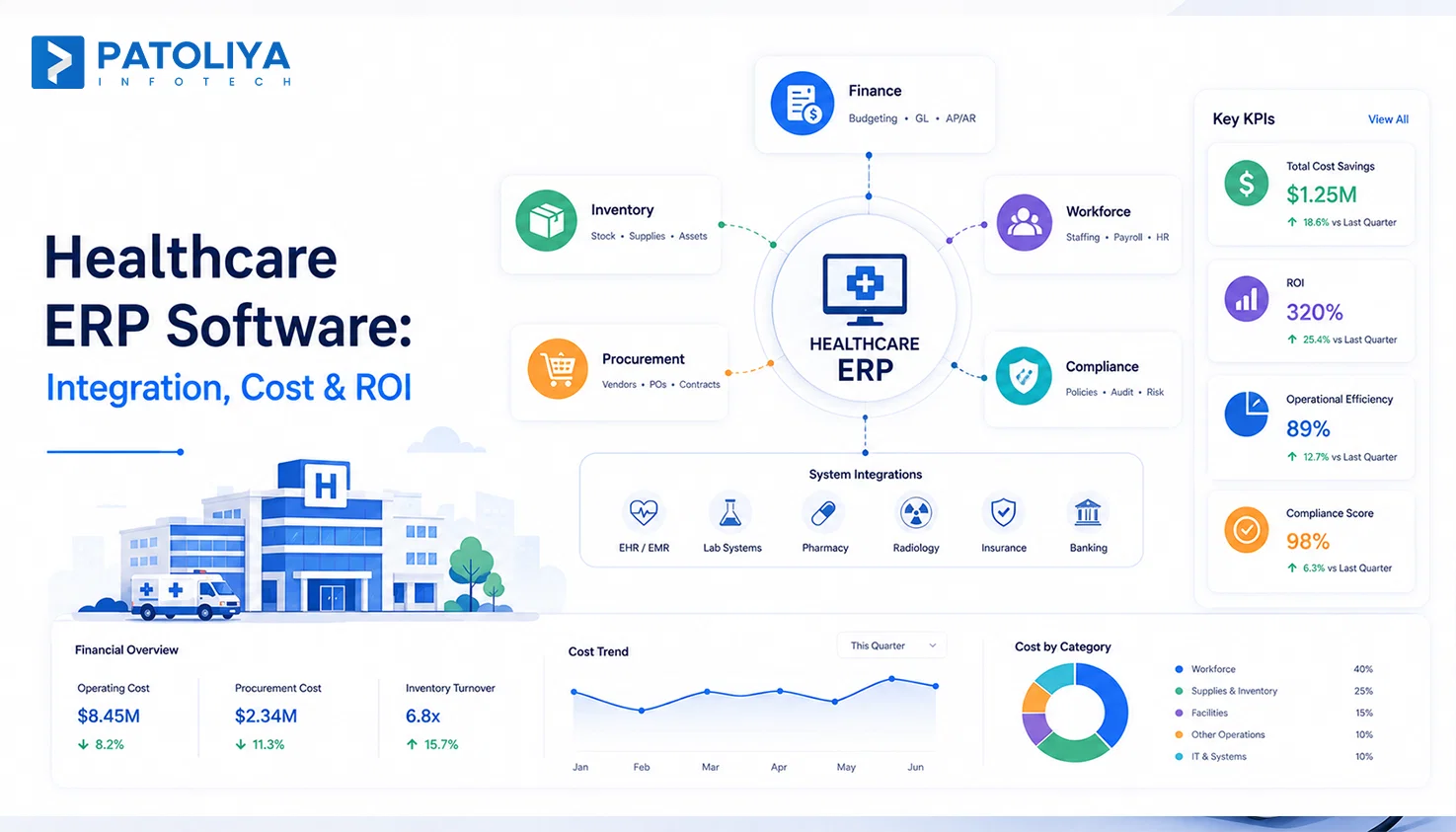
TL;DR: A healthcare ERP software system connects finance, inventory, staffing, and compliance into one structure. Standard platforms handle most hospitals well, but custom builds win once workflows, integrations, or scale outgrow generic modules.
Most hospitals do not fail because of poor clinical care. They fail because finance, inventory, and staffing run on separate systems that never share data. A healthcare ERP software platform solves this by placing every operational function under one structure.
Buying a generic healthcare ERP software package and labeling it an enterprise resource planning healthcare solution rarely fixes the underlying problem. Leadership teams often assume the product decides success, but the workflow decides it first. This guide breaks down what these platforms manage, where integration gets difficult, and when working with a healthcare software development company for custom development actually pays off.
What Healthcare ERP Software Actually Manages
Financial Operations, Revenue Cycle, and Procurement
A healthcare ERP software module for finance functions as the core of any hospital's money cycle.
- General ledger, budgeting, and multiple entity accounting.
- Revenue cycle tracking from billing through collections.
- Purchase orders, vendor contracts, and procurement approvals.
- Claims processing and reimbursement tracking.
Hospitals running a healthcare ERP software system will cut manual reconciliation time significantly because every purchase order and invoice sits in a single ledger.
Supply Chain, Inventory, and Assets
This is where a hospital finance and inventory ERP function proves the value of a true unified healthcare operations platform.
- Real-time stock levels for drugs, consumables, and equipment.
- Automated reorder points tied to usage patterns.
- Asset tracking for high-value equipment and maintenance schedules.
- Expiry date tracking for pharmaceuticals.
Facilities that skip automated reorder points inside their healthcare ERP software still run manual stock counts, and that is where medicine shortages start.
Workforce and Operational Resources
- Staff scheduling across departments and shifts.
- Payroll processing linked to attendance and overtime.
- Credential and license tracking for clinical staff.
- Resource allocation across facilities.

Scheduling tied to payroll inside a healthcare ERP software system stops the overtime errors that eat into margins every month.
Compliance, Audit Trails, and Reporting
A healthcare resource planning software system keeps every transaction traceable, which forms the backbone of solid enterprise resource planning healthcare governance.
- Automated audit trails for financial and operational records.
- Regulatory reporting for HIPAA and state health requirements.
- Role-based access controls.
- Document retention aligned with compliance timelines.
Auditors move faster when a healthcare ERP software system already carries a timestamp and an owner on every record.
ERP, EHR, and Clinical System Connectivity
Connectivity between a healthcare ERP software platform and electronic health records applications removes the gap between operations and patient care.
- Shared patient and department data without duplicate entry.
- Cost tracking tied to clinical activity.
- Reduced manual reconciliation between clinical and business systems.
Modules matter, but the value shows up when these systems talk to each other, which is where integration decides success or failure.
Healthcare ERP Integration Is Where Complexity Begins
EHR, EMR, and HIS Integration
Healthcare ERP integration with EHR, EMR, and hospital information systems carries most of the technical risk in any deployment.
Clinical systems store patient data in formats that were never built to sync cleanly with finance or inventory records. Connecting them requires reliable healthcare data integration, including field mapping, handling mismatched identifiers, and keeping both sides updated without duplicate entries.
Finance, Inventory, Procurement, and HR Integration
A healthcare ERP software deployment only earns its cost when finance, inventory, procurement, and HR share one data layer.
Departments that keep separate spreadsheets alongside the new system have not actually integrated anything. Every module needs to read and write against the same records, not a parallel copy.
APIs, Interoperability, and Real-Time Data Exchange
Modern healthcare ERP software relies on APIs, such as HL7 FHIR interoperability to move data between systems without manual exports. and a connected healthcare data warehouse architecture to move and consolidate data between systems without manual exports. Real-time exchange matters most in supply chain and billing, where a delay of even a few hours creates stock errors or billing mismatches that staff catch too late.
Legacy Data Migration and System Synchronization
Older hospitals carry years of records in formats that do not map cleanly to a new healthcare ERP software system or modern enterprise resource planning healthcare platforms.
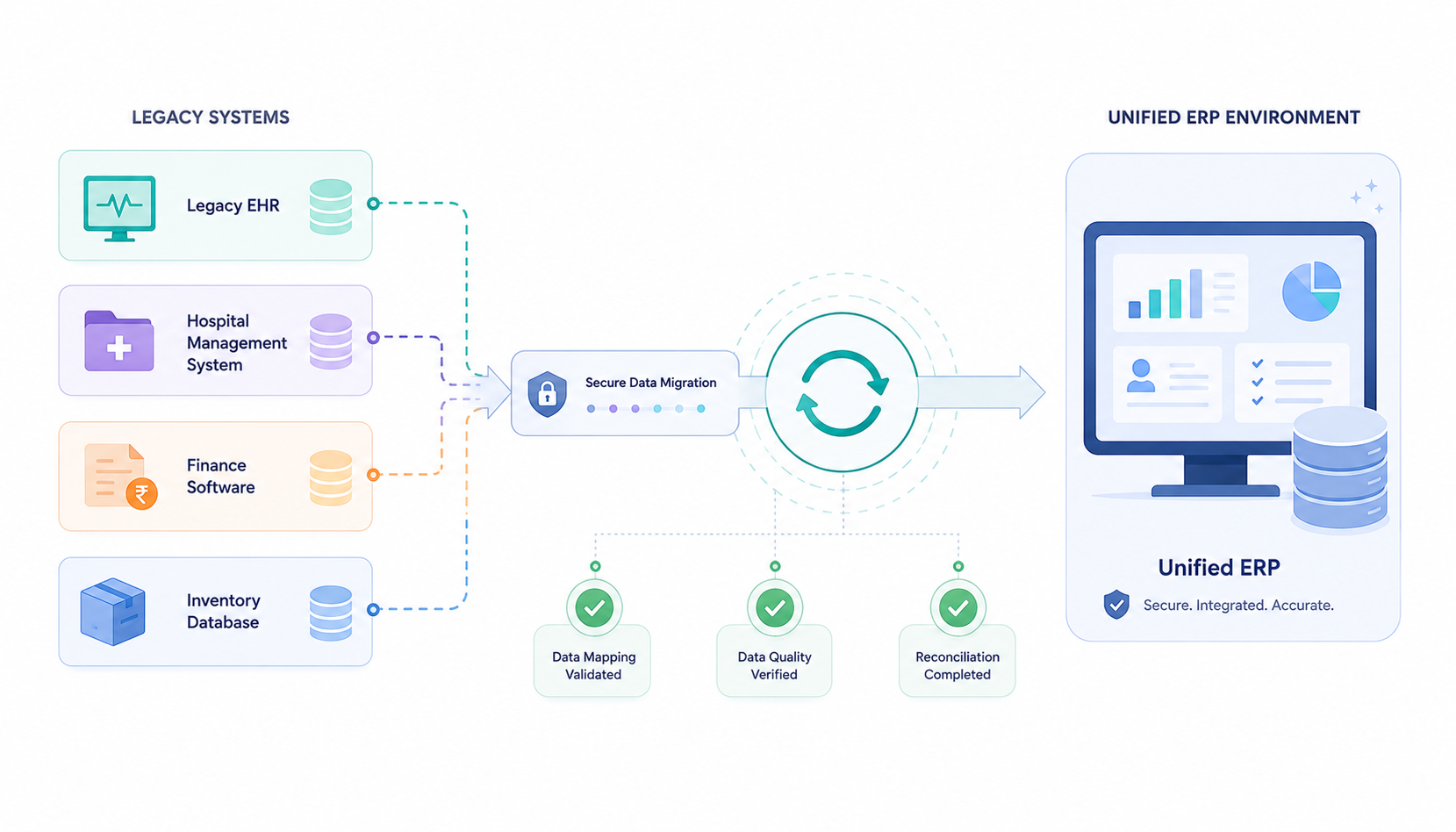
Migration projects fail when teams underestimate how messy legacy data actually is, making legacy system modernization and migration planning critical to ERP implementation. Synchronization has to run in parallel with the old system until every department trusts the new one fully.
When Standard ERP Stops Fitting Healthcare Operations
Healthcare Workflows That Require Custom Logic
- Approval chains that differ by department or facility type.
- Insurance and claims rules specific to a region or payer mix.
- Clinical procurement tied to physician preference cards.
- Compliance rules that change faster than vendor release cycles.
Multiple Facilities, Departments, and Business Units
A single healthcare ERP software license rarely fits a network running hospitals, labs, and clinics under one umbrella. Each unit tracks assets, staff, and budgets differently, and forcing them into one rigid template creates workarounds instead of efficiency.
Manual Workarounds and Disconnected Systems
- Staff exporting reports into spreadsheets every week.
- Duplicate data entry between clinical and finance teams.
- Shadow systems built by departments frustrated with the main platform.
- Approvals still routed through email instead of the system.
Scalability, Performance, and M&A Complexity
Standard platforms slow down once transaction volume grows past what the vendor designed for. Mergers make this worse because two organizations rarely run the same chart of accounts or inventory codes, and reconciling them inside a rigid healthcare ERP software system takes months longer than leadership expects.
Off the Shelf vs Custom Healthcare ERP: How to Decide
|
Factor |
Off the Shelf ERP |
Custom Healthcare ERP |
|
Setup speed |
Faster, weeks to a few months. |
Slower, several months to a year. |
|
Workflow fit |
Generic, needs workarounds. |
Built around actual processes. |
|
Integration depth |
Limited to vendor connectors. |
Built for your specific systems. |
|
Scaling across facilities |
Often requires new licenses. |
Designed for multiple entities. |
|
Ownership cost over time |
Rising license and add-on fees. |
Higher upfront, lower long-term drag. |
When Off the Shelf ERP Is Enough
A single facility with standard billing, common procurement rules, and no unusual compliance load rarely needs a custom enterprise resource planning healthcare build.
If your healthcare ERP software search keeps turning up vendors whose default modules already match your workflow, buy the platform and move on.
When Custom ERP Development Makes Sense
- Multiple facilities with different regulatory requirements.
- Deep integration needs with proprietary clinical systems.
- Workflows unique enough that every vendor demo needs heavy customization.
- Growth plans that a licensed platform cannot scale with financially.
Build, Configure, or Customize: What Leadership Should Consider
Configuration inside a licensed platform works until the vendor's roadmap stops matching your needs. At that point, a true enterprise resource planning healthcare strategy has to weigh vendor dependency against the cost of owning your own system outright. The decision belongs with leadership, not IT alone, because it changes budget structure for years.
What Does Healthcare ERP Development Cost?
|
Scope |
Typical Range |
Timeline |
|
Single facility, core modules |
Lower six figures |
Three to six months |
|
Multiple facilities, full integration |
Mid six figures |
Six to twelve months |
|
Enterprise network, custom compliance |
Upper six figures and above |
Twelve months and beyond |
Factors That Drive Development Cost
- Number of modules and facilities in scope
- Depth of integration with EHR and legacy systems
- Compliance requirements specific to region or payer
- Data volume and migration complexity
Cost by ERP Scope and Complexity
A healthcare ERP software build for one clinic costs far less than a network wide deployment because integration points multiply with every added facility, not the module count alone.
Integration, Migration, and Compliance Costs
Custom ERP development healthcare projects spend a large share of budget on integration and migration work, often more than the core software build itself. Compliance testing adds further cost, especially when the system has to pass audits across multiple state requirements.
Build Cost vs Long Term Ownership Cost
Licensed platforms look cheaper at launch but stack fees as facilities and users grow. A custom healthcare ERP software system costs more upfront and less to run over five years once you remove per-seat licensing and forced upgrade cycles.
How to Measure Healthcare ERP ROI
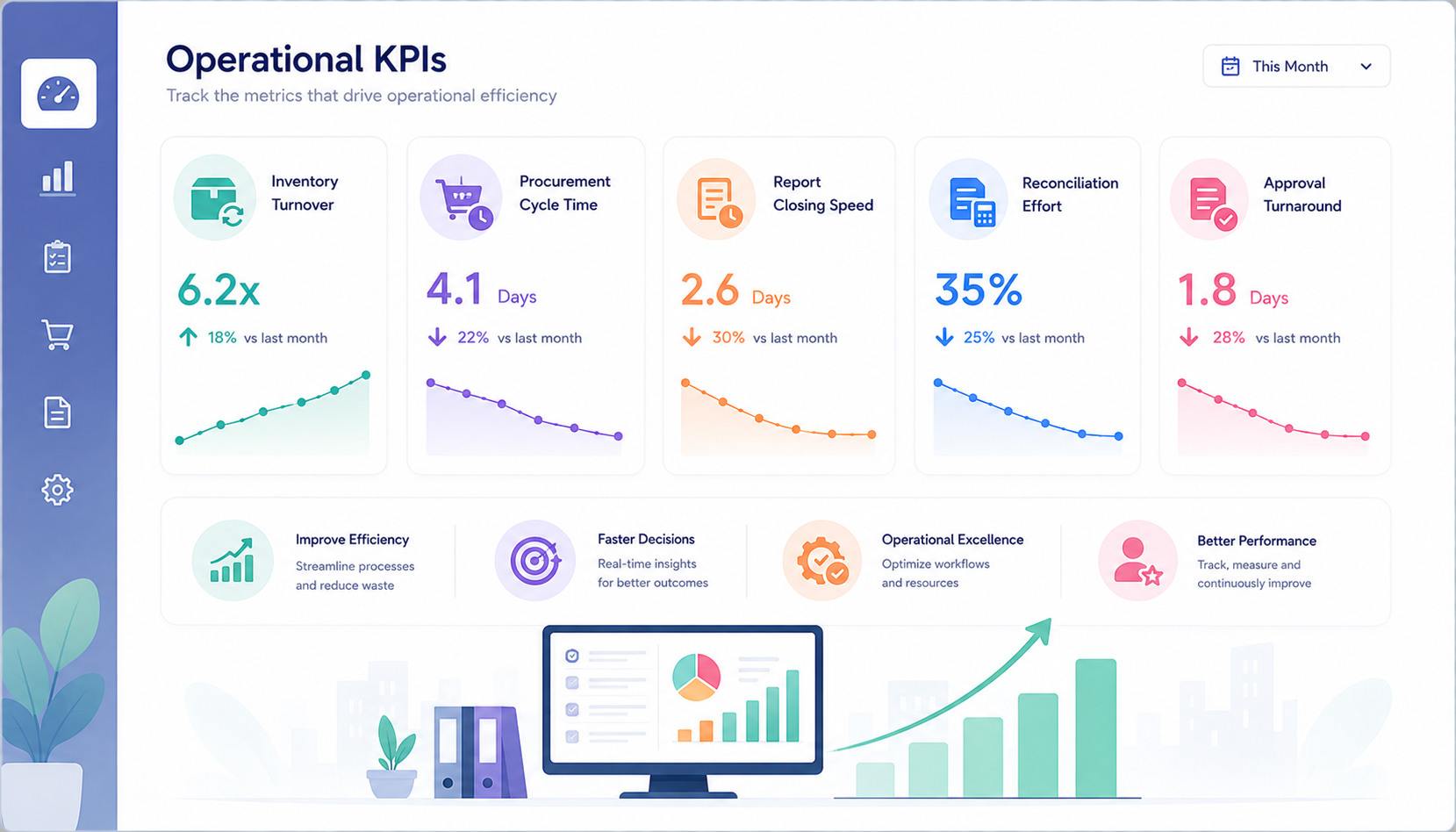
Operational KPIs
- Time to close monthly financial reports.
- Inventory turnover and stockout frequency.
- Staff hours spent on manual reconciliation.
- Approval cycle time for procurement requests.
Financial KPIs
- Reduction in claim denials and rework.
- Procurement savings from consolidated vendor contracts.
- Total cost of ownership against license or build cost.
- Revenue cycle days from service to payment.
Technology and Integration KPIs
- Number of manual data exports still running.
- System uptime during peak clinical hours.
- Time required to onboard a new facility onto the healthcare ERP software platform.
- Error rate in data synced between clinical and finance systems.
How to Evaluate a Healthcare ERP Vendor or Development Partner
Evaluate Healthcare Workflow Fit
Ask the vendor to demo your actual approval chains and procurement rules, not their generic sample data. A healthcare ERP software partner that cannot show this fit early will struggle to deliver it later.
Evaluate Integration and Architecture
Check how the platform connects with your existing EHR and finance systems before signing anything. Weak API documentation during the sales process usually signals weak integration support after launch.
Separate Configuration From Custom Development
Vendors often blur the line between configuring existing modules and building new logic from scratch. Ask directly which parts of your requirements need real custom ERP development healthcare work and which ones the platform already supports.
Evaluate Security, Compliance, and Auditability
- Healthcare software security, Infrastructure and data handling should align with the HIPAA Security Rule and the organization's broader security requirements.
- Role-based access with full audit logging.
- Clear data ownership terms in the contract.
- Documented disaster recovery process.
Assess Total Cost of Ownership
Look past the initial quote and ask for licensing growth projections across five years. A unified healthcare operations platform only pays off if the ownership cost curve stays predictable as your organization grows.
Why Enterprises Trust Patoliya for Healthcare ERP Software Development
Enterprises choose Patoliya when off-the-shelf platforms stop matching their operations. Years of building for hospital networks means the team already understands where healthcare ERP software projects usually fail.
- Custom modules built around real approval chains, not generic templates.
- Deep experience connecting ERP systems with EHR, EMR, and legacy hospital platforms.
- Compliance first architecture built for HIPAA and multi-state reporting.
- Migration planning that keeps old and new systems synced without data loss.
Patoliya helps enterprises move from disconnected spreadsheets to one unified healthcare operations platform built around their actual workflow. Book a call to see how a custom build fits your facilities and budget.
Conclusion
A healthcare ERP software system delivers value when its logic reflects your actual operations rather than a vendor’s default template. A standard unified healthcare operations platform can work well for single-facility hospitals with straightforward workflows. Custom builds become more valuable when complex processes, integrations, or growth exceed generic modules.
The decision should focus on workflow fit, integration depth, scalability, and total ownership cost over time, not just the upfront price. Let’s map your current operations, priorities, and long-term goals to determine whether a standard or custom approach makes the most sense.
FAQs:
It manages finance, procurement, inventory, staffing, compliance, and reporting under one system. A strong healthcare ERP software platform also connects with EHR and clinical systems to remove duplicate data entry between departments.
EHR stores clinical and patient data. Enterprise resource planning healthcare systems manage business operations like finance, staffing, and supply chain, working alongside EHR rather than replacing it.
Custom software development makes sense when workflows, multiple facilities, or unique compliance rules do not fit vendor templates. Custom ERP development healthcare projects also suit networks planning mergers or rapid scaling.
Cost depends on scope, ranging from lower six figures for a single facility to upper six figures for enterprise networks. Integration and migration usually cost more than the core module build.
Integration gets complex when connecting EHR, HIS, and legacy systems that store data in mismatched formats. Real-time sync between finance, inventory, and clinical systems needs careful API and architecture planning.
Track KPIs through healthcare data analytics, including claim denial reduction, inventory turnover, reconciliation time, and procurement savings. A working unified healthcare operations platform should show measurable gains within the first two quarters of full deployment.