Healthcare Compliance Software: A Complete Guide for Healthcare Organizations
 By Hitesh SUpdated on: 08/28/269 min read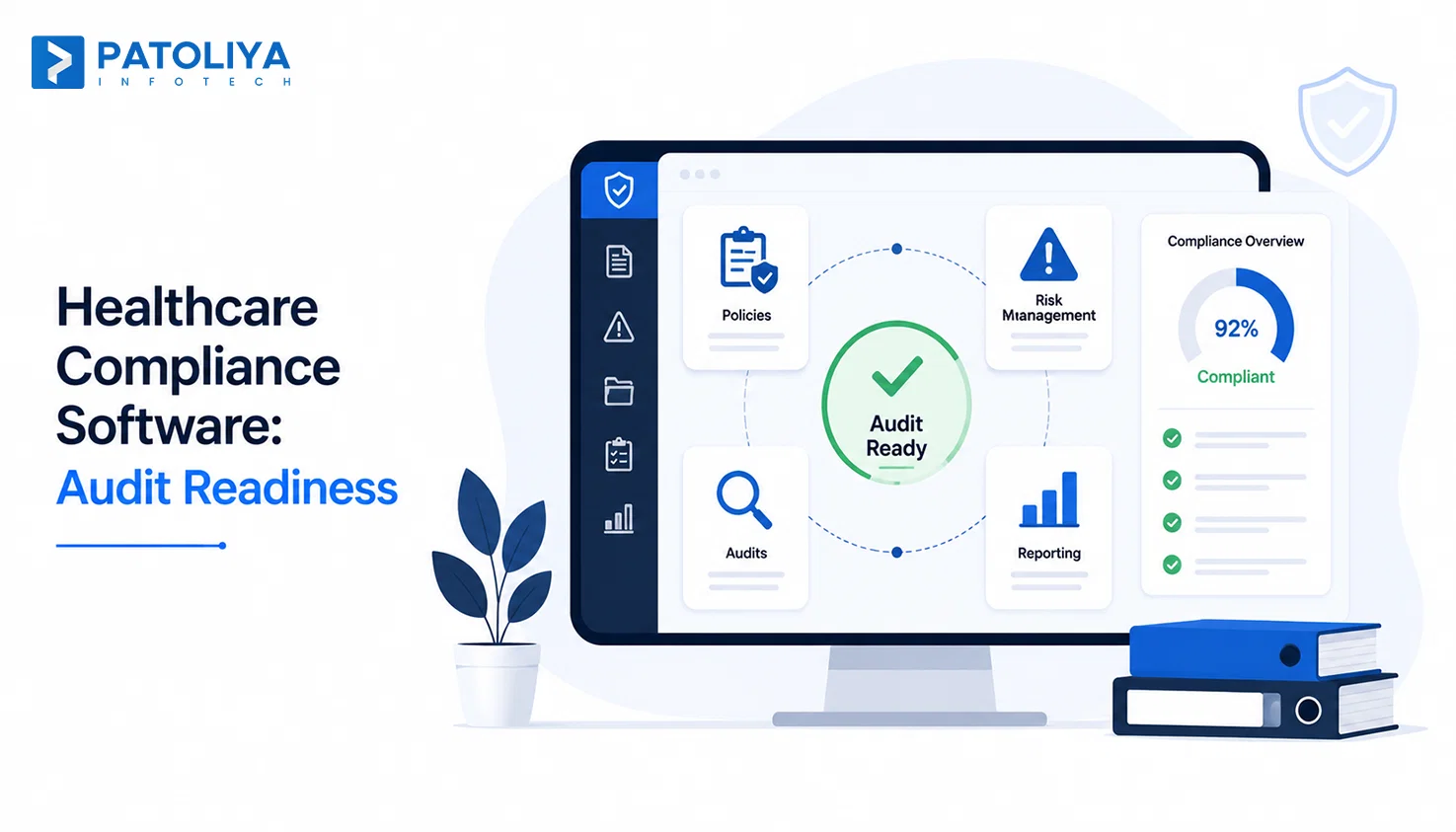
TLDR: Healthcare compliance software replaces scattered spreadsheets with one system for policies, audits, and reporting. Organizations relying on manual tracking spend more staff hours preparing for audits than actually managing risk day to day.
HIPAA is only the starting point. Healthcare compliance software helps organizations manage HITECH requirements, state privacy laws, accreditation standards, and payer-specific rules, often with the same small compliance team that handled HIPAA alone five years ago.
Manual tracking through spreadsheets and shared drives cannot keep pace with this volume, and gaps start showing up during audits instead of before them. This guide covers why compliance has gotten harder to manage, what a real healthcare regulatory compliance platform should centralize, and how leaders can tell their program has outgrown manual processes.
Why Healthcare Compliance Is Becoming More Difficult to Manage
Healthcare compliance software has gotten harder because regulations multiply faster than internal teams grow, evidence lives scattered across disconnected systems, and audits now demand proof of active enforcement, not just paperwork on file.
Regulatory Requirements Are Expanding Faster Than Internal Teams
New state privacy laws and updated federal guidance arrive faster than most compliance teams can absorb them. A team built to handle HIPAA alone now tracks dozens of overlapping requirements with the same headcount.
Compliance Evidence Lives Across Multiple Systems
Policy documents sit in one drive, training records in an LMS, and risk assessments in a spreadsheet nobody updates consistently, creating a broader healthcare data integration challenge when compliance evidence must be consolidated. Pulling one audit response means chasing evidence across five separate tools.
Audits No Longer Focus Only on Documentation

Regulators and accreditors now expect proof that policies get enforced, not just written. Healthcare compliance software that tracks attestations and corrective actions provides that proof automatically, without a scramble every time a review notice arrives.
The Hidden Cost of Manual Compliance Management
Manual compliance management costs more than most organizations realize, because it consumes senior staff time, turns reporting reactive, and lets policy management collapse once the organization grows past a single facility.
Audit Preparation Consumes High-Value Staff Time
Compliance officers spend weeks before every audit pulling records from disconnected systems, time that should go toward actual risk reduction instead of document retrieval.
Compliance Reporting Becomes Reactive
Without compliance reporting automation, reports get built only when someone asks for them. Leadership sees compliance status in a document, not a live dashboard, which means risk gets discovered late.
Policy Management Breaks Down at Scale
A healthcare policy management software gap becomes obvious once an organization adds a second facility. Version control, attestation tracking, and update distribution all fail without a centralized system managing them.
|
Manual Approach |
Centralized Platform |
|
Weeks of audit prep per cycle |
Evidence ready on demand |
|
Reactive reporting after requests |
Continuous reporting available |
|
Policy versions tracked by hand |
Automated version and attestation tracking |
What Healthcare Compliance Software Should Centralize
A real healthcare compliance software platform centralizes four categories of information that manual tracking scatters across departments, giving one system of record for the entire compliance program.
Policies, Procedures, and Attestations
- Version-controlled policy library accessible organization-wide
- Staff attestation tracking tied to individual policy versions.
- Automated reminders when policies need review or renewal.
Risk Assessments and Corrective Actions
- Standardized risk assessment templates across departments.
- Corrective action plans with assigned owners and deadlines.
- Status tracking from identification through resolution.
Compliance Reporting and Audit Evidence
- Centralized evidence repository organized by regulation.
- Exportable audit trails showing who did what and when.
- Historical reporting available without manual compilation.
Regulatory Change Tracking
- Updates on new federal and state health privacy law compliance requirements.
- Mapping between new rules and existing internal policies.
- Alerts flagging policy gaps created by regulatory changes.
These four categories form the backbone of any working healthcare regulatory compliance platform. Miss one and the gap eventually surfaces during an actual audit, when it costs the most to fix in healthcare compliance software.
Compliance Reporting Automation: The Capability That Matters Most
Compliance reporting automation matters most because it turns compliance from a once a year scramble into an ongoing, verifiable process that leadership and auditors can both trust immediately.
- Executive Reporting: Leadership gets real-time visibility into open risks, overdue attestations, and audit readiness without waiting on a manually compiled report.
- Regulatory Audit Preparation: Evidence gets organized by regulation ahead of time, cutting audit prep from weeks down to days.
- Evidence Collection and Retention: Documentation gets stored and time-stamped automatically, satisfying retention requirements without a dedicated records team.
- Continuous Compliance Monitoring: The system flags gaps as they happen, not months later during a scheduled review, while ongoing software support and maintenance helps keep the platform secure and operational as requirements evolve.
A regulatory audit software healthcare platform built around these four capabilities shifts compliance from a defensive function into one leadership can actually plan around with confidence.
Managing Multiple Compliance Frameworks From One Platform
Healthcare organizations rarely manage just one regulation. A single healthcare compliance software platform should map HIPAA, HITECH, state laws, and accreditation standards against one shared policy library.
HIPAA and HITECH Requirements
HITECH compliance software needs to track breach notification timelines and healthcare software security risk assessments alongside standard HIPAA Security Rule and its privacy and security requirements.
State Health Privacy Law Compliance
State health privacy law compliance varies significantly by state, and organizations operating across multiple states need one system tracking which rule applies where, rather than separate spreadsheets per location.
Accreditation and Internal Governance Requirements
Joint Commission standards and internal governance policies add another layer entirely. Centralizing all frameworks in one platform prevents duplicate work across teams managing overlapping requirements separately.

The Difference Between Compliance Tracking and Compliance Management
Compliance tracking records what happened. For healthcare compliance software, compliance management enforces what should happen next, catching problems as they emerge rather than during the next scheduled review cycle.
|
Tracking |
Management |
|
Records completed activities |
Enforces accountability on open items |
|
Reviewed annually |
Monitored continuously |
|
Static documentation on file |
Live operational visibility |
Recording Activities vs Enforcing Accountability
Tracking logs that a policy exists. Management assigns an owner, sets a deadline, and escalates automatically when that deadline passes unaddressed.
Annual Audits vs Continuous Compliance
A once a year audit catches gaps that existed for months. Continuous monitoring through regulatory audit software healthcare catches the same gap within days.
Static Documentation vs Operational Visibility
A folder of policies proves nothing about enforcement. Operational visibility shows exactly who attested, who didn't, and what happens next.
Signs Your Compliance Program Has Reached a Breaking Point
A compliance program has outgrown manual processes once audits trigger scrambling, data sits scattered across departments, and leadership loses real-time visibility into actual risk exposure.
Audit Requests Trigger Fire Drills: If every audit notice sends the compliance team into a multi-week scramble pulling records manually, the program is reacting instead of managing proactively.
Compliance Data Is Spread Across Departments: When HR tracks training records, IT tracks security logs, and legal tracks policy versions separately, nobody has one complete picture of organizational compliance status.
Leadership Cannot See Risk in Real Time: Executives who only see compliance status during quarterly reports are making decisions on outdated information most of the time.
Regulatory Reporting Requires Manual Compilation: If building one regulatory report takes days of pulling data from multiple sources, compliance reporting automation is overdue for that organization.
Questions Healthcare Leaders Should Ask Before Investing in Compliance Software
Before selecting a healthcare compliance software platform or custom software development services partner, leaders need clear answers on which processes need improvement, which regulations require central management, and how maturity gets measured.
Which Compliance Processes Are We Trying to Improve?
Identify whether the goal is faster audit prep, better policy management, or centralized reporting first, since this shapes which platform features matter most.
Which Regulations Must Be Managed Centrally?
List every framework in scope, including HIPAA, HITECH, applicable state laws, and accreditation standards, before evaluating any vendor's coverage claims.
How Will We Measure Compliance Maturity?
Define baseline metrics before implementation of healthcare compliance software. Without a starting point, proving improvement after deploying a healthcare regulatory compliance platform becomes guesswork.
What Evidence Must Be Available During an Audit?
Map required evidence types to current storage locations, then confirm the platform can consolidate and retrieve all of it on demand.
Metrics That Indicate a Mature Compliance Program
A mature compliance program shows measurable results across four areas: audit readiness, policy adherence, corrective action closure, and reporting efficiency.
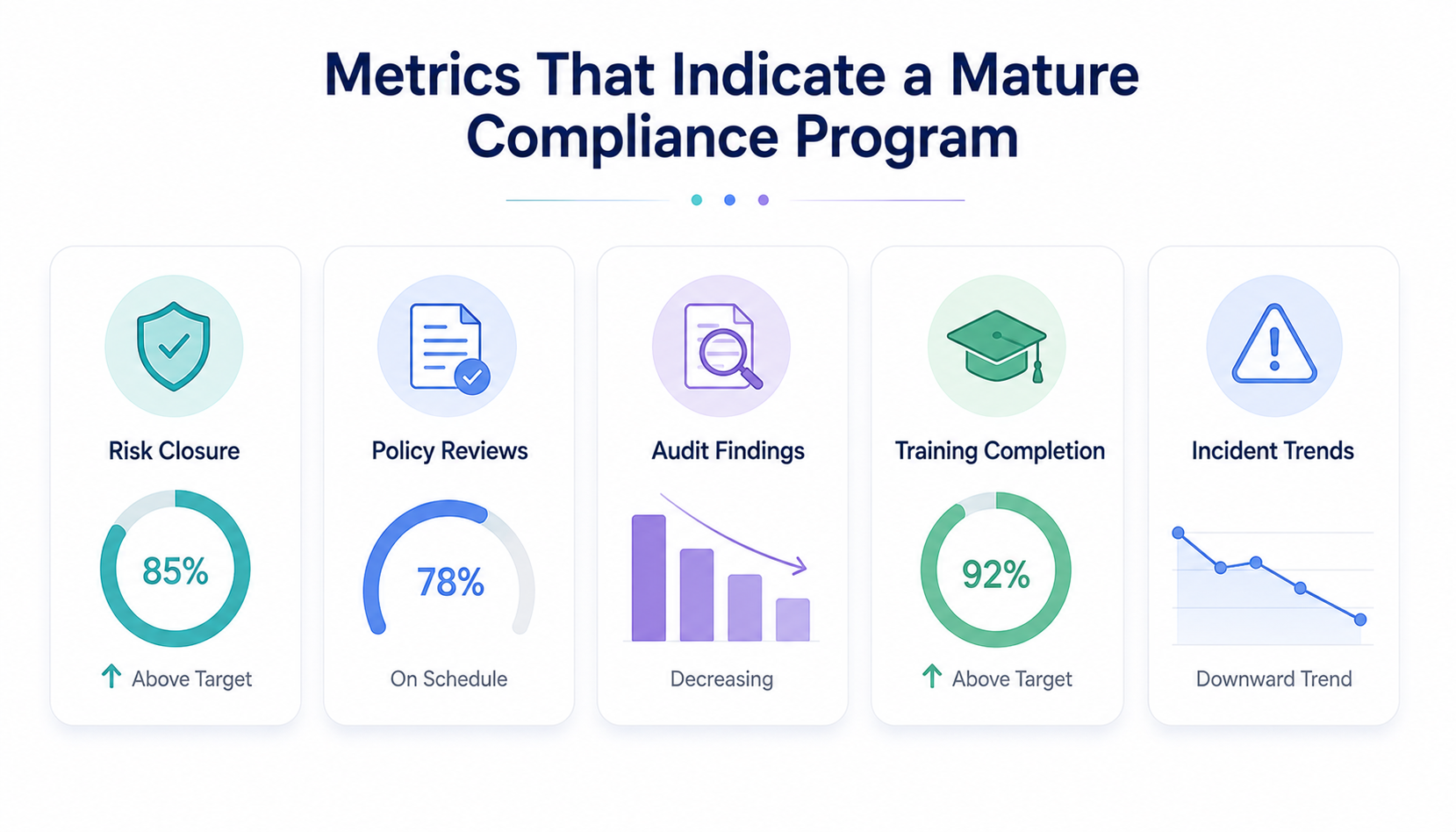
Organizations tracking these four metrics consistently outperform those relying on audit outcomes alone as their only signal of program health.
How Patoliya Infotech Helps Healthcare Teams Operationalize Compliance
As a healthcare software development company, Patoliya Infotech helps healthcare organizations turn complex compliance requirements into connected, manageable workflows. Our healthcare compliance software is designed around each organization's regulatory environment, existing systems, and operational processes.
- Centralized policy management, approvals, and employee attestations.
- Automated audit evidence collection and compliance reporting automation.
- Support for HIPAA, HITECH, and applicable state health privacy law compliance.
- Risk assessment, corrective action, and compliance tracking workflows.
- Integration with existing healthcare systems and data sources.
- Real-time visibility into compliance status, gaps, and outstanding actions.
The goal is to move compliance teams beyond spreadsheets, scattered documentation, and reactive audit preparation. Patoliya Infotech helps create a more continuous, measurable approach to healthcare compliance management.
Conclusion
Compliance maturity comes from operational visibility, not simply maintaining a well-organized folder of policies. Modern healthcare compliance software should help teams identify risks earlier, automate evidence collection, track corrective actions, and stay prepared for audits year-round.
By connecting policies, reporting, monitoring, and accountability in one system, organizations can reduce manual compliance work and respond faster when issues arise. The goal is to make compliance an ongoing operational process rather than an annual scramble. Let's talk about where your compliance program stands today and what could be improved.
FAQs:
Healthcare compliance software centralizes policies, risk assessments, corrective actions, and audit evidence into one system, replacing scattered spreadsheets and disconnected department records.
HITECH compliance software typically extends HIPAA tools by adding breach notification tracking and expanded security risk assessment capabilities required under HITECH specifically.
Compliance reporting automation organizes evidence continuously instead of during a scramble, cutting audit preparation from weeks of manual compilation down to days.
Yes. A centralized healthcare regulatory compliance platform maps state-specific rules against one shared policy library, avoiding duplicate tracking per location.
Tracking records that something happened. Management assigns ownership, enforces deadlines, and escalates automatically when compliance tasks go unresolved past their due date.
When audit preparation regularly consumes weeks of staff time or compliance data sits scattered across departments, regulatory audit software healthcare becomes a clear priority.