Inside GITEX Global Dubai: What the World’s Technology Leaders Are Building Next
 By Vijay PatoliyaUpdated on: 10/31/254 min read

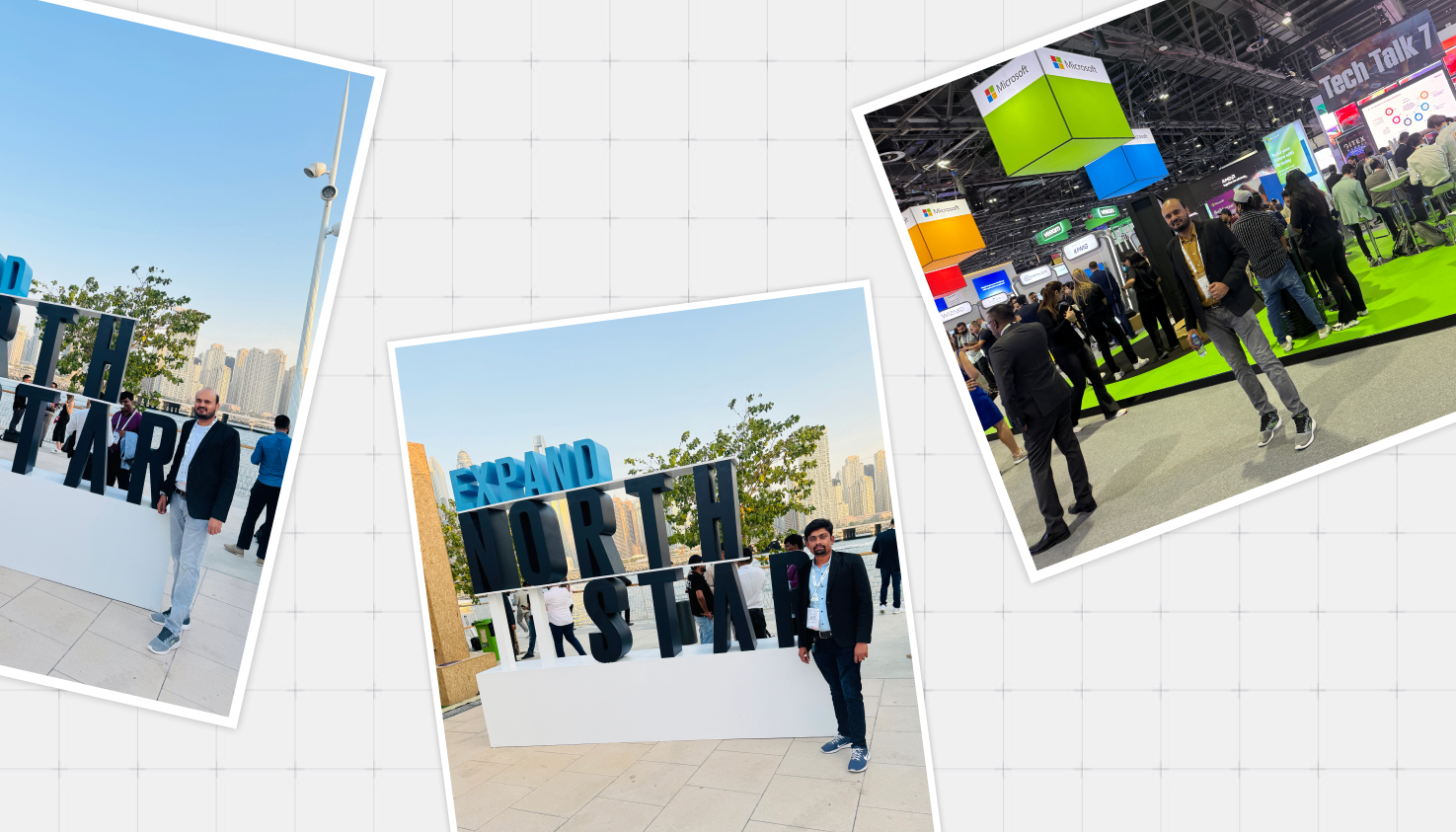
As a founder, I see GITEX as an opportunity to evaluate which technologies are moving beyond experimentation and becoming practical business investments. Walking through the exhibition, I looked beyond the demonstrations to understand what companies were investing in, which business problems they were solving, and what those priorities meant for companies planning their next phase of growth.
The value of an event like GITEX Global 2025 is not the number of meetings on a calendar. It is the quality of intelligence that can influence the next technology decision: what to build, what to modernize, what to automate, where to partner, and what not to invest in yet. For a business leader, those insights can reveal where technology budgets are moving and which capabilities are becoming practical investments.
The 2025 edition of GITEX Global brought together more than 6,800 exhibitors, 2,000 startups, and 1,200 investors, with participation from 180 countries. The investor community represented more than $1.1 trillion in assets under management, while more than 40 unicorns were also represented. These figures illustrate the scale of the event and the breadth of the technology ecosystem it brings together.
What mattered more to me than the number of exhibitors was the pattern emerging across the show floor. The conversation was shifting from what technology could demonstrate to what businesses could deploy, scale, and justify economically.

What the World's Technology Leaders Were Really Building
One of the clearest observations from the show floor was how much of the AI conversation had moved underneath the application layer.
AWS, Google, Microsoft, Oracle, NVIDIA, AMD, IBM, Salesforce, SAP, HPE, Huawei, Dell, Snowflake, and others were not simply presenting AI features. The broader ecosystem on display covered computing, cloud, data infrastructure, enterprise systems, and security, the foundations required to make AI work at scale.
Oracle’s “Enterprise-Ready AI” and Snowflake’s focus on measurable data value revealed where the real competition is moving: away from impressive AI demonstrations and toward technologies capable of changing the economics of how businesses operate. The winners will not simply make AI more capable; they will make entire workflows more economically viable.
That changes the architecture conversation. AI now has to fit into the systems, controls, and workflows where business decisions actually happen.
What GITEX Revealed About AI's Next Phase
A recurring GITEX theme was the rise of AI-native societies, discussed by some of the leading names shaping AI today. What stood out was the scale of the ambition. Having their perspectives in one place offered a rare view into how AI could reshape the systems behind governments, businesses, and economies.
When AI becomes infrastructure, its impact moves beyond productivity gains. It starts reshaping how companies make decisions, allocate resources, automate operations, and scale without adding complexity at the same rate.
It also explains why sovereign AI and data-centre investment were such prominent themes at GITEX. The event highlighted large-scale infrastructure initiatives, including the planned five-gigawatt Stargate UAE campus, with G42 coordinating physical infrastructure and partners such as Oracle, Cisco and OpenAI contributing different layers of the ecosystem.
What stayed with me from GITEX was a familiar challenge in software engineering: the real test is not what a technology can demonstrate, but what it can reliably deliver in a business environment. The interesting question is no longer whether a technology works in a demo. It is whether it can survive real data, existing systems, operational constraints, and the economics of a business.
That is where technology decisions become difficult, and where our 11+ years of building software for 150+ businesses and shipping 350+ products have shaped how we approach them. The opportunity is rarely in adopting everything that is new. It is in identifying where a new capability can materially change how the business operates, and having the engineering discipline to make it work in production.
What GITEX Global 2025 Means for Leaders
When I evaluate a technology initiative, I start with three questions: which operational problem does it solve, which systems and data does it depend on, and what measurable improvement would justify the investment? For an AI initiative, that could mean reducing manual processing time, improving forecast accuracy, or resolving operational exceptions faster. Establishing a baseline before implementation makes the eventual results easier to evaluate.
That is the real ROI of technology leadership events. They can help companies identify better use cases, avoid premature investments, discover strategic partners, and make architecture decisions with a clearer view of where the market is heading.
From GITEX Insights to What We Build Next
I went to GITEX expecting to see the next generation of technology. I left thinking more about the next generation of technology decisions.
The strongest signal is that AI is becoming connected to infrastructure, data, cybersecurity, enterprise software, and national-scale computing.
For us at Patoliya Infotech, the opportunity is to translate those market signals into practical decisions: identify the operational problems worth solving, then use AI, data, and software engineering to build systems that deliver measurable business value. That is what matters after the exhibition halls close.