AI Proof of Concept: Process, Steps and Benefits
 By Hitesh SUpdated on: 10/22/2612 min read
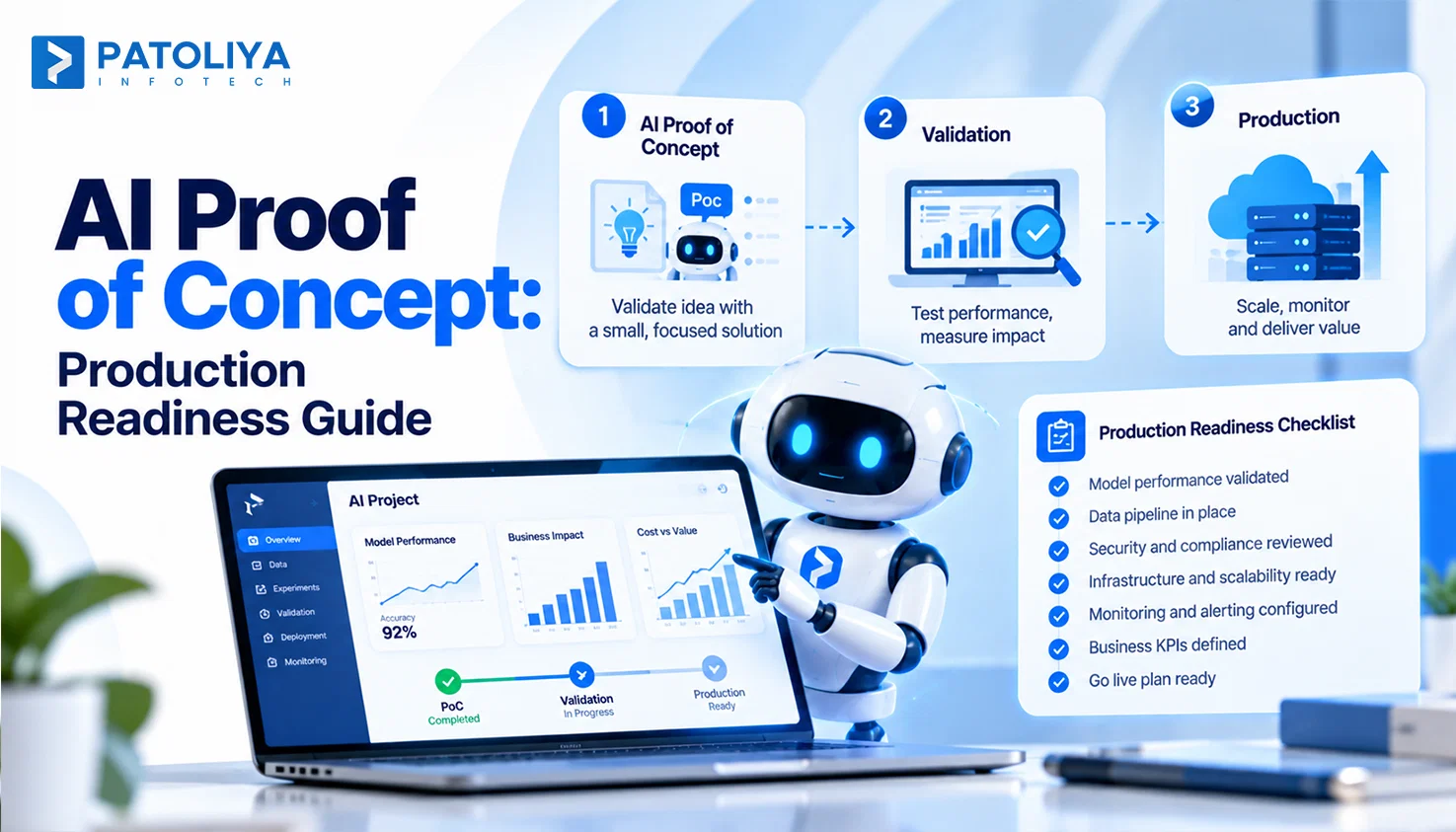
TLDR: An AI proof of concept should prove that a real business workflow runs end to end, safely and at a cost that beats today’s process. A clever demo proves far less. Run every pilot through five evidence gates, and stop or redesign early when the evidence falls short.
The demo went perfectly, and the project still died six months later. Gartner predicts over 40% of agentic AI projects will be canceled by the end of 2027, and it points to rising costs, unclear business value, and weak risk controls. Most of these projects fail on economics and operations, rarely on model quality. Agents call tools, update records, and act on your behalf, so they break in ways a chatbot never does.
Treat every AI proof of concept as a test of business risk with clear exit evidence. A demo shows potential. A concept should show readiness. This guide breaks down the gates that move AI POC to production safely.
The Five Failure Points That Keep Agentic AI in Pilot Purgatory
The POC Proves Intelligence Without Proving Workflow Completion
- A correct answer and a completed task are two different results. An agent can draft the perfect refund email while the refund itself never posts.
- Real work runs through input, reasoning, a tool call, a system update, verification, and exception handling.
- Picture a claims intake AI proof of concept that answers 94% of questions correctly while only 71% of claims reach the right queue with complete fields. Measure verified task completion from day one.
The Business Case Depends on Best Case Conditions
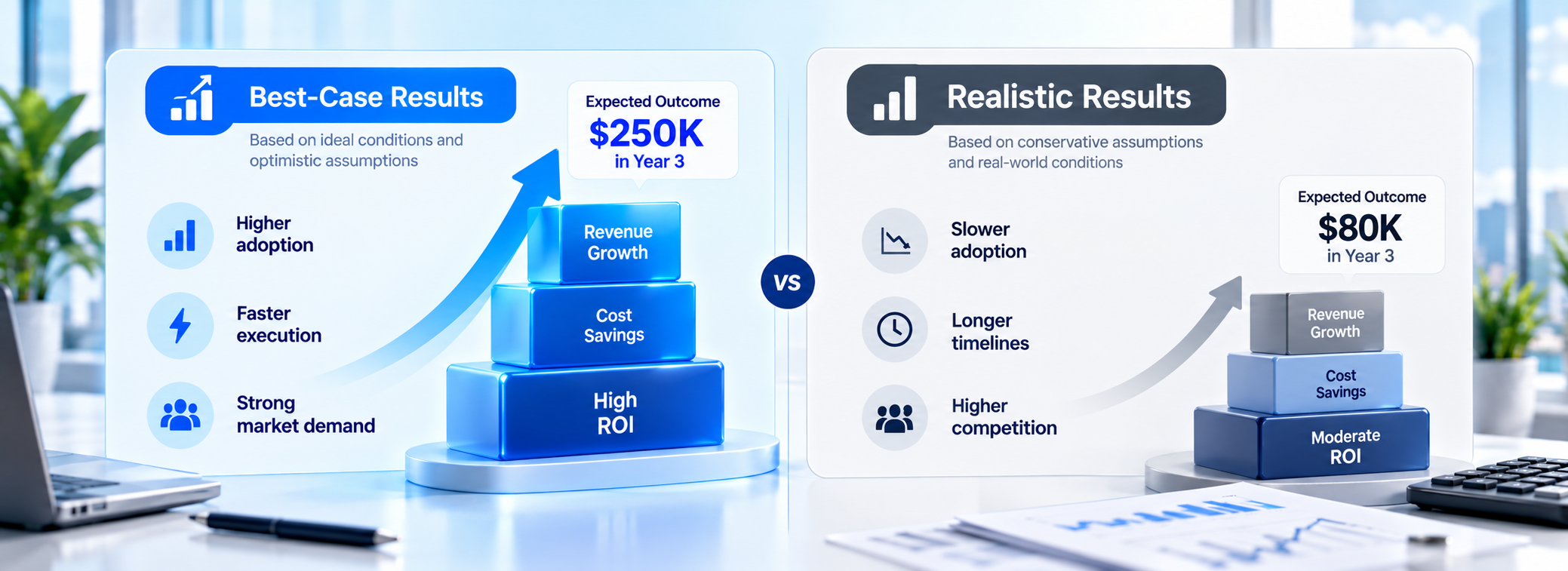
- Demo economics leave out the expensive parts. Human review on uncertain cases, retries, extra model calls, tool fees, integration upkeep and failure recovery all show up after launch.
- We advise teams to add a 20% buffer for exception handling in the first quarter.
- Then compare the cost of each fully completed workflow with your current process, because cost per model call tells you almost nothing about an AI proof of concept that touches real operations.
Data and Integrations Work in the Demo but Fail at Operational Scale
- Demo data is clean, consistent, and generous with access.
- Production data carries stale records, missing fields, three ID formats for the same customer, API rate limits at peak hours, and permission gaps for ordinary users.
- Pull at least three months of real, messy records into testing, since a polished sample set hides every hard case.
No One Owns the Exceptions or the Result
- AI, IT, security, operations, and the business sponsor each assume someone else owns the failures.
- Somebody has to handle low-confidence cases, failed actions, escalations, and wrong system updates, and that person needs a name before the pilot starts.
- Write those names into the pilot charter next to the escalation path.
- Without them, pilot purgatory becomes permanent, and the AI proof of concept stalls in review meetings.
Governance Is Added After the Agent Has Been Given Too Much Authority
- Teams often grant broad tool access for a smooth demo. That opens the door to excessive permissions, prompt injection, data exposure, missing audit trails and weak rollback.
- The OWASP Top 10 for LLM Applications ranks prompt injection and excessive agency among the top threats, and the Gartner prediction names weak risk controls as a core reason projects get canceled.
- Governance has to shape the pilot architecture from the first sprint. Start each AI proof of concept with read only access and widen permissions as evidence builds.
- Moving AI POC to production gets far easier when those controls already exist.
The AI POC to Production: Five Decision Gates
Gate 1: Select a Workflow Worth Automating
Pick one bounded workflow with a clear owner, steady volume, a measurable cost, and data you can reach. Invoice exceptions in accounts payable, ticket triage, and contract intake all make strong first candidates.
Score each candidate AI proof of concept on volume, cost, and data access, then back the highest score that has a willing owner. A team handling 2,000 invoice exceptions a month, for example, has enough volume to prove value within a quarter.
Decide upfront whether the agent may recommend, draft, or execute. A concept with a vague scope always drifts, so the sponsor should sign a one page scope with a baseline and a target. If nobody will own the result, stop here.
Gate 2: Establish Data Readiness Before Model Tuning
Data readiness decides more outcomes than prompt tuning ever will. Check completeness, freshness, access rights, lineage, and whether you hold reliable ground truth.
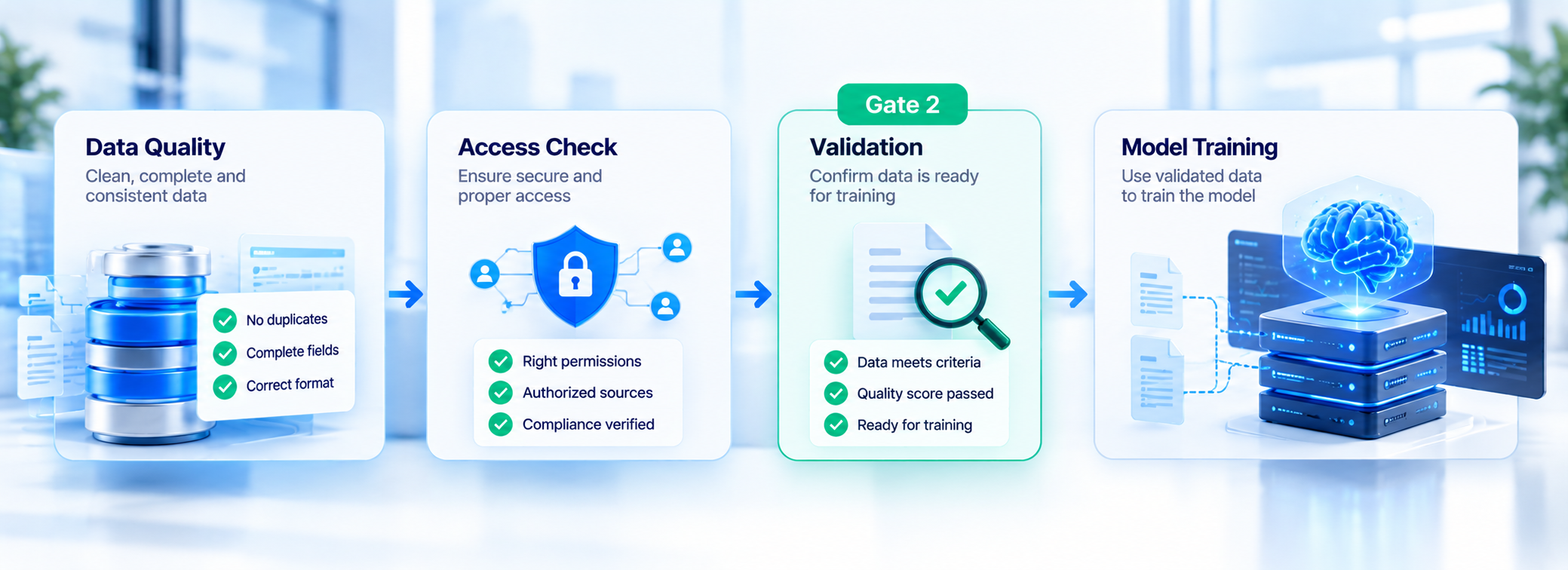
Test the awkward cases too, such as duplicate vendors, partial records, and scanned documents. A RAG proof of concept built on company knowledge needs current, permissioned sources as well.
Build the evaluation set from at least 300 real cases and include the 10% your team finds hardest. Data problems found here cost days. Found in production, they cost months and sink AI proof of concept credibility.
Gate 3: Prove Reliability Under Realistic Conditions
This gate tests what breaks agents: vague inputs, unavailable tools, malformed outputs, repeated requests, and failures halfway through a task.
Judge whether the agent took the right action and finished the job, alongside the usual model quality checks. Strong AI testing and evaluation turns these cases into an automated suite you can rerun anytime.
Run each case three times, because agents can choose different actions for the same input.
Every AI proof of concept needs this suite before any stakeholder demo. Most weak pilots die at this gate, and that is good news. An AI proof of concept that fails here costs a fraction of one that fails in front of customers.
Gate 4: Validate Production Readiness and Unit Economics
Production readiness means the system handles real latency, throughput, and concurrency with proper access controls, observability, versioning, and rollback. Check scalability at twice the expected volume.
Strong AI proof of concept teams also test what happens when a downstream system goes offline for an hour. Then work out the cost of each successful task, including inference, tools, infrastructure, and human review time.
Ask finance to review that model so the numbers survive budget season. Successful AI agent production depends on this math. If human review eats the savings, redesign before you spend more.
Gate 5: Expand Through a Controlled Rollout
Start in shadow mode, where the agent decides, and people act, for at least two weeks of real volume. Move next to human approved actions, then to one team or one segment of the workflow, and widen automation only when results hold. Agree on rollback triggers upfront, such as the error rate doubling for three days.
Share weekly results with the sponsor so the AI proof of concept stays visible during rollout. Keep a human approver on high-value actions even after rollout, and review that rule each quarter as the matures into a product. Teams that move AI POC to production through all five gates scale with confidence.
Here is what each gate should prove before more money moves forward:
|
Gate |
Evidence to collect |
Stop or redesign when |
|
Workflow fit |
Baseline, scope, named owner, target. |
No owner accepts accountability. |
|
Data readiness |
Quality thresholds, representative test set. |
Ground truth or access is missing. |
|
Reliability |
Success, error, escalation and recovery results. |
Critical errors hit money or customers. |
|
Production readiness |
Load tests, security sign off, cost model. |
Review costs erase the savings. |
|
Controlled scale |
Sustained results over the agreed period. |
Exceptions grow faster than adoption. |
Skipping a gate turns a promising AI proof of concept into an expensive cleanup and slows every AI POC to production effort that follows.
Define Success Metrics That Survive Contact With Production
Useful success metrics work on three levels. Business metrics show cycle time, cost per completed task, throughput, service levels, and manual effort saved. Quality metrics show verified completion, action errors, escalations, and rework. Agent metrics show tool call success, blocked unauthorized actions, recovery rate, and how often people approve the agent’s work.
Pick two business numbers your CFO already watches and keep model benchmark scores in the appendix of your report. Funding for any AI proof of concept follows the numbers leaders already care about.
Each metric needs a baseline, a target, a measurement window and an owner, written into the charter before the first test run. That keeps the goalposts fixed. Agree on thresholds with the sponsor early, and later AI POC to production debates stay short.
Treat critical failures separately from averages. A 96% completion rate looks great until the missing 4% includes duplicate vendor payments, and one wrong payment outweighs a hundred saved minutes. Triage and payments agents deserve different bars.
Count everything an AI proof of concept will cost at scale: model usage, infrastructure, integration work, monitoring, human review, maintenance and exception handling.
Model how volume and task complexity will grow, since cost per task often rises at 10,000 cases when exceptions climb. Run the numbers at three volume levels before you approve AI POC to production spending. Then capture the decision on a one-page scorecard like this:
|
Metric |
Baseline |
Target |
Observed |
Evidence |
Owner |
Decision |
|
Cost per completed invoice |
$6.40 |
$3.00 |
$3.80 |
Finance report |
AP lead |
Redesign review step |
Every AI proof of concept review then ends with a clear call. Without a scorecard, the meeting turns into an opinion contest, and the AI proof of concept loses its sponsor.
Build the Operating Model: MLOps, Governance, and Change Management
Treat Agent Workflows as Versioned Production Systems: An AI proof of concept headed for launch deserves the same discipline as any production system, and MLOps practices give you that.
Run regression tests before each release, version prompts, models, and tools together, and trace every decision, tool call, approval, and outcome. Release changes in small, reversible steps.
When a vendor updates its model, rerun the full regression suite before you switch traffic. Every failure in production should flow back into the evaluation set, so each AI proof of concept lesson strengthens the next release.
Design Governance Around the Agent’s Level of Authority: Authority should grow in clear steps. An agent can read data, recommend, draft for a person to send, act after approval, or act alone within tight limits.
Each step up needs stronger controls, from access logging to named approvers, audit trails, rollback, and sampling audits.
Give every tool least-privilege permissions, and hold actions with financial, legal, privacy, or customer impact to the strictest standard.
Assign each AI proof of concept action to one authority level before anyone writes code, and review those levels every quarter.
Secure Stakeholder Buy-In Before Scaling: Stakeholder buy-in starts with four named owners covering the business, the technology, security or risk, and day to day support. Change management matters as much as the code.
Train people on escalation paths and on when to override the agent. Watch adoption and override patterns over login counts. High override rates signal a trust problem.
Share AI proof of concept wins and failures openly, since candor builds trust. Moving AI POC to production without trained users wastes the build.
Connect the Pilot to a Funded AI Roadmap
Every AI proof of concept should end with one of four decisions: deploy, redesign, narrow the scope, or stop. Build your AI roadmap around that call, and budget for ongoing ownership, integrations, and monitoring. A good AI product roadmap and product roadmap planning habits help you reuse evaluation sets, connectors, and guardrails across projects.
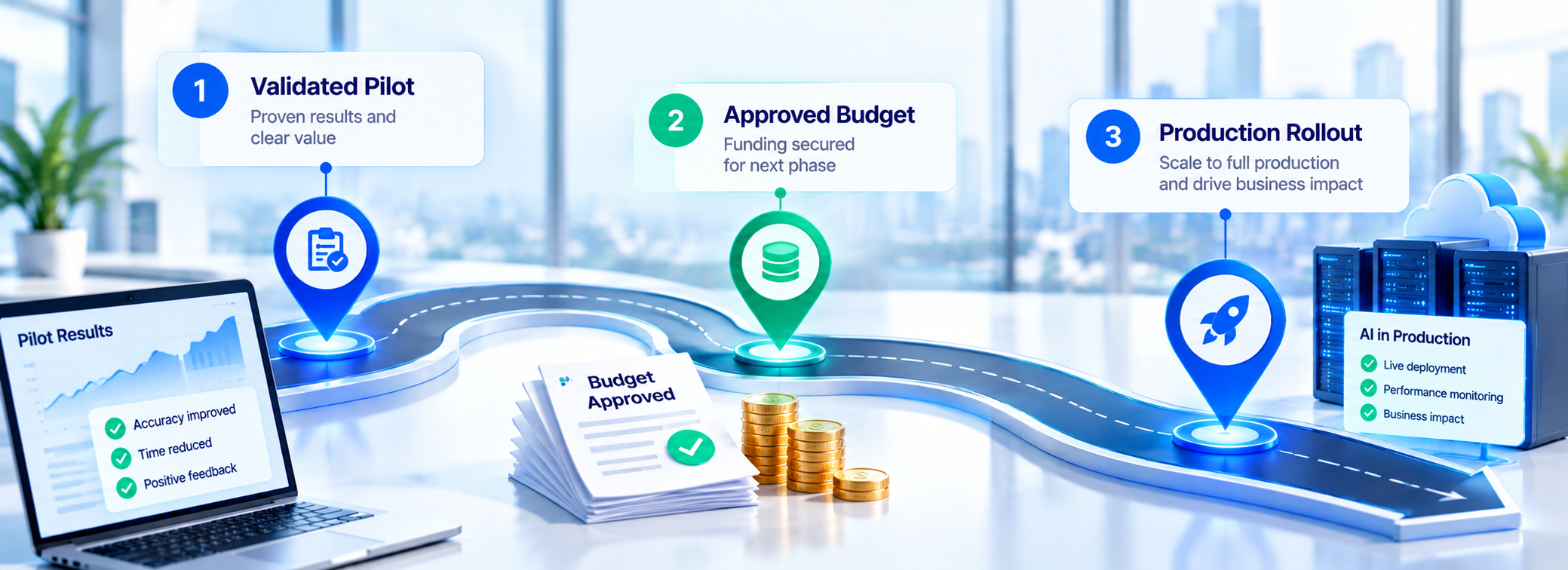
A successful pilot often leads to an MVP, and AI MVP development turns the validated workflow into a product people rely on. Write down what each AI proof of concept taught you about data, tools, and users. A funded plan keeps AI POC to production momentum alive.
How Patoliya Infotech Approaches AI Proof of Concept Development
At Patoliya Infotech, we focus on validating AI against real business workflows before scaling.
Our approach combines data readiness, workflow integration, reliability testing, and measurable success criteria. From an initial AI proof of concept to production deployment, we prioritize verified task completion, operational costs, security controls, and human oversight.
This helps businesses identify risks early, validate practical value, and make informed decisions about scaling AI solutions.
Conclusion
An AI proof of concept reduces uncertainty by testing workflow fit, data readiness, reliability, economics, and scalability. The five gates turn these questions into evidence-based decisions before further funding. Some pilots should stop when risks remain high, or savings disappear under human review.
Others can progress through controlled rollouts as reliability and business value improve. Treat every AI proof of concept as a funding decision with clear success criteria and exit conditions. This makes AI POC to production a repeatable process rather than an expensive experiment.
FAQs:
A business workflow owner should lead an AI proof of concept alongside technical, data, security, and operations stakeholders. Clear accountability ensures decisions reflect measurable business outcomes.
Prioritize workflows with measurable costs, repeatable steps, accessible data, and manageable risks. Avoid processes requiring complex judgment until reliability and oversight requirements are clearly established.
Budget for data preparation, integration, model usage, testing, monitoring, security reviews, and human oversight. Include ongoing operating costs to avoid unrealistic production cost estimates.
Executives should review task completion results, critical errors, escalation rates, cost per completed task, security findings, and operational ownership before approving broader deployment.
Define success criteria, decision owners, production requirements, and exit conditions before testing begins. Schedule gate reviews to resolve blockers or stop pilots without clear progress.
A successful AI proof of concept should lead to a controlled rollout plan covering integration, monitoring, user training, governance, support ownership, and measurable performance targets.