How Modern Teams Use AI Marketing Tools to Scale Faster
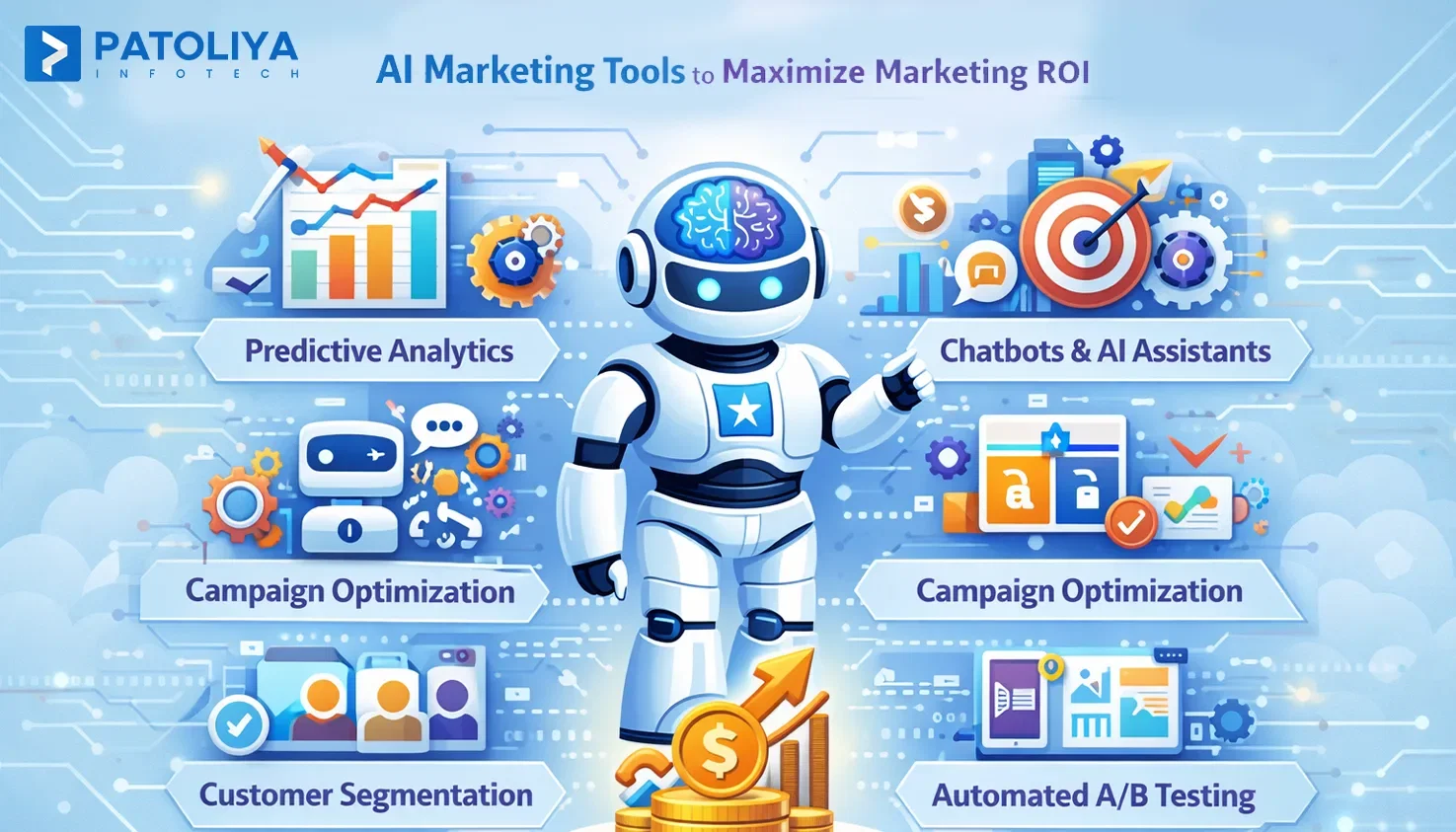
AI marketing tools are transforming how modern teams compete in fast paced digital markets. Marketing execution speed has become a decisive competitive advantage in crowded industries. Teams that rely on manual coordination struggle to translate strategy into measurable outcomes quickly. AI marketing tools close this execution gap by automating workflows, accelerating optimization, and enabling real time decision making. Most organizations begin applying automation to content production, performance analytics, personalization, and lead management processes. This guide focuses on practical implementation strategies that drive operational efficiency and revenue impact rather than experimentation.Many growth-focused organizations work with an experienced enterprise digital transformation partner to implement scalable AI driven marketing systems.
How Teams Actually Use AI Marketing Tools to Scale Growth
From Manual Campaigns to Automated Growth Systems
Growth teams are moving from manual campaign coordination to structured automation. With AI marketing tools, workflows now connect CRM activity, website behavior, and ad platforms in real time. Instead of launching static campaigns, triggers activate based on user intent signals.
For instance, when a prospect downloads a product comparison guide, AI tools for digital marketing can automatically segment that lead and initiate a targeted nurturing sequence. Meanwhile, AI digital marketing tools dynamically adjust retargeting budgets based on engagement level to reduce acquisition waste.
Where AI Delivers the Highest ROI for Marketing Teams
The highest returns come from faster optimization and smarter allocation. Using AI marketing tools, teams automatically shift budget toward high-performing campaigns without waiting for manual reports. Insights from AI marketing analytics highlight which activities drive pipeline and not vanity metrics. This enables confident scaling decisions backed by performance data.
AI Marketing Tools for Strategy, Research, and Planning
AI Powered Market and Audience Intelligence
Strategic planning increasingly depends on data-driven insights. Using AI marketing tools, teams analyze customer behavior, competitor positioning, and demand shifts in real time. Instead of static personas, behavioral clusters are created from engagement signals and purchase patterns. Recent enterprise AI adoption research highlights how predictive analytics improves marketing ROI when properly integrated.
Advanced AI tools for the digital marketing process, CRM interactions, and search trends to uncover emerging segments. At the same time, AI digital marketing tools surface high-intent micro-audiences that allow more focused targeting strategies.
Predictive Insights for Campaign and Channel Selection
Campaign planning is becoming predictive rather than reactive. With AI marketing tools, marketers simulate expected conversions, channel efficiency, and revenue contribution before investing budget. This reduces planning risk and improves cross-team alignment. Leaders can approve campaigns with clearer ROI expectations. This is because forecasting models connect marketing execution directly to sales impact.
AI Content Generation Tools Teams Use at Scale
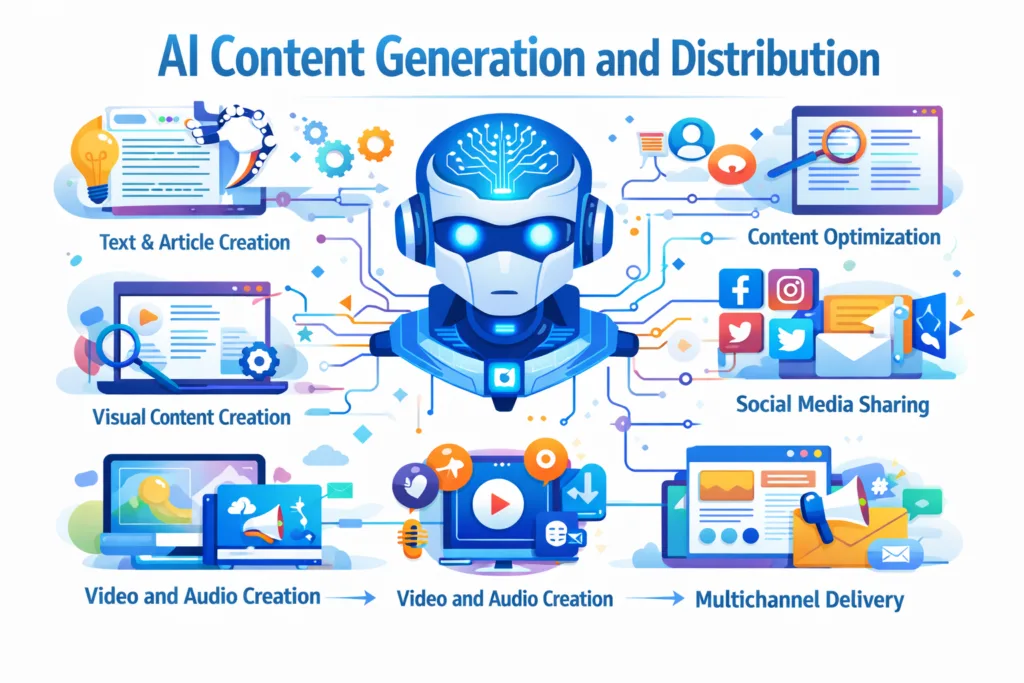
Blog, Landing Page, and Ad Copy Automation
- Faster content ideation using AI marketing tools that generate blog outlines, headline variations, and CTA options within minutes.
- Data-backed messaging recommendations through AI content generation tools that analyze historical engagement and conversion insights.
- Seamless CMS, CRM, and ad platform integrations through AI tools for digital marketing to reduce workflow friction.
- Automated performance tracking with AI digital marketing tools that suggest updates based on CTR and conversions.
- Rapid A/B testing capabilities without increasing team size or production costs.
Content Repurposing Across Channels Using AI
Scaling distribution is equally important. Using AI marketing tools, teams transform webinars into email sequences, LinkedIn posts, and paid ad creatives automatically. This maximizes asset value while maintaining messaging consistency.
For instance, a 45 minute webinar can be repurposed into an SEO blog post, several LinkedIn posts, an email nurture sequence, and short paid ad creatives. Advanced AI content generation tools and AI tools for digital marketing automatically adjust tone and structure for each platform, while AI digital marketing tools track performance to optimize distribution.
Guardrails Teams Use to Avoid Low Quality AI Content
High-performing teams implement structured prompts, fact verification, and editorial review processes to maintain authority. AI marketing tools speed up production, but human oversight protects credibility and ensures brand alignment.
AI SEO Tools That Replace Manual Optimization Work
Search Intent Mapping and Topic Expansion
Organic growth becomes more systematic when teams rely on AI marketing tools for keyword clustering and opportunity detection. Instead of manual spreadsheets, automation identifies semantic relationships and intent categories. Modern AI seo tools reveal content gaps competitors are exploiting. With support from AI tools for digital marketing, marketers prioritize high-conversion search themes over broad traffic terms. Many AI digital marketing tools also monitor ranking volatility and surface pages requiring updates.
On Page Optimization at Scale
Scaling optimization across large content libraries requires automation. Using AI marketing tools, teams audit metadata, headings, internal links, and schema across dozens of pages instantly. These systems flag structural weaknesses and recommend adjustments in real time. Continuous monitoring ensures rankings remain stable while reducing manual workload significantly.
AI Email Marketing Tools for Personalization and Timing
Behavioral Email Triggers Powered by AI
Email performance improves when campaigns respond to behavior instead of fixed schedules. With AI marketing tools, workflows activate when users revisit product pages or abandon carts. Advanced AI email marketing tools analyze browsing and engagement patterns to refine segmentation automatically.
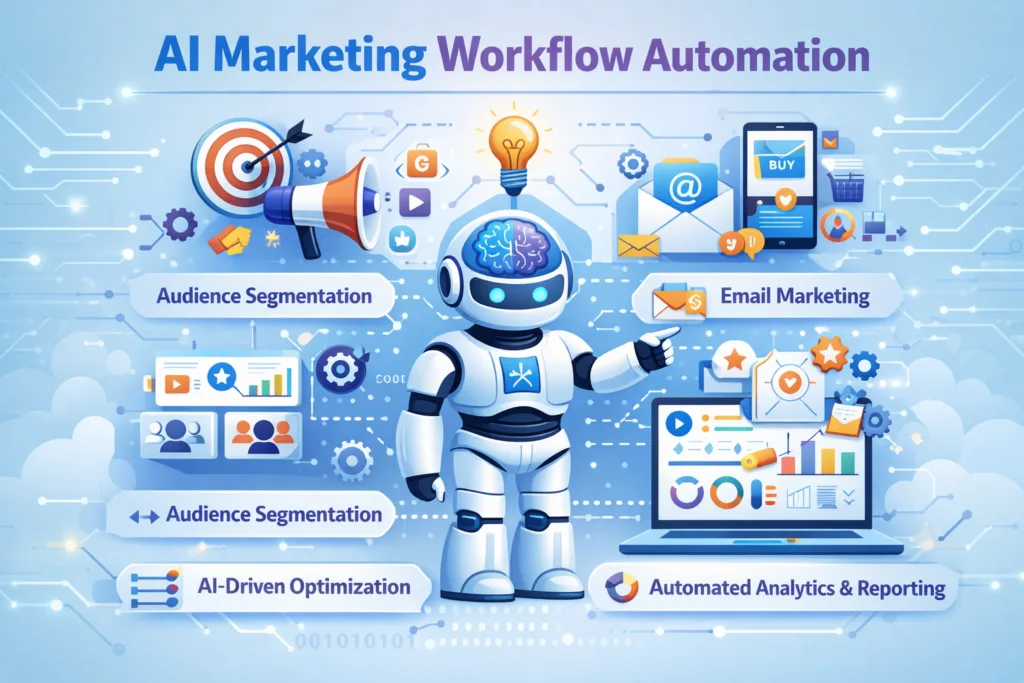
Supported by AI tools for digital marketing, targeting becomes predictive rather than rule-based. At the same time, AI digital marketing tools adjust message frequency to prevent fatigue while maximizing relevance.
Subject Line, Copy, and Send Time Optimization
Manual A/B testing limits scale. Using AI marketing tools, subject lines and body copy are generated and scored for predicted open probability. These systems also determine optimal send times based on historical engagement data. Embedded AI personalization tools dynamically adapt content blocks based on user behavior, improving click-through rates and overall campaign revenue impact.
AI Lead Scoring and Funnel Intelligence Tools
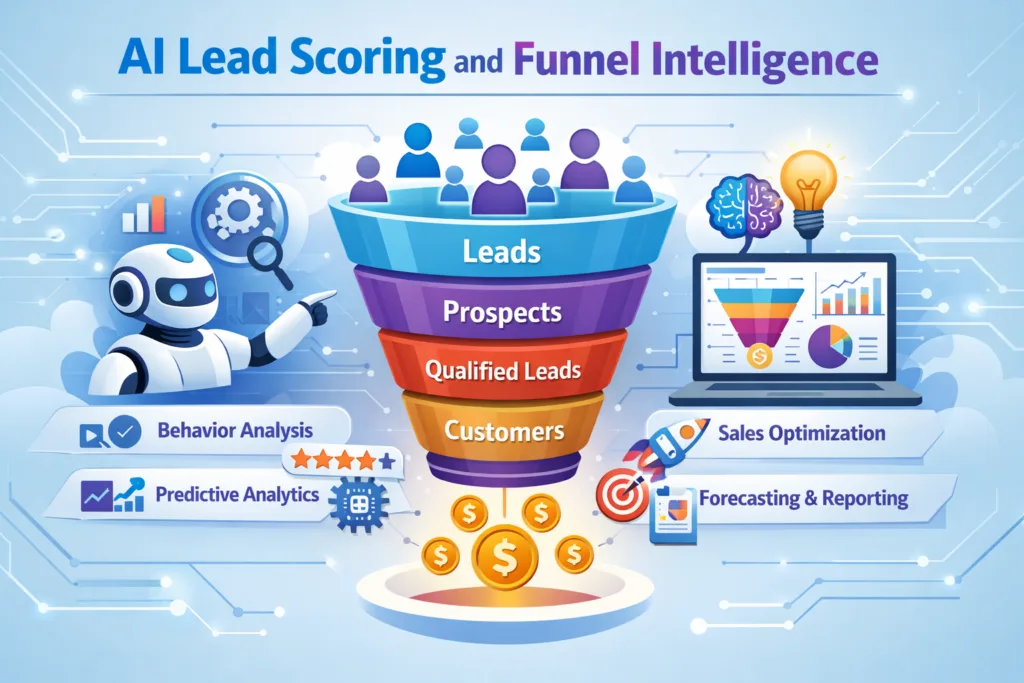
How AI Replaces Rule Based Lead Scoring
Traditional scoring gives fixed points for actions like email opens, but real intent is more complex. With AI marketing tools, models evaluate behavior patterns, buying signals, deal history, and firmographic fit automatically. Through AI lead scoring, these systems dynamically update priorities as new CRM and interaction data is captured.
For instance, if a prospect revisits the pricing page twice and downloads a case study, their score increases instantly. AI tools for digital marketing also identify account level engagement trends, replacing guesswork with predictive prioritization.
Sales and Marketing Alignment Using AI Insights
Alignment improves when AI marketing tools provide shared insight into conversion probability and funnel movement. Sales teams see which leads show buying momentum, while marketing understands which campaigns influence revenue.
For instance, if AI digital marketing tools reveal that webinar attendees convert 40 percent faster than ebook downloads, teams can prioritize follow ups and reallocate budget accordingly, accelerating pipeline velocity and improving close rates.
AI Marketing Analytics Tools for Decision Making
From Dashboard Reporting to Insight Generation
Traditional dashboards display surface metrics like clicks and impressions without context. With AI marketing tools, analytics platforms automatically connect CRM, advertising, and website data to identify performance drivers and detect anomalies. Instead of manually reviewing reports, teams receive structured insights that explain what changed and why, improving response speed and strategic clarity across campaigns.
Forecasting Revenue Impact Before Campaign Launch
Decision making improves when AI marketing tools simulate expected results before budget allocation. Using historical conversions, audience behavior, and channel performance trends, AI digital marketing tools estimate pipeline contribution, acquisition cost, and revenue potential.
AI tools for digital marketing compare multiple scenarios, helping leaders shift investment toward high return channels. This predictive modeling reduces financial risk, strengthens budget justification, and ensures campaigns launch with measurable revenue expectations aligned to business goals.
How Patoliya Infotech Helps Teams Implement AI Marketing Tools
Custom AI Marketing Tool Development
Patoliya Infotech designs AI marketing tools aligned with specific business models, funnel structures, and revenue goals. Instead of generic automation, solutions are built around real workflows, ensuring measurable performance improvements across campaigns, lead management, and analytics processes. Building intelligent marketing systems often requires advanced custom SaaS platform development tailored to real business workflows.
Integrating AI Tools Into Existing Marketing Stacks
Implementation focuses on seamless CRM, advertising, and analytics integration. By embedding AI marketing tools into current systems, teams avoid disruption while gaining predictive insights and automation that enhance operational efficiency and decision accuracy.
Ensuring Data Security, Accuracy, and Scalability
We prioritize structured data pipelines, compliance standards, and scalable architecture. Secure deployment ensures AI tools for digital marketing operate reliably while maintaining performance consistency as traffic, campaigns, and datasets expand.
Conclusion
Selecting AI marketing tools should begin with workflow analysis, not industry trends. Teams must evaluate bottlenecks in lead generation, content production, analytics, or reporting before adoption. A phased rollout reduces operational risk and allows performance benchmarking at each stage. When implemented strategically, AI marketing tools strengthen forecasting accuracy, improve resource allocation, and accelerate revenue growth. Long-term success depends on aligning automation with measurable business objectives rather than pursuing automation for its own sake.
FAQs
AI marketing tools use machine learning and automation to optimize campaigns, analyze performance data, score leads, personalize messaging, and improve forecasting accuracy across multichannel digital marketing strategies.
Yes, small teams benefit by automating repetitive tasks, improving targeting precision, and reducing manual reporting workload. Scalable solutions allow gradual adoption without requiring large infrastructure investments.
AI digital marketing tools analyze historical data, optimize budget allocation, predict conversions, and identify high-intent audiences, allowing teams to reduce wasted spend and improve measurable returns.
Teams should evaluate data quality, integration complexity, privacy compliance, automation risks, and internal readiness to interpret AI insights effectively before committing to full-scale deployment.
AI marketing tools enhance efficiency and decision-making, but they cannot replace strategic thinking, creative storytelling, or relationship building that human marketers provide.
Most teams observe measurable improvements within three to six months, depending on data maturity, implementation scope, and alignment between marketing objectives and AI driven optimization strategies.