AI food waste tracking software for Restaurant Cost Control
TL; DR: AI food waste tracking software only creates value when kitchens turn waste data into action. Cameras and scales measure what gets thrown away, but purchasing, production, and menu decisions determine whether that measurement lowers food cost.
Most kitchens already know they waste food. What they lack is proof of why. AI food waste tracking software solves the measurement problem, not the decision problem, and that distinction separates operations that cut cost from operations that collect pretty dashboards. A camera above a bin can identify a discarded chicken breast in seconds. It cannot tell a chef to lower a prep batch or renegotiate a supplier order.
This guide explains what these systems genuinely deliver, where computer vision food waste detection creates real financial impact, and how operators should evaluate a purchase before signing a contract.
What AI food waste tracking software Actually Does
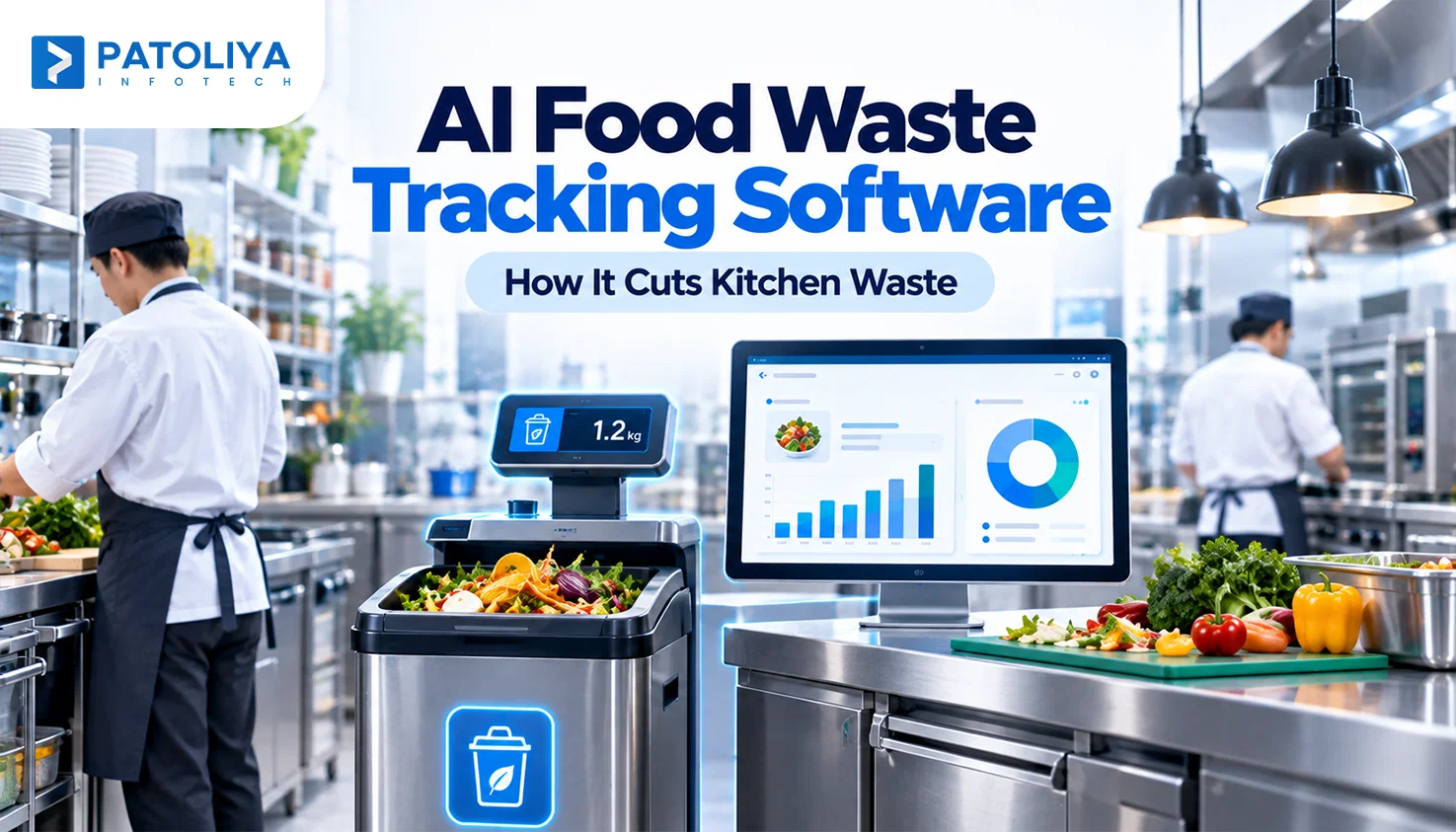
AI food waste tracking software converts a discarded food event into structured, usable data by capturing an image, identifying the item, weighing it, and calculating its cost, all within seconds of the waste happening as part of a connected restaurant technology environment.
The workflow runs in a fixed sequence every time food gets discarded. A camera or sensor captures the event, software identifies the food type, a scale records weight, the system classifies the waste reason, and calculates the dollar value. This chain is what makes AI food waste tracking software different from a clipboard log filled out at the end of a shift.
|
Data Point |
Purpose |
|
Food type |
Identifies what was thrown away. |
|
Weight |
Quantifies volume of loss. |
|
Waste reason |
Explains why it happened. |
|
Time |
Flags shift or daypart patterns. |
|
Location |
Compares kitchens or stations. |
|
Estimated cost |
Converts weight into dollars. |
Manual logs rely on staff memory and honesty, both of which fail during a busy service. AI food waste tracking software removes that gap by recording every discard automatically, giving operators a dataset that can support a structured food waste assessment based on actual kitchen behavior instead of end of shift guesswork.
What Modern Food Waste Tracking Systems Already Cover
Most vendors now offer camera identification, automated weighing, and a dashboard, so buyers should treat these three capabilities as baseline expectations rather than differentiators.
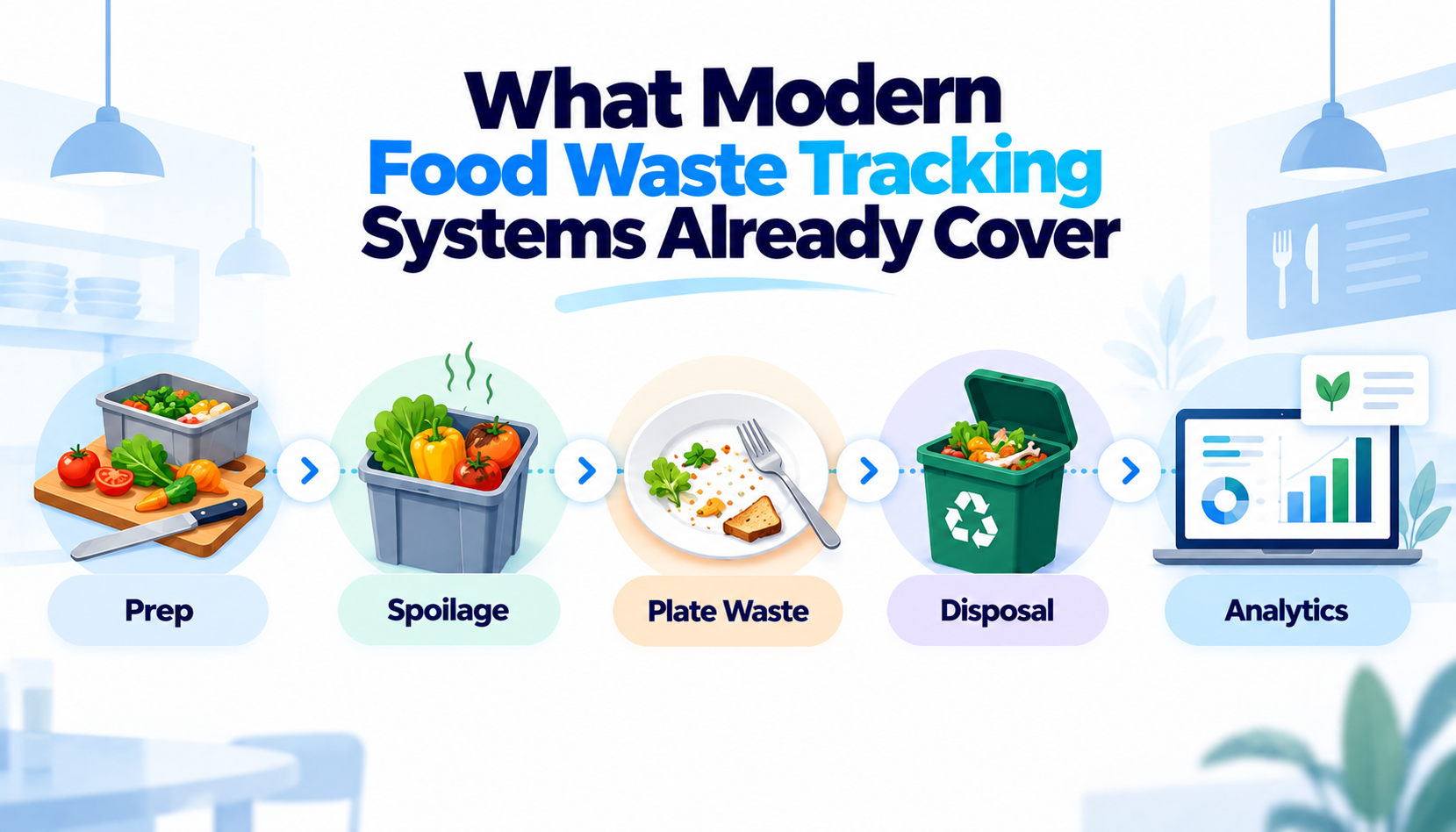
Computer vision identifies discarded food. Image recognition software scans each discard and matches it against a trained food database, tagging the item without staff input. This is now standard across the category and no longer a selling point on its own.
Smart scales quantify the waste. Every discard gets weighed at the point of disposal, and the system attributes a cost using recipe or ingredient pricing already stored in the platform, extending the role of restaurant technology into kitchen cost control. For AI food waste tracking software, this step is what makes computer vision food waste data financially usable rather than just descriptive.
Dashboards show where waste accumulates.
- Waste trends across days and weeks.
- High waste ingredients ranked by cost.
- Total waste cost by station or shift.
- Waste reasons such as overproduction or spoilage.
- Location comparisons for multi-site operators.
The limitation of measurement only systems. Knowing what got wasted is not the same as knowing what operational decision should change because of it.
A dashboard can show that chicken waste rose 12 percent this month, but it cannot tell a manager whether the fix is smaller batches, a menu price change, or a supplier switch.
This is exactly where most AI food waste tracking software stops delivering value, and where buyers need to push vendors harder during evaluation.
Where Computer Vision Actually Creates Value in a Restaurant Kitchen
Computer vision food waste systems create financial value only when detection connects to a specific operational fix, which is where AI consulting can help align model capabilities with measurable business requirements.
Detection Is Only the First Layer
Real value follows a chain: recognizing waste, measuring waste, identifying the cause, assigning financial impact, and recommending an action. Each layer builds on the previous one. A system stuck at recognition tells you a tomato was thrown away.
A system built through the full chain tells you that tomato waste costs 340 dollars a month because prep portions run 20 percent oversized during dinner service. That second answer is what an operator can actually act on.
Accuracy Matters More Than the AI Label
Buyers evaluating AI food waste tracking software vendors should test these areas directly rather than trusting marketing claims:
|
Accuracy Area |
What to Verify |
|
Recognition accuracy |
Correct food identification rate. |
|
Weight accuracy |
Scale precision under real conditions. |
|
Classification accuracy |
Correct waste reason tagging. |
|
Mixed food handling |
Performance on combined discards. |
|
Portion level measurement |
Precision below full item weight. |
|
Confidence scoring |
System flags uncertain reads. |
|
Exception handling |
Manual correction workflow quality. |
The Difficult Cases Vendors Should Demonstrate
- Ask vendors to run live tests using real-world scenarios, not polished demo cases.
- Test multiple ingredients discarded together.
- Test liquids, sauces, bones, and other inedible material.
- Test new menu items and seasonal ingredient substitutions.
- Test different portion sizes and serving variations.
- Test performance during high-volume service periods.
- Use these scenarios to expose the platform’s actual production limits.
- A clean demo with single-item discards proves very little about real-world performance.
The right evaluation question is not how accurate the AI claims to be in general. It is how accurately the system classifies and costs the waste generated inside your specific kitchen, with your menu, your prep style, and your service pace. This single question separates a serious commercial evaluation from a sales pitch.
Turning Waste Data Into Restaurant Operating Decisions
AI food waste tracking software only earns its cost when waste data changes purchasing, production, and menu decisions, and each of those connections requires deliberate setup rather than automatic reporting.
Waste patterns expose purchasing mistakes long before a finance review would catch them. Over ordering, slow moving ingredients, excess safety stock, shelf life problems, and poor demand forecasting all show up as recurring waste categories, alongside food handling and storage practices addressed by the FDA Food Code.
A buyer who orders 40 pounds of salmon weekly but sees consistent spoilage waste has a purchasing volume problem, not a kitchen skill problem, and AI food waste tracking software makes that gap visible within weeks instead of quarters.
Production data reveals a different set of issues. Overproduction, oversized batch sizes, excess prep quantities, yield loss, and poor production timing generate waste that purchasing changes alone cannot fix.
For instance, a kitchen prepping 60 portions of a soup that historically sells 35 on a Tuesday will show a repeatable waste pattern tied directly to batch planning, and adjusting that single variable often produces faster restaurant food waste cost reduction than any purchasing change.
Menu performance is where most competitor platforms stop short. Waste data becomes meaningful only when combined with POS sales, ingredient cost, portion size, menu mix, item profitability, and the broader restaurant management software environment.
A high waste menu item is not automatically a problem item. A high volume, high margin seller with moderate waste may still be the most profitable dish on the menu, while a low volume item with the same waste percentage may need removal entirely.
Multi-location operators need one additional layer: correct benchmarking. Comparing raw waste kilograms across locations tells leadership almost nothing without considering operational factors such as restaurant scheduling software, covers, revenue, and daypart. Waste needs to sit against covers, revenue, food purchased, daypart, and menu mix before it becomes a usable executive metric.
The Data Architecture Behind Useful Food Waste Analytics
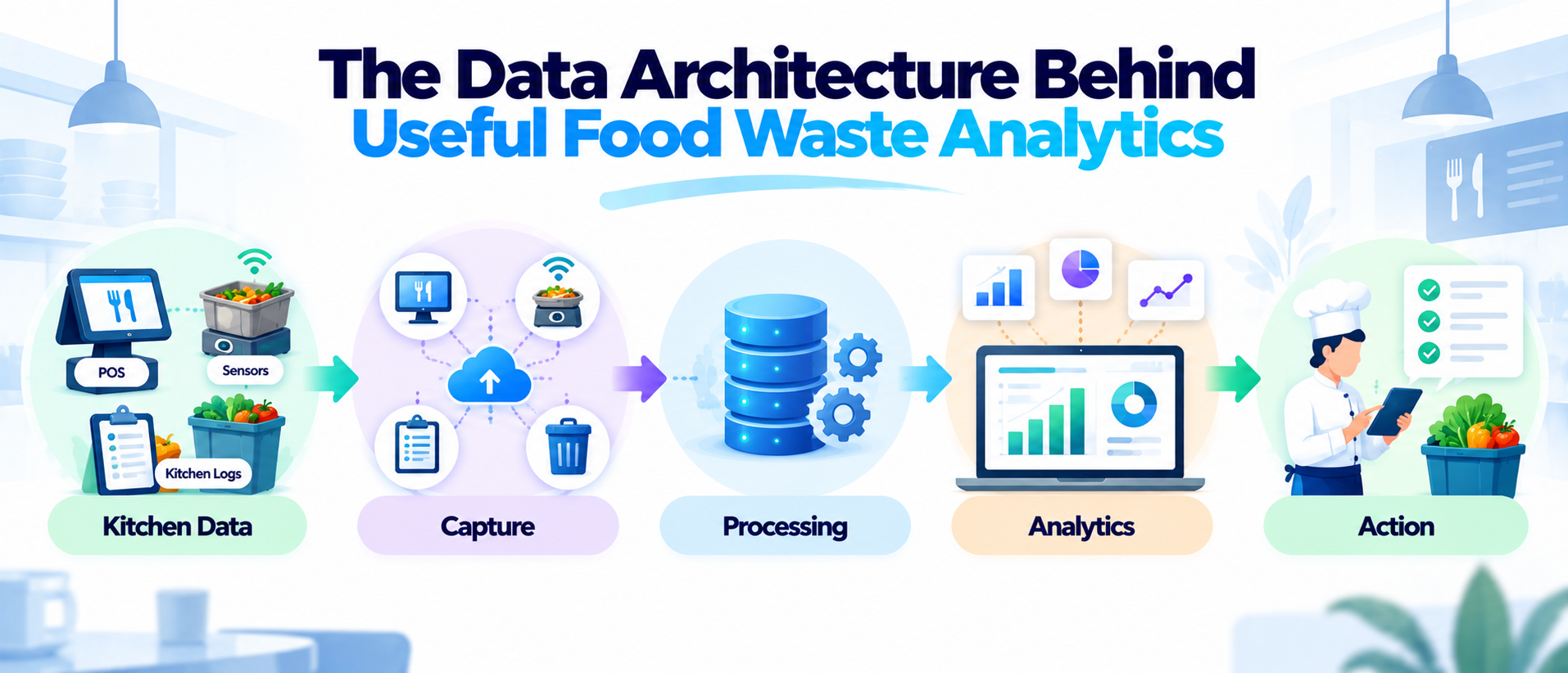
A serious AI food waste tracking software runs on five connected layers, and buyers should map each layer before assuming the system fits their operation.
Capture Layer
This layer includes the computer vision camera, smart bin, scale, and supporting sensors that record the physical waste event as it happens on the kitchen floor.
Intelligence Layer
Food recognition, classification, weight measurement, and cost calculation all run here, converting the raw capture into structured, usable data points.
Analytics Layer
The kitchen waste analytics dashboard lives in this layer, surfacing trends, alerts, benchmarks, and full waste cost analysis through web application development services designed for managers and executives.
Integration Layer
A platform limited to its own dashboard has limited enterprise value, which makes custom software integration important when waste data must connect with existing restaurant systems. It needs to connect with POS, inventory, procurement, recipe costing, ERP, payment gateway integration, and BI or data warehouse systems so waste data joins the rest of the operating picture.
Action Layer
The full loop closes here: waste gets detected, the cause gets identified, an operational action follows, and the result gets measured.
This layer is what separates a tracking tool from a true restaurant intelligence capability, and it is the layer most vendors underdeliver on.
How to Tell if Your Waste Data Is Reliable Enough to Act On
Reliable AI food waste tracking software data has to cover every waste stream that matters to the business and hold up when someone traces a number back to its source.
Does the system capture the waste that matters?
Coverage should span prep waste, production waste, spoilage, service waste, and plate waste where relevant to the concept. A system that only tracks one stream will underreport total loss significantly.
How does it handle uncertain data?
Confidence scores, unknown category flags, manual correction options, exception handling, and regular model updates all indicate a platform built for real kitchen conditions rather than a controlled demo environment.
Can the numbers be traced back?
A serious enterprise platform lets a finance or operations leader follow the full path from source event to classification to calculation to the final reported figure. This traceability becomes essential once waste cost turns into a KPI reviewed at the leadership level.
Can the data be compared across locations?
Ask specifically whether the platform supports normalized benchmarking against covers, revenue, or purchase volume rather than simply ranking locations by total waste output, since raw rankings routinely mislead multi-unit operators.
How to Calculate the ROI of AI food waste tracking software
ROI on AI food waste tracking software depends on a clean baseline, an honest measurement window, and savings attribution that holds up under finance scrutiny, not on vendor percentage claims.
Start by establishing your current waste cost baseline using waste volume multiplied by ingredient cost multiplied by frequency, then add secondary costs such as disposal, labor time, and purchasing inefficiency tied to waste.
This baseline is the number every future comparison depends on, so it needs to reflect several weeks of typical operation rather than one unusually slow period.
Once the baseline exists, track five figures consistently: baseline waste cost, post-deployment waste cost, the resulting reduction, the operational changes actually made, and the savings those changes produced.
Weigh the total against software and implementation costs to get a genuine payback figure rather than a marketing estimate.
Vendor case studies show potential. Your business case needs your own baseline and your own post-deployment results, because kitchen conditions, menu complexity, and service volume vary too much for another operator's number to transfer cleanly.
A pilot program should answer five specific questions: how much waste got detected, how accurate was classification, which waste sources mattered most financially, what actions the team actually took, and how much money got recovered or avoided.
The goal of a pilot is not proving the software functions correctly. It is proving the software produces enough measurable value to justify a full rollout.
When AI food waste tracking software Is Actually Worth Buying
AI food waste tracking software delivers the strongest returns in high-volume, multi-location operations, and delivers weak or negative returns where nobody owns waste reduction as a job responsibility.
The strongest fit is multi-location restaurant groups, high-volume kitchens, hotels, central kitchens, buffets, and large institutional food operations facing persistent food-cost pressure.
It is a weaker fit when waste is already low, teams lack authority to act, workflows cannot support new hardware, no owner is accountable for reduction, or the platform would operate as an isolated dashboard.
The deciding question is not whether a kitchen produces enough waste to justify tracking it. It is whether the operation can convert better waste visibility into a measurable financial improvement within a defined timeframe.
What Buyers Should Demand From a Food Waste Technology Vendor
Buyers evaluating AI food waste tracking software vendors should demand financial proof, real kitchen testing, integration capability, and an adoption plan before signing any contract, since a polished demo reveals almost nothing about deployment performance.
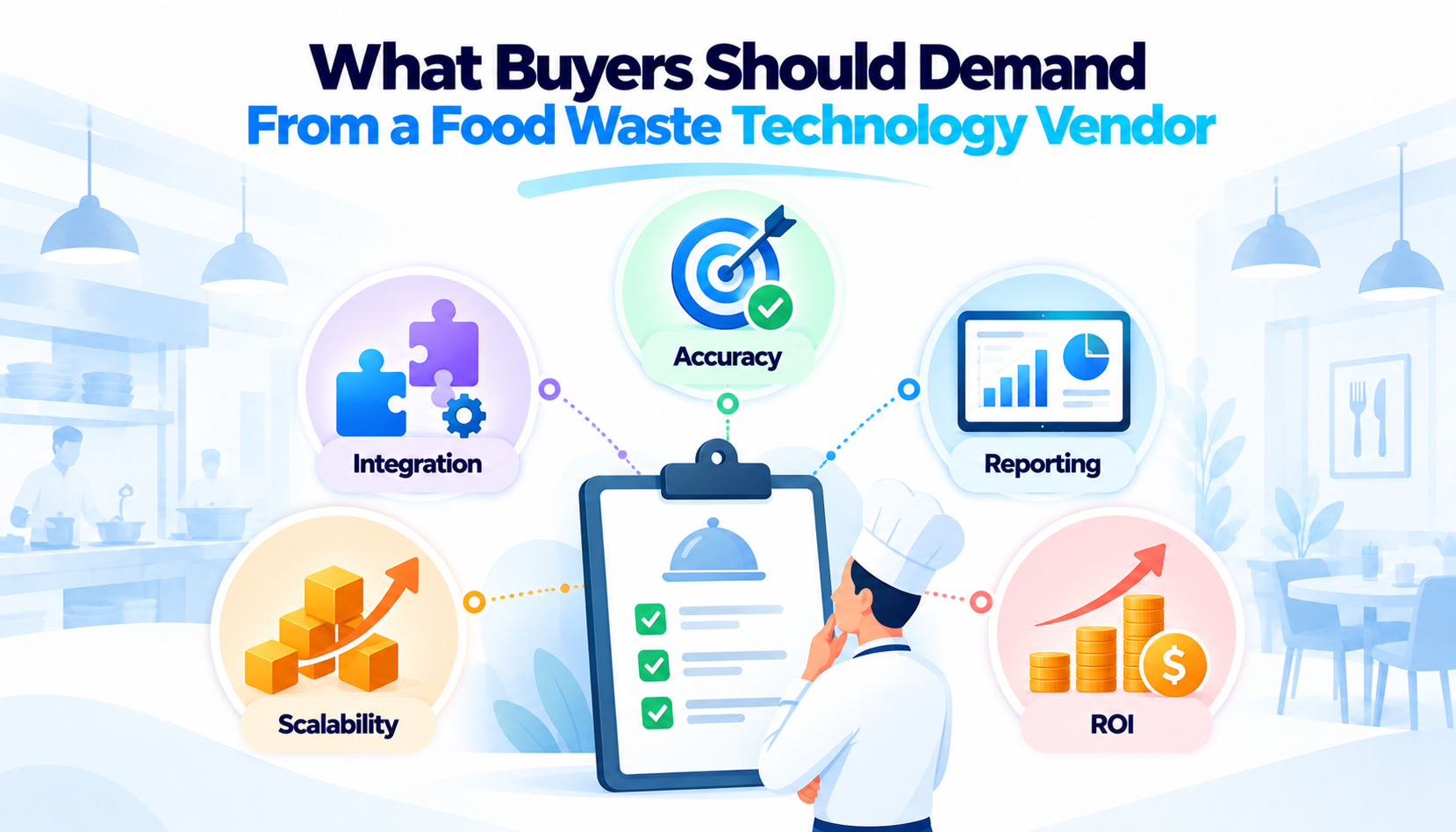
Demand financial evidence directly. Ask how savings are calculated, what baseline methodology the vendor used, what measurement period backs their claims, what customer sample size supports those numbers, what payback assumptions they rely on, and what portion of savings is directly attributable to the platform itself rather than unrelated operational changes.
Demand proof under your own operating conditions. Test the system against your menu, your kitchen layout, your specific waste types, your operating volume, your peak service periods, and, for multi-unit operators, multiple locations simultaneously.
Demand integration. Confirm the AI food waste tracking software has an open API, supports full data export, connects with POS and inventory systems, feeds existing BI infrastructure, and can be extended through custom software development services when standard integrations are not enough.
Demand a real adoption plan. Accurate data carries little value if kitchen managers never act on it. As one restaurant operations consultant put it, "The software finds the waste. The team still has to decide to fix it." Evaluate technology, implementation, adoption, and measurable outcome together rather than judging AI capability in isolation.
Food Waste Tracking Vendor Evaluation Scorecard
|
Evaluation Area |
What Leadership Should Verify |
|
Recognition |
Accuracy against your actual waste. |
|
Measurement |
Weight and quantity accuracy. |
|
Coverage |
Relevant waste streams captured. |
|
Workflow |
Staff effort and disruption. |
|
Analytics |
Cause, cost, and trend visibility. |
|
Integration |
POS, inventory, and BI connectivity. |
|
Benchmarking |
Normalized multi-location comparison. |
|
ROI |
Verifiable financial impact. |
|
Data |
Ownership, export and API access. |
|
Adoption |
Implementation and operational support. |
How Patoliya Infotech Turns Kitchen Data Into Operational Intelligence
Food waste tracking becomes valuable when the underlying data can support decisions across purchasing, production, inventory, and finance, supported by AI product engineering that connects the intelligence layer to operational systems. Patoliya Infotech brings experience across AI/ML, computer vision, cloud engineering, and enterprise data platforms to build that connected intelligence layer.
Our engineering experience includes platforms managing 10M+ enterprise records and systems handling 1,000+ daily work orders. The same expertise can be applied to connect computer vision and smart-scale data with POS, inventory, procurement, and recipe costing systems.
The result is a data foundation that can identify waste patterns, calculate their financial impact, benchmark locations, and help teams measure whether corrective actions actually reduce food costs.
Conclusion
A kitchen does not gain value simply because software can recognize discarded food. AI food waste tracking software earns its budget when the system connects waste to cause, cause to cost, and cost to an operational decision that produces a measurable result.
The strongest vendor is not the one with the most impressive recognition claim. It is the one whose platform integrates cleanly, reports honestly, and drives a financial outcome your finance team can verify. Let's talk about what that would look like inside your kitchens.
FAQs:
Yes. AI food waste tracking software can connect waste events with inventory, procurement, recipe costing, and POS data to reveal how discarded ingredients affect purchasing and overall food costs.
Restaurants should track preparation waste, overproduction, spoilage, expired inventory, service waste, and plate waste where relevant to understand where losses occur throughout kitchen operations.
Computer vision food waste detection becomes harder with mixed ingredients, sauces, liquids, and unknown items. Confidence scoring, exception handling, and manual corrections help maintain reliable waste data.
Recurring spoilage, over-ordering, and slow-moving ingredients can expose purchasing and forecasting problems, helping operators adjust order quantities, safety stock, and replenishment decisions for better restaurant food waste cost reduction.
Combining waste with POS sales, ingredient costs, portion sizes, and margins helps determine whether waste reflects weak demand, excessive preparation, or acceptable losses from profitable menu items.
Multi-location operators using AI food waste tracking software should normalize waste against covers, revenue, purchasing volume, daypart, and menu mix. This creates meaningful kitchen waste analytics instead of misleading comparisons based on raw waste totals.