Restaurant Ordering Chatbots: How They Work and What They're Worth
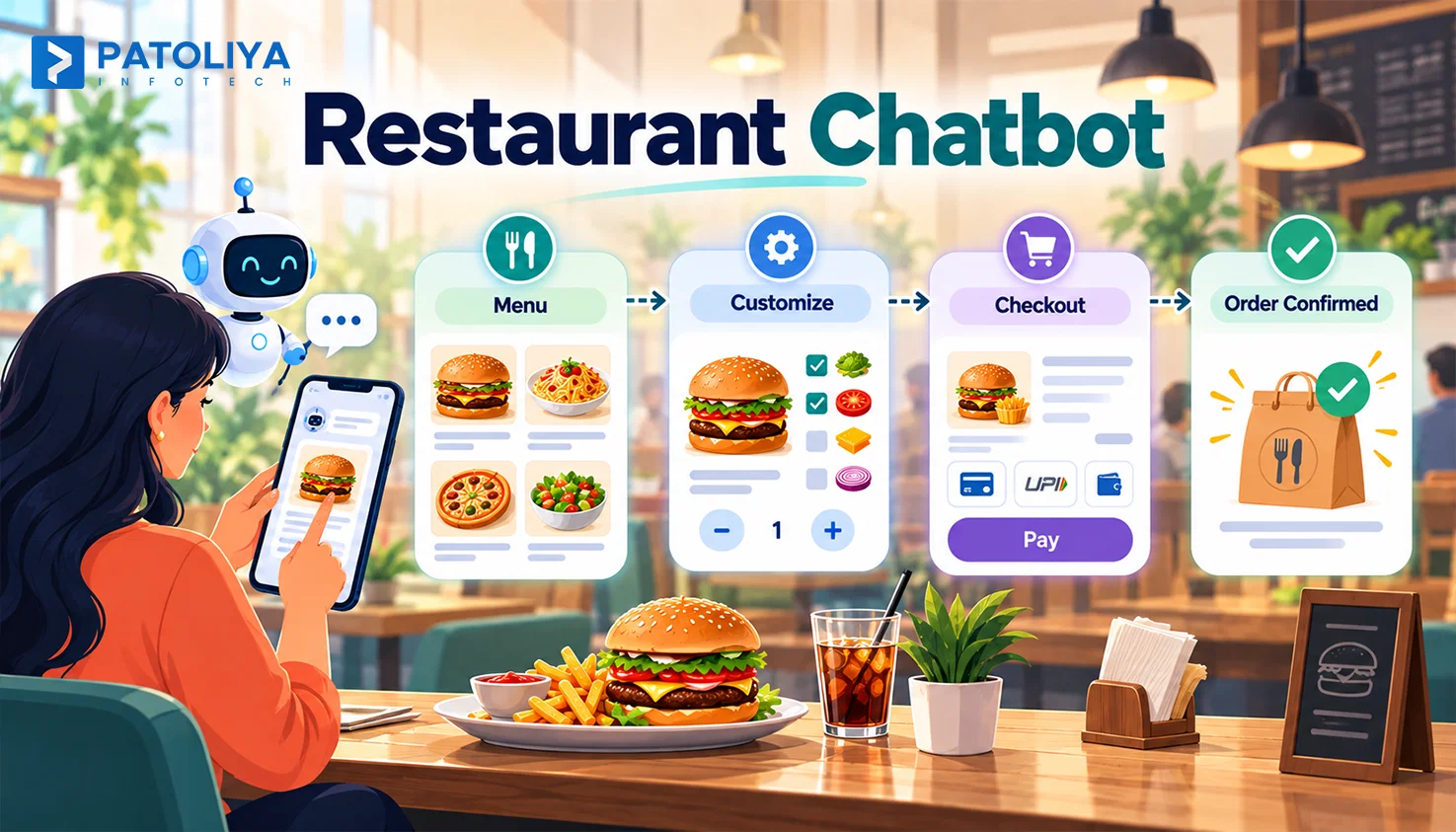
TL;DR: A restaurant chatbot turns a browsing guest into a paying order across websites, WhatsApp, and SMS channels. Operators who measure completed orders, not chat volume, get the clearest picture of return. The real test is whether a bot can execute an order without errors, not whether it can hold a conversation.
Online ordering is now standard for restaurants, but many systems still rely on rigid menus and forms. A restaurant chatbot makes the experience more conversational and helps customers complete orders with less friction. An AI ordering chatbot built on natural language understands intent, while a scripted bot only understands buttons.
Two questions matter here: how does a restaurant chatbot actually work under real menu conditions, and is the investment worth the cost once accuracy, integration, and labor impact enter the math. This guide answers both with a lens built for owners and operators.
Restaurant Ordering Chatbots: What They Actually Do
A restaurant chatbot handles five jobs in one thread: menu discovery, recommendation, customization, order placement, and payment confirmation. It replaces five separate steps a guest used to complete alone on a website.
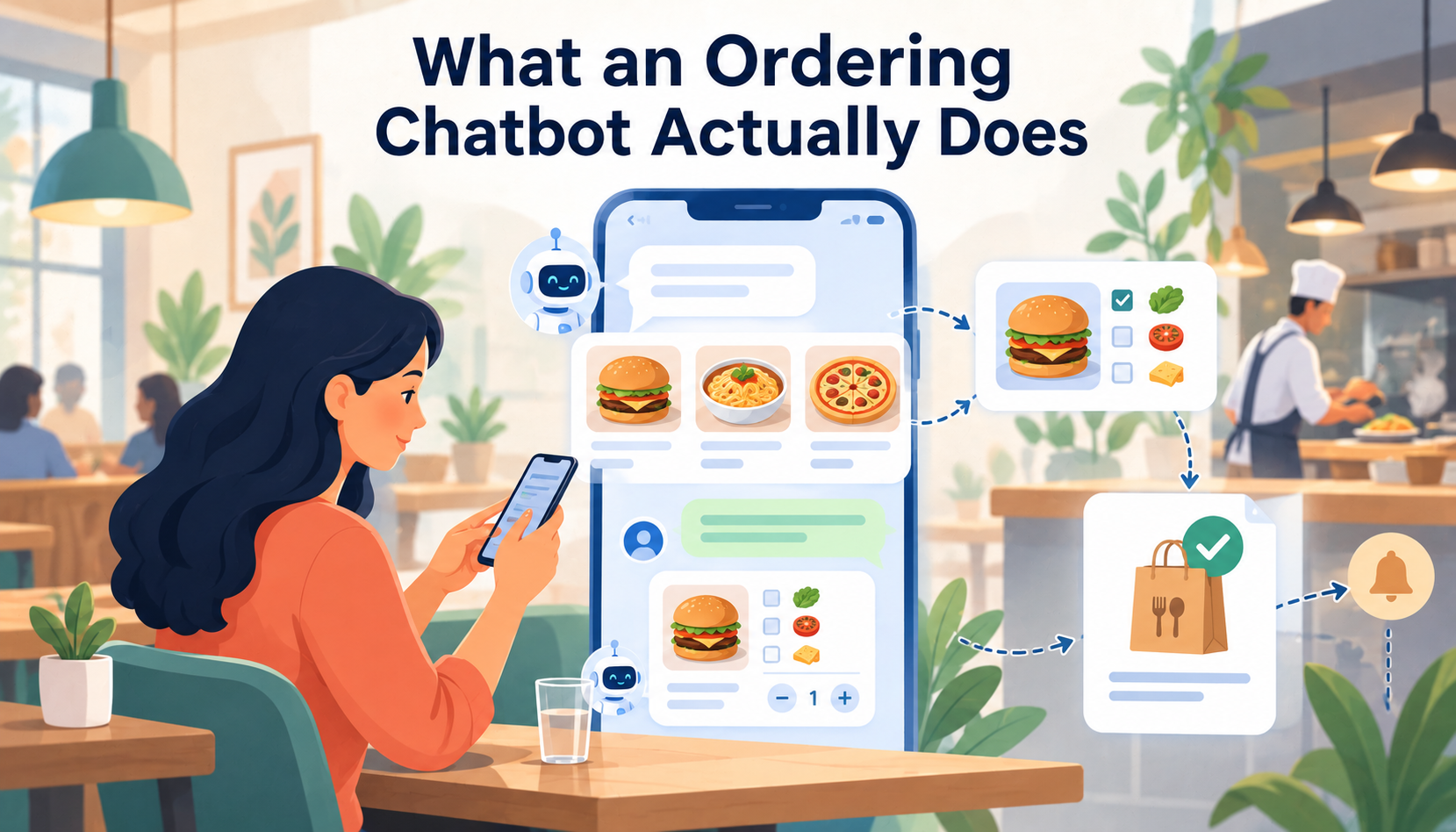
Ask it what a guest wants to eat, and it narrows sixty menu items down to three relevant picks in under ten seconds.
Where customers interact with it
Guests reach a restaurant chatbot through the website, WhatsApp, SMS, Instagram, a kiosk screen, or a voice assistant.
A WhatsApp ordering bot performs especially well for delivery brands because customers already have the app open when hunger hits. Voice remains the smallest channel by volume but grows fastest among drive through operators.
|
Approach |
How it responds |
Where it fails |
|
Rule based bot |
Follows a fixed decision tree, press one for pizza. |
Any sentence the script writer never anticipated. |
|
AI ordering chatbot |
Reads a full sentence, extracts item, size, and modifiers. |
Requires stronger training data and testing. |
What Restaurant Chatbots Are Commonly Used For
Ordering, reservations, FAQs, and customer support
A restaurant chatbot can take food orders through chat, book tables through online reservations, and answer questions about hours, locations, and menus. It can also handle simple complaints and send order status updates without requiring a phone call.
One independent pizzeria in Austin reported its restaurant chatbot answered over 200 repeat questions a week about gluten-free crust before staff ever entered the thread.
Recommendations, upsells and promotions
The value of an upsell is not that a bot can suggest a drink. It is whether that suggestion lands at the right moment and lifts average order value by a measurable margin.
A guest who just added a large pizza is a strong candidate for a side. A dessert offered too early kills the moment and feels pushy.
What Domino's AnyWare and other big brands actually prove
Domino's AnyWare ordering assistant reached ten platforms, including Twitter, smart TVs, and Amazon Echo. It shows how AI applications can extend ordering across multiple interfaces while building guest trust. What this brand proves is guest willingness.
It does not prove that a single location needs a massive engineering budget to earn that same trust with a restaurant chatbot built for its own menu.
Where Restaurant Ordering Chatbots Actually Break
Complex menus with options, pricing rules, and location variations can quickly expose a chatbot’s limitations and lead to ordering errors.
|
Menu factor |
Why it breaks a weak bot |
|
Modifiers |
Multiple options per item multiply combinations. |
|
Combos |
Bundled pricing needs recalculation logic. |
|
Substitutions |
Swapping ingredients changes cost and prep. |
|
Sizes |
Same item name, different price and portion. |
|
Quantities |
Bulk orders need different confirmation steps. |
|
Branch-specific menus |
One location sells items another does not carry. |
A restaurant chatbot trained on a five item menu looks flawless in a demo. The same system trained on a sixty item menu with twelve modifiers per dish starts guessing.
Natural language must become a valid order
Take the sentence large pepperoni no onions extra cheese. Understanding those words is the easy part for any AI ordering chatbot. The hard part is converting that sentence into a structured order object the point of sale accepts: item code, size code, two modifier codes, and a recalculated price.
What happens when an item is unavailable
A strong restaurant chatbot follows this sequence:
- Check live inventory before confirming the order.
- Offer a close substitute automatically.
- Ask the guest to confirm before charging the card.
- Update the kitchen queue the moment the swap is accepted.
A weak system skips step one, charges the card, and lets the kitchen discover the problem twelve minutes later.
POS Integration Is the Real Test
Two architectures exist for a restaurant chatbot. Chatbot to staff to point of sale means a human retypes every order, erasing half the labor savings the system was supposed to deliver.
Chatbot to ordering system to point of sale to kitchen display means the order flows straight into the kitchen queue with zero retyping.
|
Data type |
Why it matters |
|
Menu items |
Prevents ordering discontinued dishes. |
|
Prices |
Avoids billing disputes. |
|
Modifiers |
Keeps kitchen instructions accurate. |
|
Availability |
Stops selling out of stock items. |
|
Discounts |
Applies promotions correctly. |
|
Taxes |
Keeps receipts compliant. |
|
Order status |
Lets guests track progress. |
|
Pickup and delivery details |
Routes the order correctly. |
Where integration failures become expensive
Sync delays, duplicate orders, incorrect modifiers, and failed payments cost real money, not reputation alone. One duplicate order during a rush can trigger a refund, a replacement meal, and a guest who posts about it publicly. An AI ordering chatbot without tested failure handling turns a busy Friday into a chargeback problem.
The Accuracy Problem: Allergens, Ingredients and Special Requests
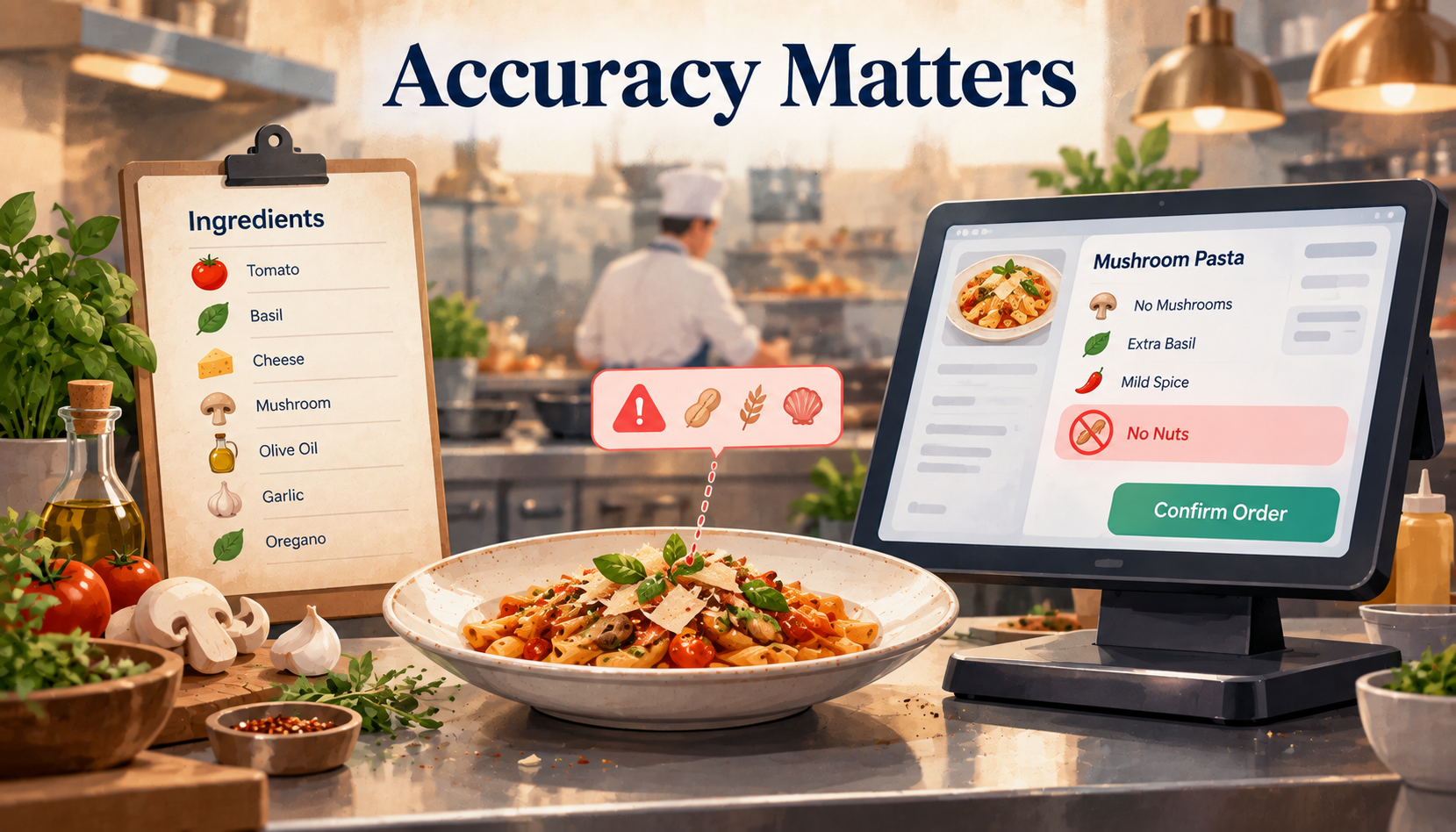
Why allergen questions require a different standard
A wrong answer about hours costs a phone call. A wrong answer about peanuts costs a life. A restaurant chatbot cannot treat allergen questions like an ordinary FAQ. Food allergen guidance must use verified information and trigger staff escalation when the chatbot is uncertain.
The data and controls behind reliable answers
Reliable answers depend on ingredient level data, sources approved by the kitchen team, and location specific menus, since suppliers and prep methods differ by address even within one brand. A chain running one allergen script across forty locations is guessing at scale.
When the chatbot should say I don't know
A well-built restaurant chatbot says I am not certain and connects the guest to staff the moment confidence drops below a set threshold. This is a practical application of an AI Risk Management Framework, where defined confidence thresholds and human escalation prevent unsupported answers. It never invents an answer to keep the conversation moving.
What Happens During the Friday Night Rush?
Can the system handle concurrent orders?
Traffic triples in the span of an hour, testing every API limit the restaurant chatbot relies on. Point of sale availability windows tighten right when order volume peaks, and response latency can stretch from two seconds to twelve seconds without the right infrastructure.
What happens when something fails
Point of sale outage: needs a fallback message the guest actually understands.
Payment failure: needs a retry path, not a dead end.
Sold out item: needs an instant substitute suggestion.
AI uncertainty: needs an immediate route to a human.
Human handoff should be designed
Staff taking over from an AI ordering chatbot need the full order history transferred instantly from the POS system, including items already selected and the exact point where the guest got stuck. Staff who receive a blank slate spend two extra minutes rebuilding the cart.
When Conversation Actually Improves Restaurant Ordering
Questions like "what's good for two people," "I want something spicy," or "same order as last time" are where a restaurant chatbot earns its cost. A static menu grid cannot answer any of those three prompts.
A guest reordering last week's exact meal does not need a conversation at all. A single tap on a saved order beats five back and forth messages every time.
The strongest AI ordering chatbot design uses conversational user interfaces for the ambiguous part of the journey and a structured checkout screen for the transaction itself. Discovery belongs to conversation. Confirmation belongs to a clean, predictable interface.
Measuring What a Restaurant Ordering Chatbot Is Worth
Stop measuring conversations; measure completed orders
Conversation volume is a vanity number. A restaurant chatbot running 10,000 conversations a month and completing 400 orders performs worse than one running 2,000 conversations and completing 600 orders. Track the full path:
The customer moves from conversation to cart, checkout, and payment, followed by order completion, fulfillment, and eventually a repeat order.
|
Metric |
What it reveals |
|
Chat to order conversion |
How many conversations become paid orders. |
|
Average order value |
Whether upsells actually work. |
|
Upsell rate |
Percentage of orders with an added item. |
|
Order error rate |
Frequency of wrong or incomplete orders. |
|
Handoff rate |
How often staff must step in. |
|
Payment failure rate |
Checkout friction points. |
|
Repeat orders |
Long term guest retention. |
|
Cost per completed order |
The number that decides ROI. |
SaaS support metrics like ticket deflection do not translate to a food business. A restaurant chatbot touches revenue, inventory, payment, and kitchen labor all at once, so its return has to be measured across all four, not one borrowed number from a support dashboard.
Restaurant Chatbot Unit Economics: When Does It Pay Off?
Incremental contribution margin + labor savings + avoided error cost − technology and integration cost = real payoff.
That is the formula for a restaurant chatbot, and most vendors only show the first line.
How economics change by restaurant type
Independent restaurant, 200 orders a week: payback often stretches past a year unless order value runs high.
Quick service chain, thin margins: needs volume above a set threshold before an AI ordering chatbot pays for itself.
High average order value, full service: breaks even faster because each converted order carries more margin.
Multi-location brand: gets the fastest payback because integration cost spreads across every site.
Low order volume, weak digital demand, poor menu data, and expensive integration together erase the entire business case for a restaurant chatbot. An operator handling fifty online orders a week rarely justifies a custom build.
Generic Chatbot vs Custom AI Ordering System
When a standard chatbot is enough
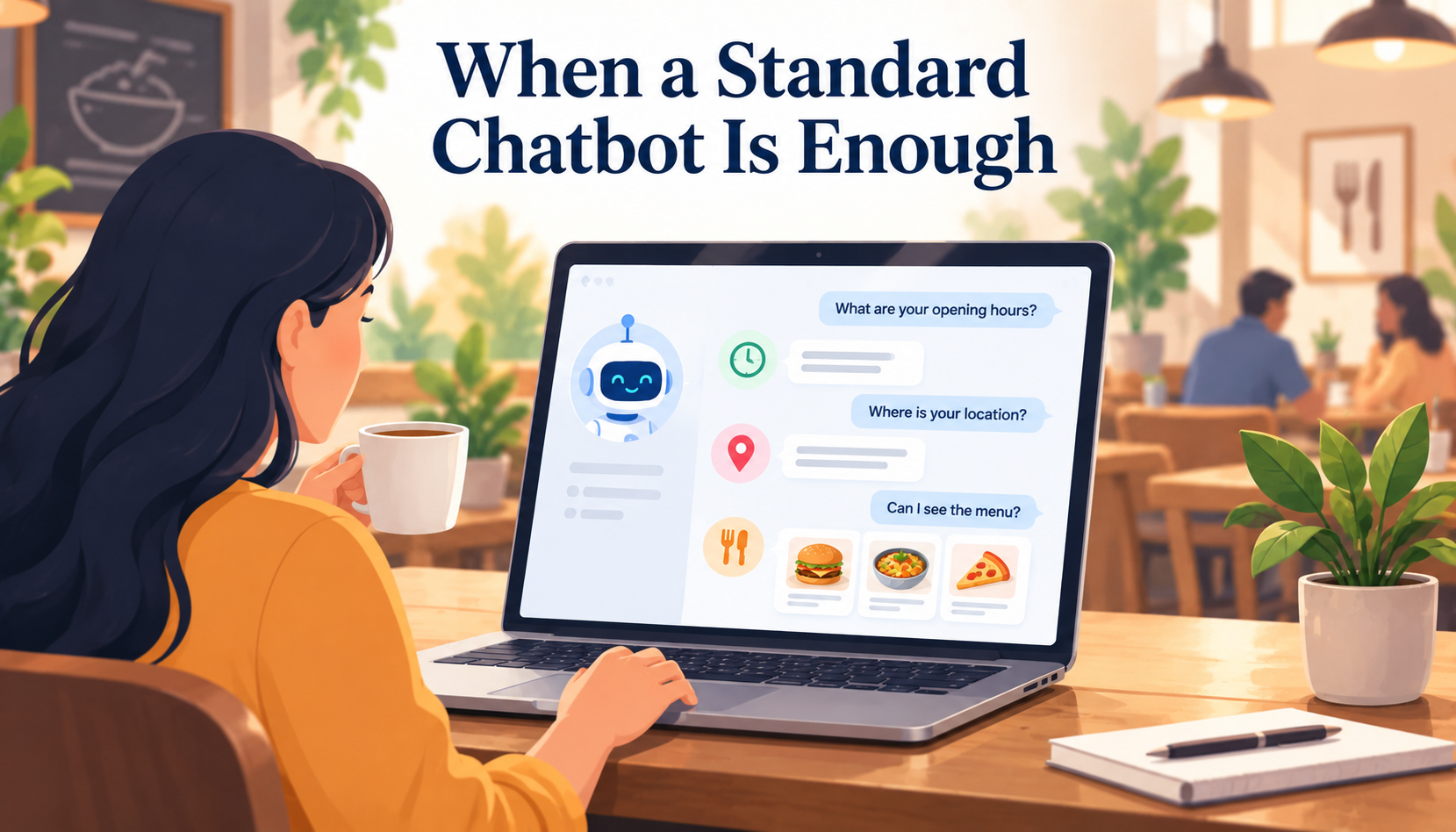
FAQs, store hours, location lookup, and basic menu questions do not need a custom build. A template based restaurant chatbot answers all four within a week at a low monthly cost.
When restaurant specific AI becomes justified
Complex menus, live availability, multiple locations, and point of sale integration justify a custom build for an AI ordering chatbot. The line is not company size; it is operational complexity.
Stop asking which restaurant chatbot has the most features on a comparison chart. Start asking which system executes your specific ordering workflow without dropping a single ticket during your busiest hour.
What Should Restaurant Leaders Check Before Buying?
Integration and operational questions
Does the system write directly into the point of sale, or only display orders for staff to retype?
How fast do menu and availability updates sync?
What happens the moment the point of sale goes offline mid-order?
AI accuracy and control questions
What data source powers allergen answers, and who approved it?
How does the restaurant chatbot behave when it cannot answer with confidence?
Are conversations audited weekly or left unchecked for months?
Commercial and data questions
Is pricing flat fee, per order, or per conversation, since each model rewards different vendor behavior?
Who owns the conversation data once the contract ends?
What reporting comes standard versus what costs extra?
Is AI Ordering Right for Your Operation?
Assessing Your Restaurant’s Readiness for Ordering Automation
Before automating orders, identify where your restaurant loses time, orders, or staff capacity, and whether a chatbot solves it.
Start with the operational problem
- Look at missed calls, abandoned online carts, staff workload during peak hours, restaurant scheduling software gaps, third-party commission spend, and order error frequency.
- A restaurant chatbot solves a specific operational problem, and buying one without naming that problem wastes the budget.
Establish the business case first
- Baseline your current order volume, conversion rate, average order value, labor cost, error cost, and existing technology spend.
- Then calculate the improvement needed for a positive return within twelve months.
Signs you should wait
- Low digital order volume, poor menu data, an unstable point-of-sale process, or no staff capacity for escalation are all signs to wait.
- A restaurant technology deployed on top of a broken process automates the break rather than fixing it.
The Restaurant Ordering Chatbot Decision in Five Questions
Can it complete an order, not just hold a conversation?
A restaurant chatbot that only chats, without pushing a real order into the kitchen, isn't solving the problem you're paying for.
Can it handle your actual menu complexity?
Test it against your real modifiers and combos, not a demo menu with five items.
Can it operate reliably through your fulfillment workflow?
Confirm it writes directly into your point of sale and kitchen display, not just a staff inbox.
Can you measure its incremental impact?
If you cannot isolate its effect on revenue and labor, you cannot judge it fairly.
Does the return justify the total cost and risk?
Weigh integration cost, ongoing fees, and error risk against the labor and revenue it actually delivers.
Why Restaurant Brands Trust Patoliya Infotech for AI Ordering Systems
Patoliya Infotech builds restaurant chatbot systems that write directly into point of sale and kitchen display workflows, not just a chat window that stops at the conversation. Capabilities delivered across live client work include:
- AI ordering chatbot deployments across quick service and full service brands.
- Ingredient-level allergen data handling for multiple location menus.
- Live modifier and inventory sync tested against real rush hour volume.
If your current restaurant chatbot stops at conversation and never reaches your point of sale, a fifteen minute walkthrough shows exactly where the gap sits.
Conclusion
A restaurant chatbot is not valuable because it can hold a conversation. It becomes valuable when that conversation turns into an accurate cart, a completed payment, and an order the kitchen can fulfill on time. Restaurants should therefore measure the entire ordering journey, from customer intent to successful fulfillment, rather than focusing on chat volume alone.
The right chatbot should fit existing menus, POS systems, payment workflows, inventory rules, and staff operations. When those pieces work together, conversational ordering becomes an operational advantage instead of another disconnected digital channel.
FAQs:
What happens when a chatbot accepts an item that is already sold out?
A production-ready restaurant chatbot should receive real-time availability updates, remove unavailable items from ordering, and suggest valid alternatives before customers complete payment or submit orders.
How should restaurants test chatbot order accuracy before going live?
Restaurants should test modifiers, substitutions, discounts, taxes, unavailable items, special instructions, payments, cancellations, and refunds, then compare chatbot transactions against corresponding POS records.
Can a restaurant chatbot handle different menus across multiple locations?
Yes. A properly integrated chatbot can identify the selected location and dynamically apply its specific menu, pricing, availability, promotions, operating hours, modifiers, and ordering rules.
What should happen when the chatbot cannot confidently understand an order?
The chatbot should ask a clarifying question before checkout. If uncertainty remains, it should escalate the interaction to staff rather than risk creating an incorrect order.
Can a restaurant chatbot capture complex customization requests?
Yes, provided the ordering logic supports structured modifiers, substitutions, preparation preferences, quantities, and special instructions while validating each combination against the restaurant’s configured menu rules.
How does a chatbot prevent incorrect orders from reaching the kitchen?
Before submission, it should validate item availability, modifiers, pricing, taxes, discounts, and customer selections, then transmit the confirmed cart through the restaurant’s integrated ordering system.